
Palestine Action Defendants Represent Themselves After Court Decisions at Woolwich Crown Court
Key Takeaways
- Court of Appeal hearing the government's appeal against High Court ruling on ban
- High Court found the ban unlawful and disproportionate, prompting appeal
- Defendants chose to represent themselves due to court decisions as trial nears
Trial and self-representation
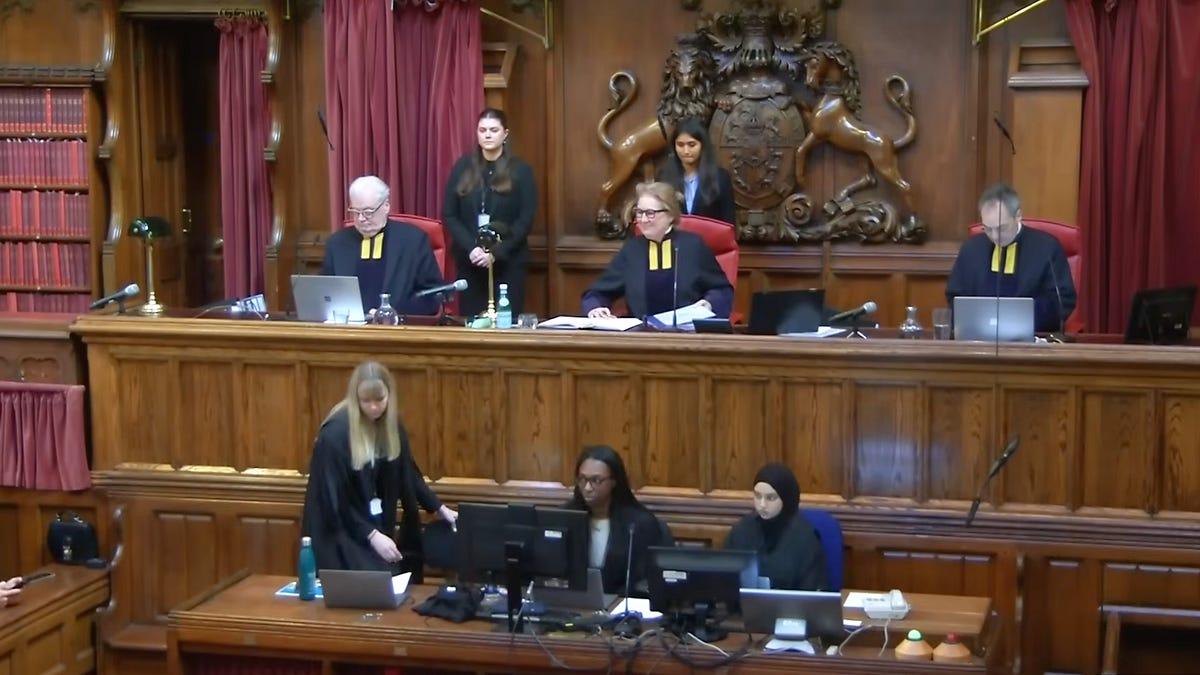
In Britain, Palestine Action defendants chose to represent themselves as their trial nears its conclusion, with Novara Media reporting that they did so “due to some decisions by the court.”
“London, United Kingdom – The United Kingdom is appealing the High Court’s landmark ruling that the government’s ban on Palestine Action was illegal”
The defendants named by Novara Media are Charlotte Head, 30, Leona Kamio, 30, Fatema Rajwani, 21, Zoe Rogers, 22, Jordan Devlin, 31 and Sam Corner, 23, who “face charges of criminal damage in connection with a raid on a factory owned by Israeli weapons company Elbit Systems in Filton near Bristol, in August 2024.”

Novara Media says only Corner retained a lawyer, while the other five “made their closing statements at Woolwich Crown Court on Wednesday, choosing to represent themselves.”
Head told the jury: “Sadly, despite how unbelievably kind and smart and wise my barristers are, after some decisions made by the court, I no longer feel like they are permitted to represent me in a way that does us all justice. So I’ve had to represent myself.”
Kamio said in her closing statement, “This is not everything that I’d like to tell you, but I’m so scared of the consequences of saying something I’m not permitted to, that I hope this is enough.”
Novara Media also reports that police arrested protesters outside the court holding signs saying: “Juries have an absolute right to acquit a defendant according to their conscience.”
The trial continues, with Novara Media stating “The trial continues.”
Court restrictions and closing statements
As the Woolwich Crown Court proceedings approached their conclusion, Novara Media describes multiple restrictions and disputes over what defendants could say and what evidence was available.
Head said she felt she had “no choice” but to take direct action, adding that she had been on marches and “cities and people were still being reduced to dust,” and that her “mental health plummeted watching what was happening and feeling helpless to stop it.”

Kamio criticised what she called the “disingenuous and contradictory” prosecution case and asked the jury: “Why did you need to know that I may have been hungover from a party?”
She also questioned the absence of CCTV or body-worn security camera footage, saying that a witness referred to as “witness Alpha” could not remember a password.
Novara Media reports that Kamio claimed other footage not made available to the court would have shown security guard Angelo Volante being “incredibly violent,” and she said the footage’s absence could not be explained by a “low frame rate.”
The Grayzone, in a separate account, says a “draconian British judge has forbidden them from referring to the principle of jury equity in their closing speeches,” and describes restrictions that bar defendants from discussing “the history of the Middle East, including events…since October 7 2023,” or “Israel’s activities in Gaza” at any time.
The Grayzone also quotes a draft court order it says prevents defendants and their lawyers from mentioning jury equity and from inviting acquittal based on conscience, stating the judge is forbidden from “[directing] a jury to convict.”
Appeal over the ban
Beyond the Filton case, Britain’s Court of Appeal is hearing the government’s challenge to a ruling that found the Palestine Action ban unlawful, with multiple outlets describing the legal battle and the arguments being made.
“Asa Winstanley, February 4, 2026 – Six Palestine Action militants who had broken into an Israeli weapons factory in the United Kingdom have been acquitted of all charges brought against them”
Anadolu Ajansı says the Court of Appeal in London opened its hearing into the British government’s challenge against a ruling that found the ban on Palestine Action unlawful, with proceedings running “from Tuesday morning until the afternoon and due to continue on Wednesday.”
It says the case centers on a February High Court judgment that held the group’s proscription under the Terrorism Act 2000 was “disproportionate,” while allowing the ban to remain in place pending appeal.
Anadolu Ajansı adds that the Home Office is seeking to overturn that ruling, arguing the designation was justified and that Palestine Action “remains a serious security concern.”
The ban, Anadolu Ajansı reports, was “proscribed in July 2025” following an incident in which activists entered a Royal Air Force (RAF) base and damaged military aircraft.
The Guardian provides additional background, saying Yvette Cooper announced plans to ban Palestine Action under the Terrorism Act “three days after it claimed responsibility for a break-in at RAF Brize Norton, during which red paint was sprayed into the turbines of two military aircraft,” and that the ban came into effect on 5 July.
The Guardian also states that the High Court ruled the decision to ban Palestine Action was unlawful on two grounds, including that proscription was a “very significant interference” with the right to freedom of speech and freedom of assembly.
Impact on Palestinians in Britain
In the Court of Appeal proceedings, Middle East Eye reports that lawyers argued the Palestine Action ban disproportionately impacts Palestinians in Britain campaigning against Israel’s actions in Gaza.
The outlet says Raza Husain KC, representing Huda Ammori, told the court that the ban had created a “culture of fear” among British Palestinians and those advocating for Palestinian rights.
Husain’s written statements, as quoted by Middle East Eye, say: “The proscription of PA is impacting particularly severely on Palestinians in Britain, whose conduct and expression have been chilled and criminalised at precisely the moment when their communities in Palestine are being annihilated.”
Middle East Eye also reports that Husain quoted testimony from Dr Aimee Shalan, chair of the British Palestinian Committee, describing how members of the Palestinian community in Britain “routinely faced legal threats, including allegations of being terrorists or terrorist sympathisers.”
Husain further argued that the “chilling effect” of proscription would push people to self-censor more than required, saying: “the climate that proscription creates means that many, many people will have to self-censor to a greater degree than is actually required, that is, the chilling effect of course in action,” and that “Criminal, yes, terroristic no.”
The Home Office’s position, as reported by Middle East Eye, was that prior consultation of the ban was not required because Palestine Action was “a disparate group” and the court could consider “the practical difficulties of inviting prior consultation.”
Middle East Eye says the court will give a judgment in coming weeks, with a closed session on Thursday where government lawyers will present secret evidence not available to Palestine Action’s legal team.
What’s at stake and who reacts
The stakes of the Court of Appeal decision are framed by outlets as affecting protest rights, arrests, and the legal consequences of showing support for Palestine Action.
“Palestine Action ban disproportionately impacts Palestinians in UK, court hears Lawyers representing the co-founder of Palestine Action said the ban on the direct-action group had disproportionately impacted Palestinians in Britain campaigning against Israel’s actions in Gaza”
The Guardian says that because the High Court did not quash the ban, “for now it remains an offence to show support for Palestine Action,” and that it is “punishable by a maximum prison sentence of 14 years, for more serious offences under section 12 of the Terrorism Act.”
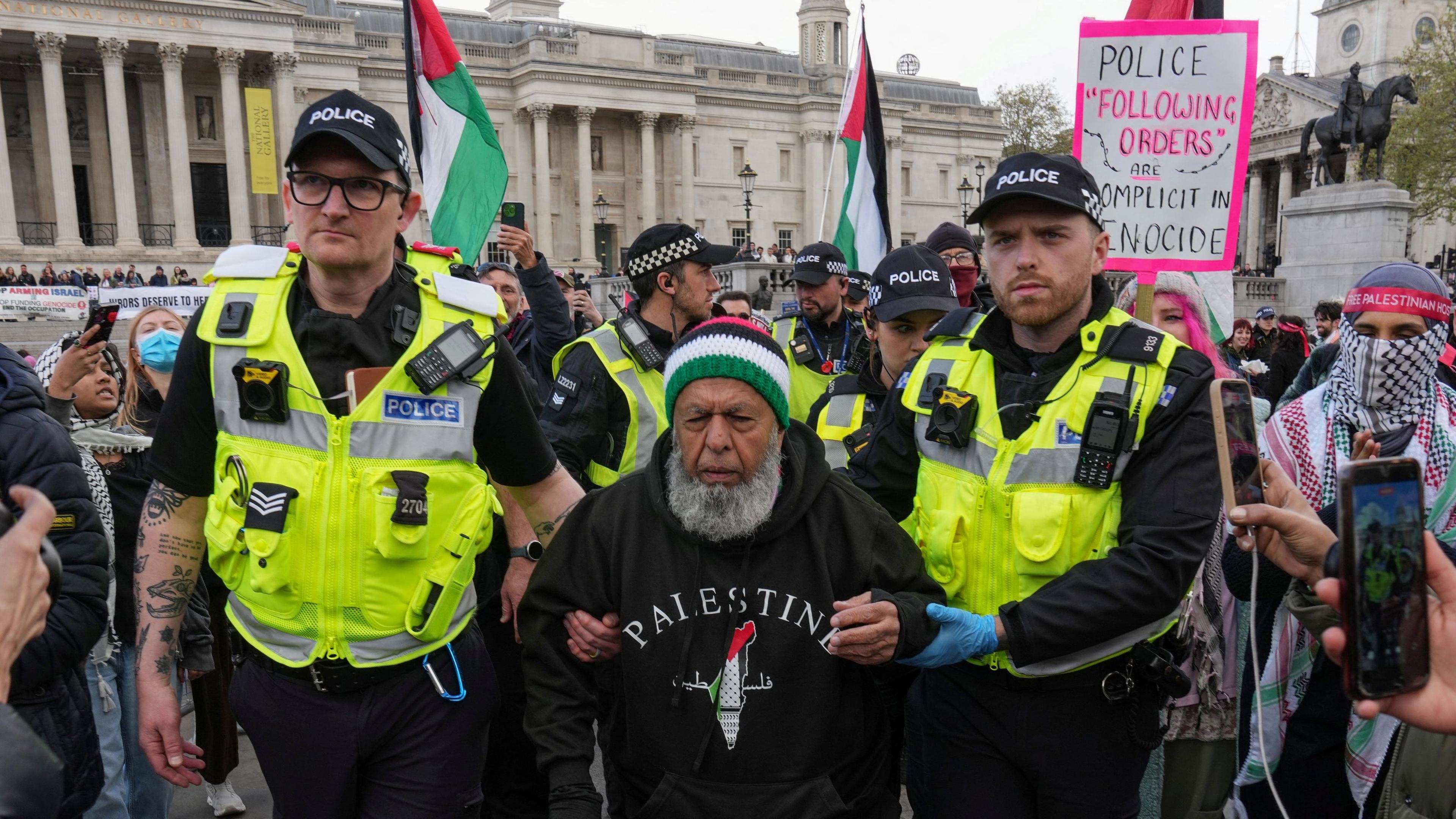
It adds that the Met initially said it would stop arresting people for alleged support but then “changed its stance and arrested 532 people at a DOJ protest earlier this month,” and that whether the “3,000-plus people arrested, of whom more than 500 have been charged” will stand trial remains uncertain.
Al Jazeera describes the broader campaign, saying that since the UK banned Palestine Action last July, “thousands of Britons have participated in a coordinated campaign of civil disobedience,” and that “more than 2,700 people” have been arrested under terror laws for holding up signs reading, “I oppose genocide. I support Palestine Action.”
Al Jazeera also reports that the letter “We oppose genocide, we support Palestine Action,” signed by around 1,700 academics, writers and cultural figures, was delivered to the court and read aloud during proceedings, and that the letter will be delivered to the court on Tuesday by Peter Hallward.
In the same Al Jazeera account, Amnesty International is quoted saying the UK “continued to use counterterror laws to restrict peaceful protests against the genocide in Gaza and ban the organisation Palestine Action [as] arms exports to Israel continued.”
Joshua Rozenberg reports that “five senior judges will hear the home secretary’s appeal today against a High Court ruling overturning the banning of Palestine Action as a terrorist organisation,” describing the panel as “strong” and saying the court is expected to conclude on Thursday.
More on Britain
Keir Starmer Faces May 1 Local Elections Test as Labour Defends 2,550 Seats
13 sources compared

250kg German SC250 WWII Bomb Discovered in Plymouth Triggers Evacuation and Controlled Detonation
15 sources compared
UK Raises Terror Threat To Severe After Golders Green Stabbing Of Two Jewish Men
28 sources compared
Daily Mail Vincula a Carlos III y Donald Trump como Primos Decimoquintos en Visita de Estado
30 sources compared