Gaza Genocide18 November, 20252 min read
Palestinian Attackers Kill Israeli, Wound Three in Car-Ramming and Stabbing at Gush Etzion Junction in Occupied West Bank
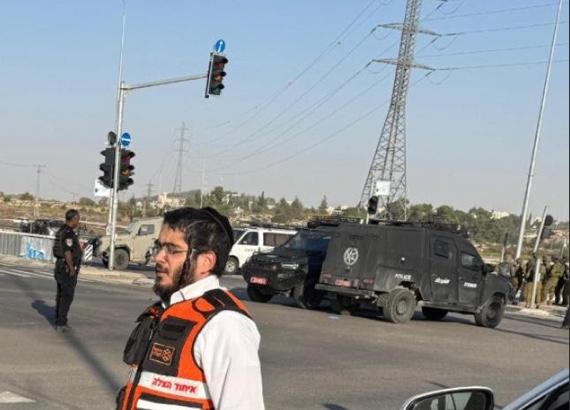
Two Palestinian attackers rammed a vehicle into civilians and stabbed people at Gush Etzion Junction Attack killed one Israeli man and wounded three others
32 outlets told this the same way.
Outlets did split on Israel Marks Oct. 7 Anniversary With Strikes on Gaza, Netanyahu Faces Election After Nova Tribute →
Gush Etzion attack report
A combined car-ramming and stabbing attack at the Gush Etzion Junction in the occupied West Bank on Nov. 18 left one Israeli man dead and three others wounded, according to multiple Israeli emergency and military sources.
“At least one person was killed and three others injured in a vehicle-ramming and stabbing attack Tuesday at Gush Etzion Junction in the occupied West Bank, Israeli emergency services and the IDF said.”
Magen David Adom paramedics and Israeli hospitals reported a roughly 30-year-old man died from a stab wound.
A woman in her 40s was taken to surgery, and two males, a man in his 30s and a roughly 15-year-old boy, were moderately injured.
The Israeli military said soldiers shot and killed the attackers at the scene.
Bomb-disposal teams found explosive materials in the vehicle.
Casualties and explosive response
Medical teams reported serious and moderate injuries among the survivors. At least one of the wounded may have been hit by gunfire during the response. Hadassah Medical Centre and several Israeli outlets reported a woman had a gunshot wound to her lower body and was undergoing surgery.
Some Israeli media said she may have been shot accidentally by security forces. Bomb-disposal teams were described as neutralizing explosives found in the attackers' vehicle.

West Bank violence overview
The attack occurred amid a wider surge of confrontations in the West Bank, which several outlets link to escalating settler attacks and the fallout from the Gaza war. Reports cited UN and NGO counts, noting that UN OCHA and other monitors recorded a sharp rise in settler attacks in October and prompting international pressure on Israel to hold settlers accountable. Some regional and international outlets placed the assault in the context of a broader pattern that has left heavy casualties among Palestinians and Israelis since October 2023.
“UN OCHA reported at least 264 settler attacks in October — the highest monthly total since monitoring began in 2006.”
Reactions to the attack
Palestinian armed groups either praised the attack or, in one instance, claimed responsibility. Several outlets reported that Hamas and Palestinian Islamic Jihad praised the assault, while UPI said Palestinian Islamic Jihad claimed responsibility. Many other outlets said groups praised the operation but did not claim it.
Israeli political figures and settlement leaders called for tougher responses, with opposition leader Yair Lapid describing the incident as "severe". Some settlement leaders vowed retaliation or blamed government policy. The Israeli army deployed additional troops, sealed off nearby villages, and carried out searches with roadblocks.
