Crime18 November, 20252 min read
Palestinian Attackers Kill One Israeli, Wound Three in Occupied West Bank
One Israeli killed, three wounded at Gush Etzion junction in the occupied West Bank Attackers rammed a car then stabbed pedestrians

16 outlets told this the same way.
Gush Etzion attack summary
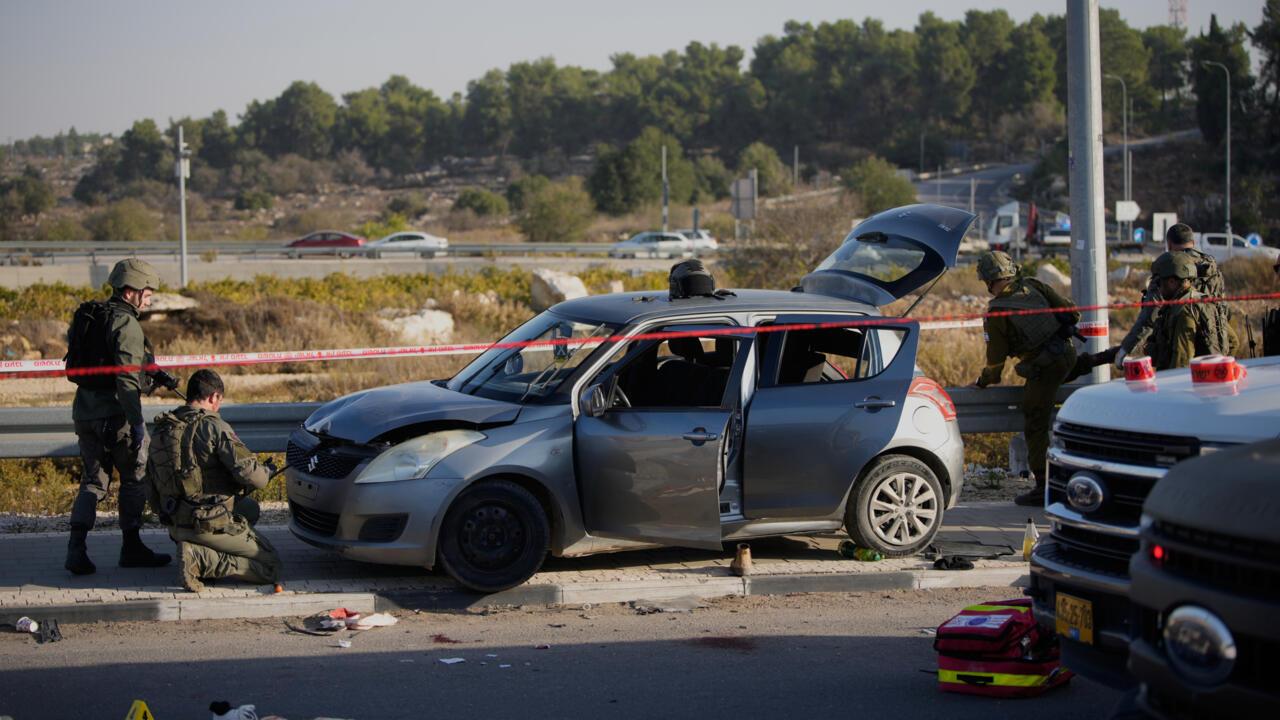
A car-ramming and stabbing attack took place at the Gush Etzion junction, the main intersection between Bethlehem and Hebron in the Israeli-occupied West Bank, leaving at least one Israeli dead and three others wounded. Multiple reports describe the incident as a combination of ramming and stabbing. Zoom Bangla News said it left one Israeli man dead and three others wounded, naming a critically injured woman and a moderately injured man and boy, and AL-Monitor reported the attack left a 30-year-old man dead of a stab wound.
“A car-ramming and stabbing attack at the Gush Etzion junction — the main intersection between Bethlehem and Hebron in the Israeli-occupied West Bank — left one Israeli man dead and three others wounded (a critically injured woman and a moderately injured man and boy).”
France 24 described paramedics reporting a 30-year-old man dead from a stab wound and three people — a woman in her 40s in serious condition, a man in his 30s, and a roughly 15-year-old boy, both in moderate condition. Local and regional outlets also summarized the event as a deadly ramming-and-stabbing incident with suspects neutralised.

Attack and security response
Israeli forces said they shot and killed two attackers at the scene. They later discovered explosive materials in the vehicle used by the assailants. Several news outlets reported on the military response and subsequent security measures.
Zoom Bangla News said Israeli soldiers secured the area and called bomb-disposal teams to neutralize explosives found in the attackers' vehicle. AL-Monitor noted that Israeli forces reported killing two attackers, finding explosive materials in the vehicle and working to neutralize them.

France 24 reported the army found explosives and was conducting searches and setting up roadblocks. Other outlets issued brief confirmations that suspects had been neutralised.
Escalating West Bank tensions
The attack unfolded against a backdrop of escalating West Bank tensions and a spike in violence by Jewish settlers, which several sources described as part of a deteriorating security environment. Times Series reported that settlers rampaged through the village of al-Jab'a, torching homes and cars, while police and military were deployed and Prime Minister Benjamin Netanyahu issued rare public condemnation.
“Israeli settlers rampaged through the West Bank village of al-Jab’a on Monday, torching homes and cars; Israel’s military and police were deployed after the violence, which drew a rare public condemnation from Prime Minister Benjamin Netanyahu.”
Hindustan Times said a senior Israeli official urged decisive action to stop settler violence and cited UN OCHA figures showing that October saw at least 264 settler attacks on Palestinians, the highest monthly total since tracking began. LBC and The Herald linked the attack to wider friction between settlers, the military and Palestinian communities.
Responses to junction attack
Israeli leaders publicly condemned settler violence and pledged action. Palestinian factions offered differing responses to the junction attack. Times Series and lbc.co.uk noted Prime Minister Benjamin Netanyahu's rare public condemnation of settler rioters and his welcomed a UN-backed US plan for Gaza.
France 24 and The Herald reported that Palestinian Islamic Jihad praised the junction attackers and that Hamas praised the attack but did not claim it. AL-Monitor and Zoom Bangla stressed there was no immediate claim of responsibility as investigations continued. The incident was reported alongside international diplomacy on Gaza reconstruction and stabilization, underscoring how local violence intersects with broader political disputes.