Other26 December, 20253 min read
Palestinian Man Kills Two in Northern Israel in Car-Ramming and Stabbing Attack
This article is an automated aggregation of coverage from news outlets. Our editorials offer in-depth analysis curated by the NewsCord team.
Palestinian assailant carried out a combined car-ramming then stabbing 'rolling' attack across northern Israel Two Israelis—a 68-year-old man and an 18-year-old woman—were killed; others wounded

40 outlets told this the same way.
Northern Israel attack
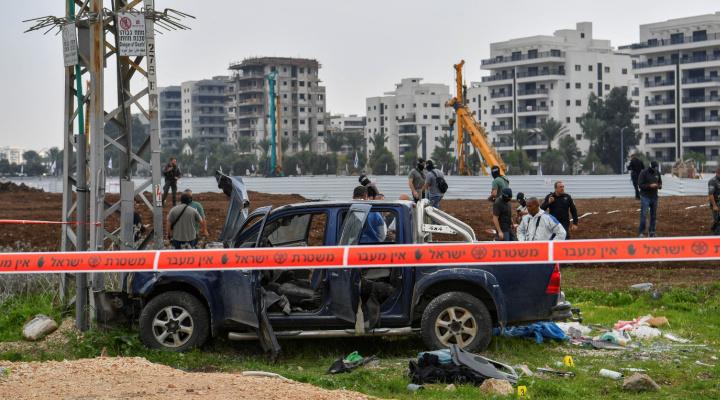
On Dec. 26, 2025, Israeli authorities and multiple news outlets reported a combined car-ramming and stabbing attack in northern Israel that left two people dead and at least one teenager wounded.
“Israeli police say a suspected ‘rolling terror attack’ in northern Israel left two people dead and a teenager wounded on Friday.”
Police and emergency services described the incident as a 'rolling terror attack' that began in Beit Shean and continued toward Afula and Road 71.
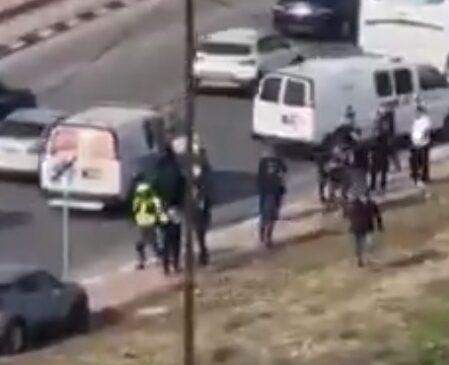
Officials later identified the victims as 18- or 19-year-old Aviv Maor and 68-year-old Shimshon Mordechai.
Several outlets reported the attacker was from the West Bank town of Qabatiya and that he was shot and taken to hospital in a wounded condition after being stopped.
The accounts place the attack amid a broader surge of violence since Oct. 7, 2023.
How the assailant was stopped
Accounts vary on how the assailant was stopped. Several mainstream outlets and local reports say a civilian confronted or shot the attacker near Afula and that the suspect was wounded and hospitalized. The BBC, The Guardian and Anadolu Ajansı use phrasing such as 'shot and wounded by a civilian' or that a passerby 'neutralized' the assailant.
However, some outlets give different or more definitive outcomes — SSBCrack News stated simply 'Police shot and killed the suspect,' while other reports say police engaged him or that security officers were involved. These immediate discrepancies reflect the chaotic, rapidly evolving nature of on-scene reporting.

Attacker identity discrepancies
News reports differ on the attacker's identity and age. Several outlets identified him as a Palestinian from Qabatiya in the northern West Bank. Some outlets named him as Ahmad Abu al-Rob or Ahmad Abu ar-Rob (Anadolu Ajansı, IMEMC).
“Authorities identified the attacker as a 37‑year‑old Palestinian from the occupied West Bank, named by Yedioth Ahronoth as Ahmad Abu al‑Rob.”
Those outlets suggested possible ties to Islamic Jihad. Punch Newspapers and other sources gave his age in the mid-30s (34). Algemeiner and BBC gave the locality without a precise age.
These variations, including names, ages and alleged affiliations, appear in different outlets' initial reporting. Many reports rely on local media, security statements or army radio. Some outlets explicitly state that any affiliation is alleged.
West Bank security response
Israeli officials ordered a swift security response in the West Bank town the attacker was said to be from. Defense Minister Israel Katz ordered troops to act forcefully and immediately, and the military massed around Qabatiya, conducting focused operational searches and entering the suspect's home. Forces prepared operations that some reports said included bulldozers and engineering surveys ahead of possible home demolition.
The IDF and police also detained or questioned local residents and the suspect's employer, according to several outlets. Human rights groups and other critics warned that house demolitions and broad raids risk collective punishment of civilians.
Coverage of rising violence
Wider reporting frames the attack within a sharp rise in violence since Oct. 7, 2023, and includes additional related incidents that media linked to the same trend.
“UN data showing high levels of violence in the West Bank since Oct. 7, 2023, with more than 1,000 Palestinians and 57 Israelis killed and hundreds injured.”
Several outlets cite UN or aggregated figures showing heavy Palestinian casualties in the West Bank and dozens of Israeli deaths in attacks since October.

Others note separate incidents such as an alleged unlawful ramming by an Israeli reservist in the West Bank the previous day.
Political leaders condemned the killings.
President Isaac Herzog called them a "horrific killing spree" and Prime Minister Netanyahu named the victims and praised the civilian who intervened.
Other commentators and outlets stressed the broader drivers of escalation.