
Twenty-Four Palestinian Detainees Arrive At Al-Aqsa Martyrs Hospital In Deir Al-Balah After Israeli Jail Release
Key Takeaways
- 24 detainees arrived at Al-Aqsa Martyrs Hospital, Deir al-Balah, after release.
- Over 9,600 Palestinians detained in Israeli prisons as of early April.
- Prison reports cite abuses including sexual violence, torture, and denial of basic rights.
Releases and hospital arrivals
Twenty-four Palestinian detainees arrived on Sunday at Al-Aqsa Martyrs Hospital in Deir al-Balah, central Gaza Strip, after their release from Israeli occupation prisons, according to WAFA Agency.
WAFA said medical sources at the hospital stated the released detainees were admitted to undergo necessary medical examinations, while “no further details” were available on their health conditions.
The WAFA dispatch placed the event in a broader Gaza context that included other reported incidents, including “One Palestinian killed, several others injured in Israeli airstrike on motorcycle in central Gaza” and “Child killed, others injured in Israeli strikes across central Gaza Strip; death toll rises to 72,551.”
WAFA also listed other items in its running update, including “UPDATE: Two Palestinian teenagers injured by Israeli forces’ gunfire south of Hebron” and “Young Palestinian man shot, injured by Israeli forces’ live fire west of Jenin.”
In the same WAFA item, the release was dated “19/April/2026 07:21 PM,” and the hospital arrival was described as occurring “on Sunday.”
The hospital arrival story, however, remained limited to the fact of admission for examinations, with WAFA explicitly stating that no additional health details were provided by the medical sources.
Numbers behind detention
A separate account of the detention system came from VOI.id, which said the Palestinian Prisoners and Ex-Detainees Affairs Commission reported that the number of Palestinian and Arab prisoners in Israeli jails reached “more than 9,600 people as of early April 2026.”
VOI.id reported that the number of female prisoners reached 86, including “two who were detained before the genocide of October 7, 2023,” and “25 who were detained under administrative detention.”

The same VOI.id statement said the number of child detainees “under the age of 18 reached about 350 people,” spread across Ofer and Megiddo prisons, with “two girls detained in Damon prison.”
VOI.id also reported that “the number of administrative detainees in Israeli prisons rose to more than 3,532 in early April 2026,” and that the number “includes women and children, the majority of whom are former prisoners who have spent years in Israeli prisons.”
It further stated that “the number of sick prisoners in Israeli prisons increased after the genocide,” and that “Most of them suffer from congenital diseases, injuries, or serious illnesses” while “a ban on medical treatment” was cited.
VOI.id added a death figure, saying that “the number of prisoners who have died in Israeli custody since 1967 has reached 326,” including “89 who died after the genocide,” and that “dozens of other prisoners from Gaza are still reported missing.”
The VOI.id report also described categories of detainees, saying the number categorized as “illegal combatants” had reached “1,251 at the beginning of April 2026,” while noting that this “does not include those detained in Israeli military detention centers.”
Taken together, the VOI.id figures provide a quantitative backdrop to the WAFA-described hospital releases, while also emphasizing the scale of detention and the categories used by the prison system.
Legal claims and prison conditions
The Times of Israël focused on the legal and administrative findings of Israel’s Public Defender’s Office, saying that reports published by the Public Defender's Office of the Ministry of Justice indicate that Palestinian prisoners incarcerated for security offenses have suffered “severe and systematic violence at the hands of prison guards,” have been deprived of food, and have been victims of “medical neglect.”
The Times of Israël said inspectors from the Public Defender's Office visited four prisons in 2024 and reported seeing inmates “who were extremely thin” and observing “physical marks of beatings and medical neglect” on the bodies of those questioned.
It also described how the reports were made public after “a year-long legal battle by the Israeli Civil Rights Association (ACRI),” which filed a freedom of information request after the Ministry of Justice refused to disclose the documents.
The Times of Israël quoted ACRI lawyer Adv. Oded Feller saying, “These reports we received confirm the testimony of prisoners as well as the reports of human rights groups and international organizations regarding widespread abuses in Israeli prisons,” and adding, “They show that these savage atrocities are indeed taking place in Israeli prisons.”
The report said prison officials where the worst abuses were reported denied the existence of systematic violence and insisted “there was no lapse in providing and making available the hygiene and cleaning products necessary to maintain sanitary conditions.”
It also described a legal context, saying that “In September of last year, the High Court of Justice ruled that the State had not fulfilled its legal obligations to ensure adequate nutrition for Palestinian prisoners incarcerated for security offenses in Israel.”
The Times of Israël further stated that after the Hamas pogrom on October 7, 2023, the government barred “the usual and customary visits of the Red Cross to Palestinian prisoners,” and said that Israel holds “roughly 6,700 Palestinian prisoners of various categories.”
It added that “1,200 Gazans arrested at different times during the war against Hamas are held in Israeli prisons and detention centers as “illegal combatants” without indictment,” and that “nearly 1,300 Palestinian prisoners have been convicted by a court and are currently incarcerated in Israeli prisons.”
Sexual violence accounts
Le Monde.fr reported on “the recurrence of sexual violence against Palestinians” in Israeli prisons through the account of Sami Al-Sa’i, a “47-year-old Palestinian journalist,” arrested by the Israeli army on “February 23, 2024, in Tulkarem, in the north of the occupied West Bank.”
Le Monde.fr said that “nineteen days after his arrest,” Al-Sa’i was transferred from a military base to Megiddo prison, and that he told reporters on “Wednesday, January 14” that “The guards asked me to undress and throw my clothes into a trash can.”
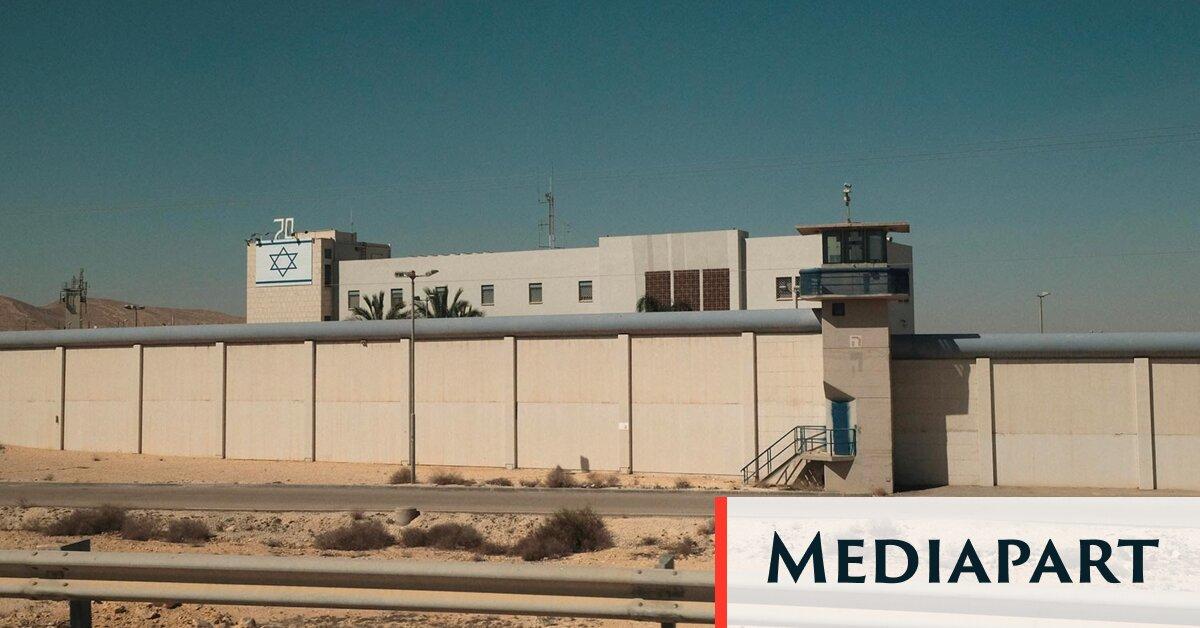
Le Monde.fr quoted Al-Sa’i describing questions the guards asked, including “Are you from Hamas? Are you a journalist?” and then described that “The blows began, they hit every part of my body(...).”
The article further quoted Al-Sa’i saying that guards immobilized him after his eyes were blindfolded and that “They tried to insert something hard into my anus,” with him adding, “But it was too painful, they penetrated me deeply. The pain was terrible.(...) They started again.”
Le Monde.fr also included Al-Sa’i’s description that “The man heard his guards laugh, then smoke a cigarette,” and that he was carried to a communal cell where “For several days, he cleaned the wound with toilet paper.”
The Le Monde.fr account framed the episode as part of a broader pattern by stating the story concerned “the recurrence of sexual violence against Palestinians.”
While Le Monde.fr did not provide a new detention number in the excerpt, it anchored the narrative in specific dates, locations, and quoted testimony, including the transfer to Megiddo prison and the detailed description of the alleged assault.
The article’s excerpt also indicated that “You have 86.24% of this article left to read,” emphasizing that the full reporting extended beyond the provided text.
Prisoners’ voices and stakes
Chronique de Palestine presented the perspective of Naël Barghouti, describing him as “a 68-year-old Palestinian from the occupied West Bank” who “spent more than four decades in Israeli captivity.”
“It was nineteen days after his arrest by the Israeli army, on February 23, 2024, in Tulkarem, in the north of the occupied West Bank”
The article said Barghouti regained his freedom “thanks to a prisoner exchange agreement signed between Hamas and Israel in January 2025,” and that “As a condition of his release, Barghouti had to accept exile and was expelled to Egypt a month later.”

Barghouti’s quoted statements emphasized endurance and political framing, including “I have never lost hope, and I never will,” and “We deserve a state under the sun.”
The piece also said that “According to the most recent and reliable statistics, about 9,300 Palestinians are currently detained by Israel,” and that “Nearly half of them have not been indicted or tried.”
It added a death toll in custody, stating “At least 87 Palestinians have been killed in Israeli prisons since October 7, 2023,” and included Barghouti’s description of detention without charges, saying, “Without any prior warning, a prisoner is detained without charges, whether a 15-year-old boy or a woman.”
The article quoted Barghouti on what he said Palestinians seek, stating, “We do not seek blood or war, but we will not accept anything other than defending ourselves and defending our rights,” and it included questions about restrictions, including “Why are Palestinians forbidden to live like any other people, to leave when they wish, to return when they wish, to go to the sea when they wish?”
Chronique de Palestine also quoted Husam Badran, saying he “spent 14 years in Israeli prisons and is currently head of national relations within Hamas,” and Badran said, “I think there is virtually no Palestinian household that does not have a Palestinian prisoner.”
The article described Badran’s view of how prisoners are regarded, stating, “Palestinian prisoners held in the occupier's prisons are one of the most respected and esteemed groups of the Palestinian people, regardless of the faction to which they belong.”
In this way, the WAFA-described hospital arrivals, VOI.id’s detention counts, and the legal and testimonial accounts from The Times of Israël and Le Monde.fr converge on a single theme: the ongoing human consequences of detention and the continuing political stakes of releases, custody, and alleged abuses.
More on Gaza Genocide

Israeli Forces Kill 16-Year-Old Palestinian Ibrahim Al-Khayyat in Hebron Raid
13 sources compared

Israeli Forces Intercept Global Sumud Flotilla Near Crete, Detain Activists
40 sources compared
Israeli Attacks Continue in Lebanon as Joseph Aoun Condemns Violations Despite Ceasefire
20 sources compared

UK Court Finds Palestine Action Ban Illegal as Shabana Mahmood Appeals
24 sources compared