Crypto01 May, 20267 min read
Paul Sztorc Announces August eCash Bitcoin Hard Fork, Offering 1:1 BTC Exchange
This article is an automated aggregation of coverage from news outlets. Our editorials offer in-depth analysis curated by the NewsCord team.
Sztorc plans August 2026 eCash hard fork with a 1:1 BTC exchange. Drivechains enabled, but risks include replay problems and custody complexities.

Sztorc sets August launch
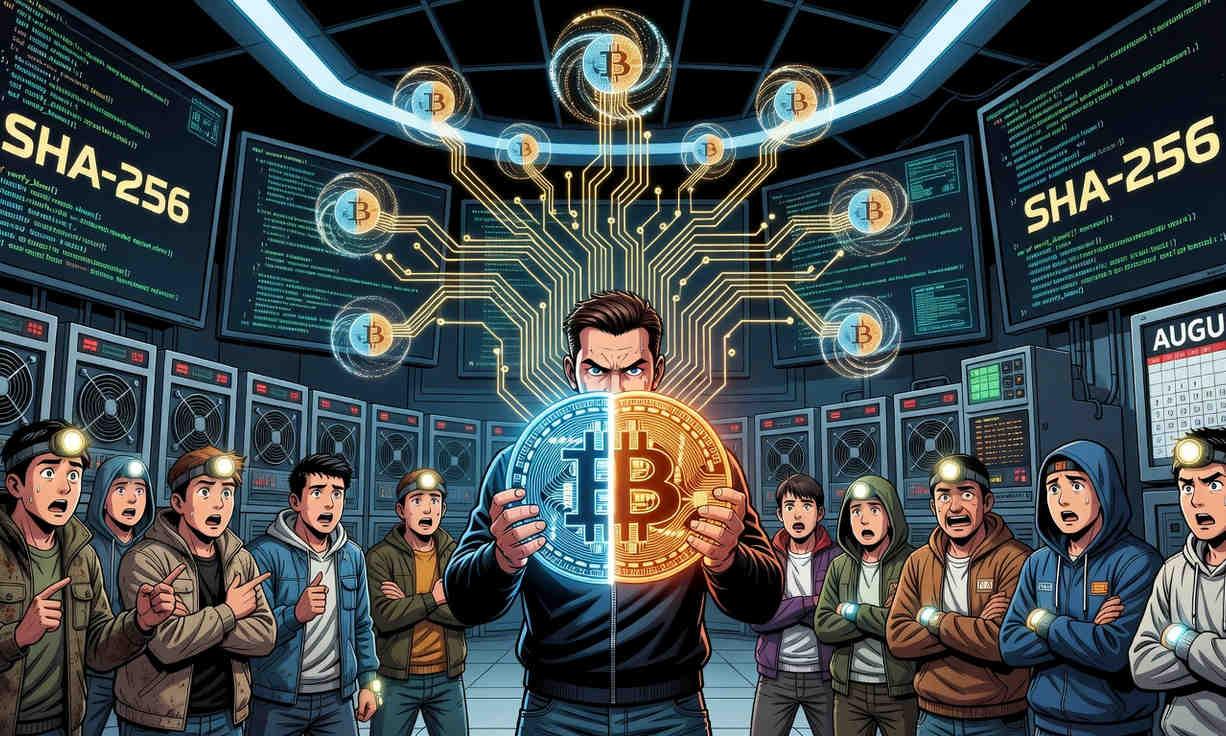
Bitcoin developer Paul Sztorc announced on Friday that a new hard fork of the Bitcoin network called eCash will be deployed in August, and he said Bitcoin holders will be able to exchange their BTC for eCash at a 1:1 ratio once the hard fork is live.
In his announcement, Sztorc said the layer-1 node software for the chain will be a “near-copy” of the BTC Core client software and will use the SHA-256 hashing algorithm used by the Bitcoin blockchain.

He also said the hard fork will have a reduced initial mining difficulty to make it easier for participants to mine blocks.
TradingView’s report adds that the eCash hard fork will also include seven layer-2 scaling networks called “drivechains,” aimed at increased transaction throughput and optional onchain privacy.
Sztorc further distanced eCash from previous attempts to hard fork the Bitcoin protocol, including Bitcoin Cash (BCH), which he said was created in 2017 but failed to become the dominant chain.
In the same thread, Sztorc said, “Unlike BCH, the 2017 fork, there is no ‘Bitcoin’ in the name,” and he added, “This is a permanent and sustainable fix to Bitcoin's problems.”
The announcement also landed amid a debate about privacy-preserving features and post-quantum resistance, with Sztorc saying, “Back in 2017, the Bitcoin tech stack was strong, and expectations for Lightning were strong. Today, it is the reverse,” according to TradingView.
Drivechains and Satoshi coins
Beyond the August timeline and the 1:1 BTC-to-eCash swap, Sztorc’s plan centers on drivechains and a controversial reassignment of coins attributed to Satoshi Nakamoto.
TradingView says the eCash network will include seven layer-2 scaling networks called “drivechains,” for increased transaction throughput and optional onchain privacy, while CoinDesk frames the proposal as “an airdrop — and a potentially hazardous one” rather than a conventional fork.
CoinDesk reports that Sergio Lerner, co-founder of Rootstock Labs, told CoinDesk in an email that “eCash is a new blockchain…It is not directly taking anything away from bitcoin holders,” and Lerner argued that distributing eCash based on Bitcoin’s UTXO set—“the collection of “unspent transaction outputs,” essentially the chunks of bitcoin that make up user balances—exposes users to avoidable operational risk.
TradingView also says Sztorc “manually” reassign a portion of Satoshi Nakamoto’s 1.1 million BTC stash to early investors, and it quotes Bitcoin advocate Peter McCormack responding, “Taking Satoshi coins is theft and disrespectful, and eCash is already used for Lightning payments with Cashu and Fedi. Those are poor choices.”
Cryptoast adds that Sztorc plans to reallocate 600,000 eCash, theoretically belonging to Satoshi, to various accredited investors, and it warns that “Without protection, a transaction signed on one chain could be copied and rebroadcast on the other.”
MEXC’s report similarly says the sharpest debate is Sztorc’s proposal to “manually reallocate a portion of Satoshi Nakamoto's 1.1 million BTC — coins believed to be inaccessible — to early investors,” while DiarioBitcoin says the proposal would “manually” reassign part of the 1,100,000 BTC attributed to Satoshi Nakamoto to early investors.
Across the coverage, the same architecture is described—layer-1 nearly identical to BTC Core, SHA-256, reduced initial mining difficulty, and seven drivechains—while the dispute concentrates on what happens to Satoshi-linked coins and how users are expected to claim or interact with the new chain.
Developers warn of replay risk
CoinDesk’s reporting focuses on security and operational risk, describing eCash as “an airdrop — and a potentially hazardous one” and arguing that the proposal introduces user risk through how it is distributed and how the two chains interact. Sergio Lerner told CoinDesk in an email, “I’m firmly against Paul’s fork, but not because it represents a ‘hostile Bitcoin hard fork,’ as some claim,” and he added, “eCash is a new blockchain…It is not directly taking anything away from bitcoin holders.” CoinDesk says Lerner argued that “Airdropping to UTXO owners does not help bitcoiners and instead exposes them to significant risk,” and it links that risk to the need for users to move funds out of cold storage and interact with unfamiliar software.
CoinDesk also says the concern is compounded by the lack of full replay protection between the two chains, warning that “Without a clean separation, transactions intended for Bitcoin could inadvertently affect funds on the eCash network, or vice versa.” Dan Held, a Bitcoin entrepreneur, is quoted as saying, “Reallocating Satoshi’s coins is shock value marketing, and the no-replay protection makes it quite hazardous to redeem.”
Cryptoast echoes the replay-protection warning, stating that “At the time of the fork, Bitcoin and eCash will share the same history, the same UTXOs, the same addresses, and compatible transaction formats,” and it warns that “Without protection, a transaction signed on one chain could be copied and rebroadcast on the other.” Cryptoast then describes a concrete failure mode and advises, “For Bitcoin users, the most prudent measure is simple: do not touch eCash,” while adding that users who still want to use eCash should first go through a “coin splitting” step.
Philosophical objections and uneven access
Alongside security concerns, CoinDesk describes a philosophical fault line over whether eCash would “break the native ownership of Bitcoin” and whether the ecosystem should tolerate structures that reinterpret Bitcoin’s ledger.
Jay Polack, head of strategy at Bitcoin sidechain VerifiedX, is quoted saying, “It’s mind boggling to think that anybody would think that’s a really good idea,” referring to the combination of forking and reassigning dormant coins.
Polack argues, “You can’t break the native ownership of Bitcoin. It’s totally contradictory to what Bitcoin is,” and he frames the objection as being about risk introduced by changing how Bitcoin ownership is represented.
CoinDesk also ties the debate to distribution mechanics, saying that because Bitcoin ownership is often intermediated by exchanges, custodians and institutional platforms, “the entity controlling private keys is not always the economic owner of the coins.”
Lerner is quoted again on this point, saying, “The custodians controlling UTXO keys are often not the rightful economic owners,” and CoinDesk adds that “This places users who hold bitcoin through custodians at a disadvantage.”
The same CoinDesk report says that in practice, “some users may never receive eCash at all, while others may take on new risks to access it,” and it notes that systems built on top of Bitcoin—including sidechains like Rootstock and federated custody networks—could require coordination or upgrades to safely split coins across chains.
Cryptoast similarly emphasizes that the main risk for BTC holders comes from mishandling that could expose their Bitcoins to replay risk, and it warns that “As long as a Bitcoin holder does not interact with the new chain, they are not directly exposed to a loss of BTC due to mishandling.”
Community reaction and adoption doubts
While CoinDesk and Cryptoast emphasize risks and objections, other outlets highlight how the announcement is being received and what it could mean for adoption.
“A new chain does not automatically create a new utility.”
TradingView reports that the announcement drew mixed reactions, including Sztorc’s statement, “Unlike BCH, the 2017 fork, there is no ‘Bitcoin’ in the name,” and it also includes direct pushback from Peter McCormack calling the plan “Taking Satoshi coins is theft and disrespectful.”

TradingView quotes another critic, Bitcoin advocate PakoVM, saying, “I give you two or three years to fold completely,” about the planned hard fork.
MEXC’s report describes the controversy as centering on Sztorc’s proposal to “manually reallocate a portion of Satoshi Nakamoto's 1.1 million BTC — coins believed to be inaccessible — to early investors,” while also repeating Sztorc’s claim that eCash is “a permanent and sustainable fix to Bitcoin's problems.”
DiarioBitcoin similarly says the announcement triggered divided reactions, especially due to the plan to reassign part of the BTC attributed to Satoshi Nakamoto, and it quotes Peter McCormack’s criticism that “Taking Satoshi coins is theft and disrespectful, and eCash is already used for Lightning payments with Cashu and Fedi. Those are poor choices.”
CoinDesk, meanwhile, reports that support exists but is limited, “largely framing eCash as an optional experiment tied to long-standing scaling proposals,” and it quotes Lerner’s insistence that “eCash is a new blockchain…It is not directly taking anything away from bitcoin holders.”
Cryptoast adds a practical adoption constraint by arguing that “A new chain does not automatically create a new utility,” and it warns that “A fork can only move part of the existing usage if users, platforms, or merchants choose to migrate.”