Crypto · 02 May, 2026 · 7 min read
Reuters Investigation Links Nobitex Founders Ali And Mohammad Kharrazi To Sanctioned Entities
Ali and Mohammad Kharrazi, brothers linked to Iran's supreme leader, founded Nobitex. Nobitex registration in 2018 used an alternative surname in filings.
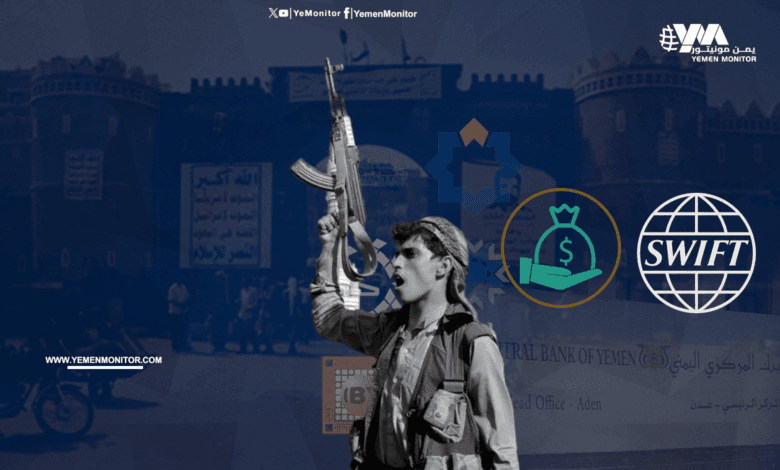
10 of 11 outlets skipped it: claims that Nobitex helped finance Iran’s allies abroad specifically including the Houthi group in Yemen..
11outlets compared
Same story, two versions
tap a side to read it in full
YYemen Monitor
“have turned it into a secret channel for financing Iran’s allies abroad, including the Houthi group in Yemen.”Read the original ↗
The Times of Israel
“Nobitex is used by the Iranian state to route money to allies outside the conventional banking system, according to an analysis of blockchain records by crypto-analytic firm Crystal Intelligence and interviews with four private financial investigators.”Read the original ↗
Some outlets foreground a specific beneficiary (Houthi) and a ‘secret channel’ framing, while others keep the description broader (state routing to allies). This affects perceived severity, geopolitical attribution, and how sanctions-evasion risk is assessed.
Nobitex’s founders, scrutiny
Iran’s largest cryptocurrency exchange, Nobitex, is at the center of a Reuters investigation published May 1 that links its founders to Iran’s ruling political establishment and raises questions about whether the platform has served as a conduit for sanctioned entities.
“According to the report published by Reuters on Friday, May 1”
Reuters and outlets citing it say Nobitex was founded by brothers Ali and Mohammad Kharrazi, who registered the exchange in 2018 under an alternative surname, “Aghamir,” keeping their family connections off the public record for years.

The investigation describes Nobitex as widely used by ordinary Iranians seeking to preserve savings amid economic turmoil, with Nobitex claiming “more than 11 million users” and accounting for “approximately 70% of the country’s cryptocurrency trading volume.”
At the same time, blockchain analytics firms cited in the reporting traced transactions tied to sanctioned institutions, including the Central Bank and the Islamic Revolutionary Guard Corps (IRGC).
Reuters found no evidence that members of the Kharazi family are under Western sanctions, and it remains unclear why the exchange itself has avoided such measures.
In a statement to Reuters, Nobitex denied the allegations, describing itself as a “private and independent business” and saying it has “never been an arm of the government.”
The exchange also said any illicit activity would have occurred “without the knowledge or approval of its management,” and that accounts involved in suspicious activity are permanently closed when identified.
Sanctions evasion estimates diverge
The Reuters investigation, as relayed by multiple outlets, centers on how Nobitex may have been used to circumvent Western sanctions after a new round of U.S. sanctions on April 28 targeting Iran’s “shadow banking architecture,” which Reuters says did not include Nobitex.
Cryptopolitan and The Block both describe the exchange as processing transactions tied to sanctioned Iranian institutions, including the Central Bank of Iran and the IRGC, with estimates varying widely across blockchain analytics firms.

Cryptopolitan reports that the exchange has processed “between $22 million and $366 million in transactions tied to sanctioned entities,” and says “central bank wallets alone sending $347 million to Nobitex in H1 2025.”
The Block similarly cites Elliptic identifying “around $366 million,” Chainalysis estimating “closer to $68 million,” and Crystal Intelligence pointing to “roughly $22 million in direct transfers from sanctioned wallets,” while noting that “All three estimates likely understate the actual flow.”
Iran News Update adds that blockchain analytics firms cited in the report indicate the platform was used to transfer “millions of dollars linked to sanctioned entities,” and it describes Crystal Intelligence’s estimate that Nobitex processed “over $100 million” during a period of internet outages and rolling blackouts in Tehran.
WION quotes Crystal Intelligence’s Nick Smart warning that “since it has so much activity that belongs to normal Iranians, it is hard to separate the regime from the people using the platform.”
Nobitex disputes the premise that it is knowingly facilitating sanctioned flows, telling Reuters it has never been an arm of the government and that illicit activity would have occurred without management’s approval.
War-time operations and internet shutdown
Beyond sanctions, the Reuters investigation described Nobitex continuing to process transactions during wartime disruptions, including a nationwide internet blackout imposed Feb. 28, according to blockchain analytics firms cited by Reuters.
“has continued processing transactions throughout the war with the US and Israel that began on February 28”
The Times of Israel says Nobitex “has continued processing transactions throughout the war with the US and Israel that began on February 28,” and it adds that this occurred “even during a government-imposed nationwide internet shutdown and widespread power outages in Tehran.”T
Cointelegraph and The Block both echo that Nobitex remained operational during the blackout, with The Block reporting that Crystal Intelligence told Reuters Nobitex processed “more than $100 million in transactions during the war, around 20% of normal activity,” and that “$54 million has been withdrawn from the exchange since the conflict began.”
Iran News Update similarly reports that Crystal Intelligence said the exchange processed “over $100 million” during a period marked by “widespread internet outages and rolling blackouts in Tehran,” describing it as “roughly one-fifth of its normal activity,” and it says Reuters notes users withdrew at least “$54 million” during that time.
The reporting also ties Nobitex’s resilience to connectivity controls, with NetBlocks finding that only “1 to 2 percent of the population—those on a government-approved “whitelist”—remained connected,” and The Block repeating that “only 1% to 2% of Iranians, those on a ‘state-approved whitelist,’ currently have internet access.”
WION frames the issue as a challenge for compliance because Nobitex’s user base includes “normal Iranians,” while the exchange’s activity overlaps with state-linked flows.
The Times of Israel adds that Nobitex advised clients on ways to avoid monitoring and interception by Western governments and described technical measures such as changing wallet addresses and developing cryptographic tools, citing a 2021 annual report.T
Officials, warnings, and denial
The investigation has prompted political reaction in the United States, while Nobitex and Reuters-cited reporting emphasize the exchange’s denial of government ties.
WION quotes Senator Elizabeth Warren calling the findings “a flashing red light,” warning that “adversaries are using digital assets as an alternative to the US-led global financial system – moving billions easily because too many services across the crypto ecosystem lack basic controls to prevent money laundering and sanctions evasion.”

The Times of Israel also reports that Senator Elizabeth Warren, ranking Democrat on the Senate Banking Committee, called the investigation “a flashing red light,” and it says she warned that digital assets are increasingly being used by adversarial states to move money outside traditional finance.T
In contrast, Nobitex told Reuters it has faced “significant operational restrictions from the Iranian government, including office raids, domain blocking, and banking gateway closures,” and it said those actions are “entirely inconsistent with the notion that we are receiving any form of governmental support.”
The exchange’s statement to Reuters, as quoted in WION, says “Nobitex is a private and independent business. It has never been an arm of the government,” and it adds that it has “never had any relationship, arrangement, agreement, or contract with the Central Bank of Iran, the IRGC, or any other governmental body.”
Iran News Update adds that Nobitex described itself as “private and independent business” and asserted it has “never acted as a government arm and has no agreements or affiliations with the Central Bank, the IRGC, or any other state institution.”
The reporting also includes a claim by Nobitex that it changes wallet addresses and uses cryptographic tools to obfuscate links between related wallets because of “increasing restrictions related to international sanctions,” as described by The Times of Israel.T
What comes next for compliance
The investigation’s stakes, as reflected across the reporting, extend beyond Nobitex’s ownership to how other parts of the crypto ecosystem may be forced to reassess exposure to sanctioned flows.
“at what point does user growth become institutional exposure?”
Startup Fortune frames the core issue as a question of when consumer scale becomes “institutional exposure,” describing Reuters as mapping transaction flows through Nobitex to sanctioned entities including the IRGC and Iran’s central bank, while Nobitex denies government ties and asserts ignorance of illicit use.

The piece also says the prominence of the founders’ family connection makes it “impossible to claim ignorance of going forward,” and it describes how international banks, payment processors, and crypto platforms that interacted with Nobitex’s user base are “now reassessing what they knew about the exchange’s ownership and political context.”
WION adds that a key compliance challenge is that Nobitex’s activity includes “normal Iranians,” making it “hard to separate the regime from the people using the platform.”
The Times of Israel reports that Nobitex has advised clients on how best to avoid their transactions being monitored or intercepted by Western governments, and it describes technical steps including changing wallet addresses and layering transactions using multiple wallet addresses.T
Reuters-cited reporting also notes that Nobitex has not been sanctioned by the United States or its allies, and that Reuters found no sign that any member of the Kharrazi family appeared on Western sanctions lists, leaving a “gap” for global counterparties and service providers interacting with flows connected to the platform.
FinanceFeeds describes that gap as leaving “a gray area for global counterparties and service providers,” and it ties the attention in Washington to Senator Elizabeth Warren’s “flashing red light” warning.