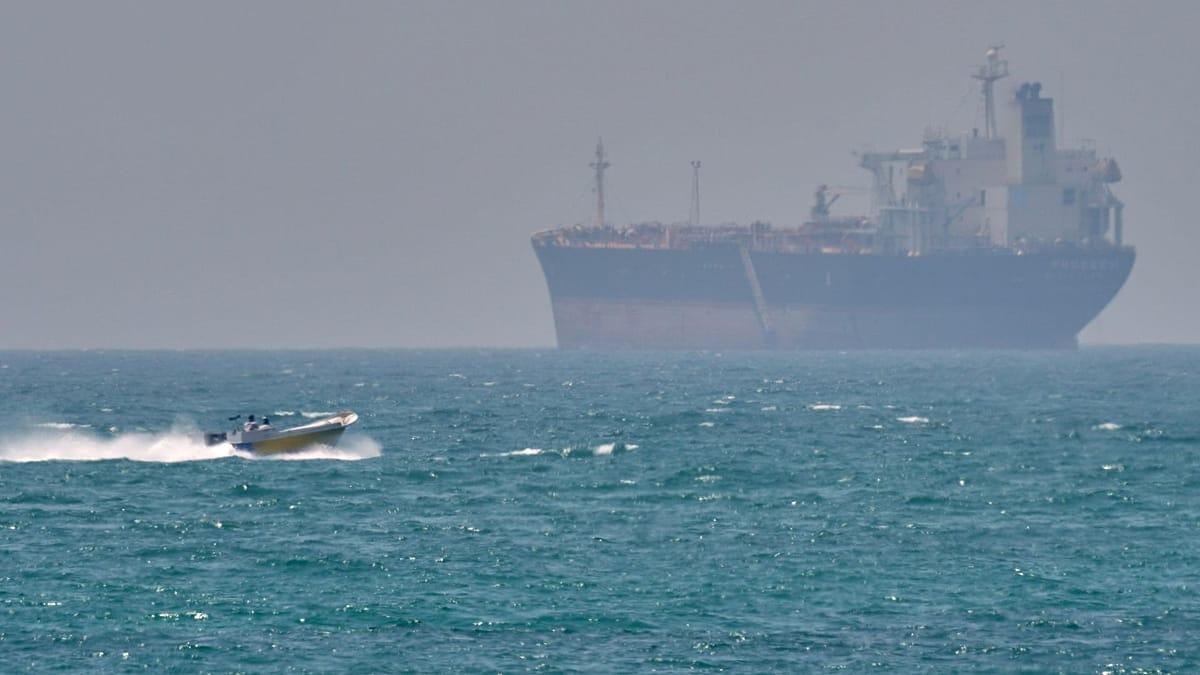
U.S. Treasury Warns Shippers Against Paying Iran Tolls Through Strait Of Hormuz
Key Takeaways
- OFAC warned shippers paying Iran tolls for Hormuz passage could face sanctions.
- U.S. persons and entities are barred from paying Iranian government entities, non-U.S. parties risk sanctions.
- Payments in any form, including charitable donations, to Iran for Hormuz transit may trigger penalties.
OFAC toll warning
The U.S. Treasury Department’s Office of Foreign Assets Control (OFAC) warned U.S. shippers and maritime service providers that they could face sanctions if they pay Iran’s “tolls” to gain access through the Strait of Hormuz.
“President Trump says he is reviewing a new Iranian proposal to end the war President Trump says he is reviewing a new Iranian proposal to end the war WEST PALM BEACH, Fla”
In an advisory released Friday, OFAC said, “U.S. persons and U.S.-owned or -controlled foreign entities are generally prohibited under U.S. sanctions from engaging in transactions with the Government of Iran, including the provision or receipt of services, unless exempt or authorized by OFAC.”
The warning also targeted non-U.S. entities, with OFAC stating that “Maritime service providers should conduct enhanced due diligence around transits through the Strait of Hormuz.”
The Hill reported that OFAC did not specify whether any companies have made indirect payments, while noting that “some ships have paid up to $2 million in toll fees to Tehran since the U.S.-Israeli conflict in Iran began on Feb. 28.”
Stars and Stripes said the U.S. warned shippers that it “will “not hesitate to take action against those supporting Iran’s military, including through ‘toll’ payments.”
The U.S. also framed the payments as more than currency, saying they can include “digital assets, offsets, informal swap, or other in-kind payments, such as nominally charitable donations made to the Iranian Red Crescent Society, Bonyad Mostazafan or Iranian embassy accounts.”
The Hill added that an Iranian Oil, Gas and Petrochemical Products Exporters’ Union spokesperson said Iran would impose a fee of “$1 per barrel of oil” on board tankers, with vessels required to email Iranian authorities about what they are carrying before paying in bitcoin.
Blockade and diversion
The toll warning sits alongside a continuing U.S. naval blockade of Iranian ports in the Strait of Hormuz and the Gulf of Oman.
Stars and Stripes reported that “A U.S. naval blockade targeting Iranian ports in the Strait of Hormuz and the Gulf of Oman began on April 13,” and said U.S. Central Command reported on X that “over the last 20 days 48 vessels have been redirected to ensure compliance with the blockade.”
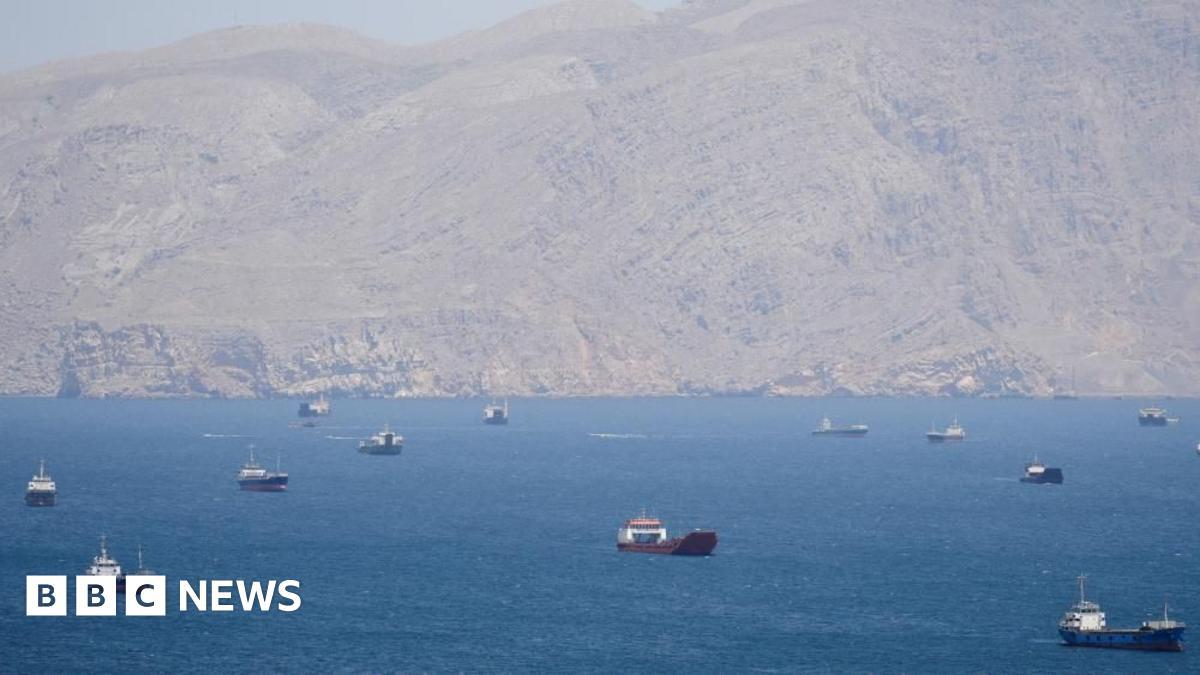
The Hill similarly said the U.S. has rejected Iranian peace proposals, including a latest proposal on Wednesday that would reopen the Strait of Hormuz in exchange for the U.S. lifting its naval blockade on Iranian ports and vessels in the waterway.
The Hill also described how the closure of the Strait of Hormuz has contributed to higher fuel prices, saying “the national average for a gallon of gas reaching $4.39 on Friday, nearly 10 cents higher than it was on Thursday,according to AAA.”
New York Post added that the U.S. responded to Iran’s closure by imposing “a naval blockade of its own on April 13,” and said the Central Command reported “48 commercial ships have been told to turn around since the blockade began.”
Türkiye Today provided additional context on how traffic changed, saying “Normal Hormuz traffic stood at approximately 3,000 vessels per month before the war,” and that “In the entire month of March, only 154 vessels crossed, per Kpler data.”
It also quoted CENTCOM’s X post: “Over the past 20 days, 48 vessels have been redirected to ensure compliance with the blockade,” while describing the “tollbooth” operation as Iran offering safe passage via routes closer to its shore and charging fees.
Diplomacy and Trump’s stance
While OFAC’s warning targets maritime payments, the U.S. and Iran are also trading proposals as a ceasefire holds.
AP reported that President Donald Trump said on Saturday that he was reviewing “a new Iranian proposal to end the war” but expressed skepticism it would lead to a deal, telling reporters, “I’ll let you know about it later,” and adding that “they’re going to give me the exact wording now.”
AP also said Trump posted on social media that he “can’t imagine that it would be acceptable in that they have not yet paid a big enough price for what they have done to Humanity, and the World, over the last 47 years.”
Two semi-official Iranian news outlets, Tasnim and Fars, believed to be close to Iran’s paramilitary Revolutionary Guard, said Iran sent a “14-point proposal via Pakistan” in response to a “nine-point U.S. proposal,” while Iran’s state-run media had not reported the new proposal.
Stars and Stripes described the ceasefire as “holding despite stalled negotiations,” and said Trump rejected Iran’s latest proposal to end the war, saying on Friday that “I’m not satisfied with it, so we’ll see what happens.”
The Hill added that the U.S. has demanded that the Islamic Republic accept more concessions over its nuclear program, which the Iranians insist is intended for peaceful purposes, and said Trump condemned the tolling system idea after Iran announced the plan, telling the country that it “better stop now!”
The Hill further said the Trump administration said Friday the war in Iran was already “terminated” after the countries reached a ceasefire deal “for War Powers Resolution purposes,” and that Trump formally notified Congress on March 2, making Friday the 60-day mark.
Narges Mohammadi’s health
Beyond the Strait of Hormuz dispute, AP and other outlets reported on the worsening health of imprisoned Iranian rights lawyer Narges Mohammadi.
AP said her foundation and family described her condition as “very high risk,” and said Iran’s Intelligence Ministry was opposing her transfer to Tehran for treatment by her own doctors.
AP reported that Mohammadi, a Nobel Peace Prize laureate in her early 50s, was urgently transferred to a hospital in Zanjan in Iran’s northwest on Friday after a cardiac crisis and fainting.
It added that medical teams in Zanjan requested her records before performing any treatment, while recommending that she be transferred to Tehran, and that her husband Taghi Rahmani said the Intelligence Ministry opposed the transfer for angiography, or imaging of the blood vessels.
In a voice message shared with AP by the foundation, Rahmani said, “Until the angiography is done, it is not possible to determine what her main illness currently is,” and Fox40/AP reported that “the Intelligence (Ministry) is still opposing the transfer of Narges to a hospital in Tehran for angiography.”
Fox40/AP also quoted Rahmani: “Until the angiography is done, it is not possible to determine what her main illness currently is,” and said Mohammadi’s brother, Oslo-based Hamidreza Mohammadi, told AP that doctors had not been able to treat her fluctuating blood pressure.
The Norwegian Nobel Committee urged Iranian authorities to immediately transfer Mohammadi to her medical team, saying, “She has the mental resilience for imprisonment, but her body does not have the readiness. The Ministry of Intelligence wouldn’t even mind if (she) died,” as quoted by AP.
Sanctions expansion and executions
The U.S. warning about toll payments is part of a broader sanctions posture that includes actions against Iran-linked networks and individuals, while Iran also carried out executions tied to alleged espionage.
In a separate report, یورونیوز said the U.S. announced sanctions on “35 entities and individuals” on April 28 for their role in Iran’s “shadow banking” structure, and it quoted the Treasury warning that any company that pays “tolls” to the Iranian government or the Islamic Revolutionary Guard Corps (IRGC) to pass through the Strait of Hormuz will face “heavy sanctions.”

It also quoted U.S. Treasury Secretary Scott Bentsen saying, “Iran's shadow banking system functions as a vital financial artery for the country's armed forces and enables activities that disrupt global trade and fuel violence across the Middle East.”
The same report said the Treasury had “frozen about $344 million in cryptocurrency linked to the regime,” and described the policy as “maximum pressure.”
Meanwhile, AP and Fox40/AP reported that Iran hanged two men convicted of spying for Israel, with Mizanonline identifying them as Yaghoub Karimpour and Nasser Bekrzadeh.
AP said Mizanonline reported that Karimpour was accused of sending “sensitive information” to an officer in Israel’s Mossad intelligence agency, while Bekrzadeh allegedly sent details about government and religious leaders as well as information about Natanz.
Fox40/AP added that Iran’s judiciary’s news outlet said the men were hanged after the Supreme Court upheld death sentences, and it reiterated that Iran has hanged “more than a dozen people over alleged espionage and terrorist activities in recent weeks.”
More on Iran

Trump Reviews Iran’s 14-Point Peace Proposal, Questions Whether Tehran Paid Enough Price
27 sources compared
Iran Accuses The United States Of Nuclear Non-Proliferation Treaty Violations, Qatar Urges Hormuz De-Escalation
17 sources compared

Trump Administration Bypasses Congress, Approves $8.6 Billion Arms Sales to Israel, Qatar, Kuwait, UAE
14 sources compared
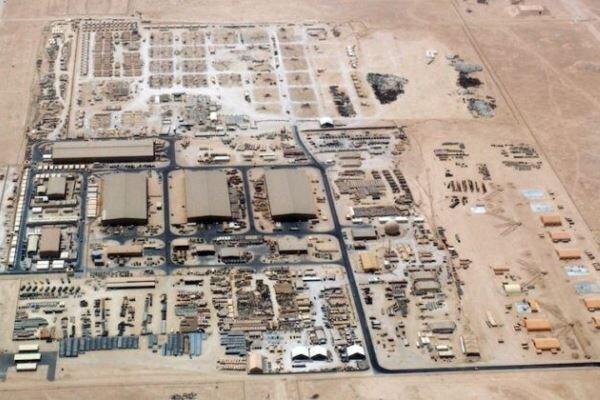
Iran Damaged At Least 16 U.S. Military Sites Across Eight Middle Eastern Countries, CNN Says
10 sources compared