Iran · 01 May, 2026 · 6 min read
Iran Damaged At Least 16 U.S. Military Sites Across Eight Middle Eastern Countries, CNN Says
At least 16 U.S. military sites across eight Middle Eastern countries were damaged. Some damaged sites were rendered unusable or severely degraded.
9 of 10 outlets skipped it: THAAD radar systems at two UAE locations appeared destroyed in satellite imagery (specific THAAD claim)..
ynetnews was read line by line by the Watchdog: 5.1. See the score →
10outlets compared
Same story, two versions
tap a side to read it in full
Türkiye Today
““Three sources told CNN the real cost of the war was closer to $40 billion-$50 billion rather than the $25 billion Pentagon comptroller Jules Hurst had stated to Congress.””Read the original ↗
Gulf News
““Acting Pentagon Comptroller Jules Hurst III told lawmakers on Wednesday that the conflict with Iran had so far cost US taxpayers 25 billion USD.””Read the original ↗
The same conflict is framed with materially different cost baselines, shaping whether the story is primarily about operational damage or budgetary/accounting scope (munitions-only vs reconstruction/asset replacement).
Damaged U.S. Sites
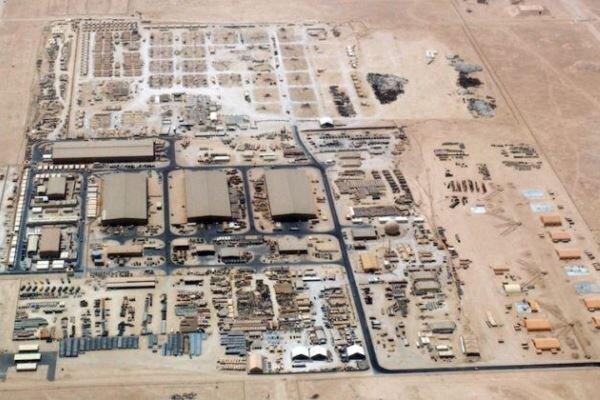
A CNN investigation, cited by multiple outlets, says Iran and its allies damaged at least 16 American military sites across eight Middle Eastern countries during the U.S.-Israeli war with Iran that began on February 28.
“At least 16 American military sites have been damaged in Iranian strikes, making up the majority of US positions in the Middle East”
The report says the damaged facilities constitute the majority of U.S. military positions in the region, with some rendered “virtually unusable.”

CNN’s account, as repeated by Türkiye Today and Gulf News, describes damage spanning runways, radar systems, dozens of aircraft, command headquarters, hangars and satellite communications infrastructure across seven countries.
The same investigation says Iranian strikes targeted advanced U.S. radar systems, communications systems and aircraft, describing them as among the most expensive and difficult-to-replace assets in the region.
In the framing used by Gulf News, a congressional aide familiar with the damage assessments said, “There has been a spectrum of assessments,” ranging from “the whole facility is destroyed and needs to be shut down” to leaders who say the sites are “worth repairing due to the strategic benefit they give the US.”G
The Times of India similarly quotes the same aide describing the scale as unprecedented, adding a U.S. source’s line: “I’ve never seen anything like this before.”
The investigation also includes a Pentagon comptroller figure: Acting Pentagon Comptroller Jules Hurst III told lawmakers on Wednesday that the conflict with Iran had so far cost U.S. taxpayers 25 billion USD, while other outlets cite higher internal estimates.
Cost and Assessment Dispute
The investigation’s findings are paired with a dispute over cost and the completeness of official damage accounting.
Türkiye Today says CNN reported that “Three sources told CNN the real cost of the war was closer to $40 billion-$50 billion rather than the $25 billion Pentagon comptroller Jules Hurst had stated to Congress,” and it adds that NBC News separately reported damage across multiple categories of infrastructure.T

It also notes that Hurst told Congress the $25 billion figure was “mostly munitions,” and that he separately told Pentagon budget briefers the department did not “have a final number for what the damage is to our installations overseas” and that it depended “on how we decide to rebuild those, or if we do.”
Gulf News repeats the $25 billion figure attributed to Hurst and adds that repairs to the U.S. GNavy Fifth Fleet headquarters could total $200 million alone, citing “one congressional official” speaking to The New York Times following a Pentagon assessment.
The New Republic adds that “Within the first two weeks of the war, Iran’s attacks on U.S. military bases caused an estimated $800 million in damage,” citing “a report by the Center for Strategic and International Studies and a BBC analysis.”
In the same thread of disagreement, Stars and Stripes says “Asked about the extent of damage to U.S. bases, a U.S. defense official declined to comment on battle damage assessments,” and it quotes the official’s refusal to discuss assessments for security reasons.
Across outlets, the Pentagon’s position is consistent: the Pentagon declined to provide battle damage assessments, with a spokesman saying, “We do not discuss battle damage assessments for operational security reasons. Our forces remain fully operational and we continue to execute our mission with the same readiness and combat effectiveness.”
Targets and Specific Bases
Multiple outlets describe the types of assets hit and, in some cases, name specific bases and equipment.
“a dozen MQ-9 Reaper drones”
Türkiye Today says Iran’s main targets included advanced U.S. radar systems, communications systems and aircraft, and it adds that CNN’s investigation found at least 16 American military sites across eight countries had been damaged.T
It also says NBC News detailed extensive damage including “at least one fighter jet, a dozen MQ-9 Reaper drones, two MC-130 tankers, helicopters and the E-3 Sentry,” and it reports that THAAD radar systems at two UAE locations appeared to have been destroyed in satellite imagery.
The New Republic provides a more concrete example, saying that at Prince Sultan Air Base in Saudi Arabia, a Boeing E-3 Sentry aircraft “was destroyed,” and it describes the aircraft as “currently out of production.”
ynetnews similarly says the E-3 Sentry surveillance aircraft, known as “the eyes of the United States in the Gulf,” was destroyed at Prince Sultan Air Base in Saudi Arabia, and it ties radar and communications damage to specific locations such as Camp Arifjan in Kuwait and Muwaffaq Salti Air Base in Jordan.
ynetnews also lists additional bases hit, including Al Udeid Air Base in Qatar, Naval Support Activity Bahrain and Camp Buehring in Kuwait.
The Stars and Stripes report adds that Iranian drones and missiles pummeled Bahrain’s NAVCENT headquarters and that the Pentagon rushed to evacuate dependents and non-essential personnel from the island amid closed airspace and ongoing explosions.
Ceasefire, Blockade, and Escalation
The damage assessment is situated within a timeline of strikes, ceasefires, and subsequent U.S. actions described in the sources.
Türkiye Today states that “The U.S. and Israel launched strikes on Iran on Feb. 28,” and it says the strikes prompted retaliation from Tehran against Israel and U.S. allies in the Gulf, including “the closure of the Strait of Hormuz.”
It then says “A two-week ceasefire was announced on April 8 through Pakistani mediation and followed by direct talks in Islamabad on April 11-12, though no lasting agreement was reached.”
Türkiye Today adds that U.S. TPresident Donald Trump later extended the ceasefire without setting a new deadline, “following a request from Pakistan,” and it says “Since April 13, the U.S. has imposed a naval blockade targeting Iranian maritime traffic in the waterway.”
Stars and Stripes describes the broader operational context as “Operation Epic Fury” and says Iranian retaliation involved “thousands of drones and missiles fired at U.S. bases and host nations in the Persian Gulf,” with radar systems, hangars, warehouses and command centers taking heavy fire “over the course of six weeks.”
It also says “Strikes waned as a temporary ceasefire agreement took effect,” and it describes the holding pattern as “both sides are now in a holding pattern as diplomatic negotiations start and stall.”
In addition, Türkiye Today reports that Hurst’s $25 billion figure was not reflected in the Pentagon’s “$1.5 trillion FY2027 budget request,” and it says Hurst confirmed the repair cost was “not reflected” and that “Our partners also might contribute a share for that construction.”T
Regional Reactions and Implications
The sources also connect the damage to political reactions among host nations and to questions about future U.S. posture.
“This war showed that the alliance with the U.S. is neither unique nor invincible.”
Türkiye Today says Gulf Arab nations hosting U.S. bases were “privately criticizing the Trump administration for starting the war without prior consultation,” and it includes a Saudi source’s assessment that “This war showed that the alliance with the U.S. is neither unique nor invincible.”T

Gulf News repeats that same Saudi source line, and LIGA.net similarly quotes a regional reaction that “The war showed us that the alliance with the United States cannot be exclusive and that it is not impregnable.”G
In Stars and Stripes, Will Todman of the Center for Strategic and International Studies is quoted saying, “So much depends on how this war with Iran ends, or if it ends,” and it adds that “There are so many questions we don’t have the answers to.”
Stars and Stripes also quotes Vali Nasr saying, “The U.S. ultimately, not only wasn’t able or willing to defend the Gulf countries, it couldn’t actually really defend itself,” and it frames the damage as beyond expectations for what Iranians would do there.
The same report describes Bahrain’s role and says it “has hosted the headquarters of U.S. Naval Forces Central Command,” and it states that “As of this year, it was home to at least 8,300 American personnel, including service members, civilians and their families.”
Finally, Stars and Stripes says “When — and how — U.S. forces resume normal operations in the theater is still unclear,” reinforcing that the consequences are still unfolding as negotiations “start and stall.”