Iran Submits 14-Point Response to U.S. Proposal to End War After Feb. 28 Attacks
Key Takeaways
- Iran submits a 14-point plan to end the war via Pakistani mediators.
- Iran's 14-point plan responds to Washington's 9-point peace proposal.
- Trump says he's reviewing the proposal and not satisfied with it.
Iran’s 14-point response
Iran submitted a 14-point response to a U.S. proposal to end the war that began with U.S. and Israeli attacks on Iran on February 28, according to the semi-official Tasnim news agency and the state-owned media organization Press TV, as NPR reported.
NPR said the plan’s key points include a demand to resolve all issues and end the war within 30 days, instead of observing a two-month ceasefire as the U.S. had proposed.

The Iranian outlets listed additional demands including guarantees against future military aggression, the withdrawal of U.S. forces from Iran's periphery, an end to the naval blockade, the release of frozen Iranian assets, payment of reparations, the lifting of sanctions, an end to fighting in Lebanon, and a new mechanism governing the Strait of Hormuz.
NPR also reported that an Iranian official said Friday that the document had been handed to Pakistan, but did not disclose its terms.
NPR further noted that President Trump said on Saturday he is reviewing the new proposal, and that the U.S. previously presented Iran with a 15-point framework demanding, among other things, the complete reopening of the Strait of Hormuz and an end to Iran's nuclear program.
In the same reporting, Trump told reporters on Friday, "They want to make a deal, I'm not satisfied with it, so we'll see what happens," and NPR said it had not independently verified the contents of the proposal.
Pakistan as mediator
Multiple outlets described Pakistan as the conduit for messages between Washington and Tehran as the ceasefire and negotiations continued.
PBS, citing Associated Press reporting, said two semiofficial Iranian outlets, Tasnim and Fars, believed to be close to Iran's paramilitary Revolutionary Guard, said Iran has sent a 14-point proposal via Pakistan in response to a nine-point U.S. proposal.

PBS reported that Trump said on Saturday he was reviewing the new Iranian proposal to end the war and told reporters, "I'll let you know about it later," adding that "they're going to give me the exact wording now."
PBS also said the three-week ceasefire appears to be holding and that the U.S. president floated a new plan to reopen the Strait of Hormuz, where about a fifth of the world's trade in oil and natural gas typically passes.
The Guardian similarly reported that Iran had passed a new proposal to Pakistani mediators and that Trump said he was not “satisfied” by it, quoting Trump as saying, "Right now, we have talks going on, they’re not getting there," and that his options remained "either blast them away or make a deal."
The Guardian also described Pakistan’s role shifting from direct back-channel diplomacy to passing messages after direct talks stalled, and it quoted Tahir Andrabi, the spokesperson for Pakistan’s foreign ministry, saying, "The clock on diplomacy has not stopped," before the article cut off.
Trump’s rejection and options
While Iranian outlets and mediators described a new proposal being passed to Pakistan, U.S. statements in the reporting emphasized rejection and narrowed options.
The Guardian quoted Trump telling reporters, "Right now, we have talks going on, they’re not getting there," and said he added that his options remained "either blast them away or make a deal."
The Guardian also reported that Trump did not elaborate on what he saw as the latest proposal’s shortcomings, but said, "They’re asking for things I can’t agree to."
BreakingNews.ie likewise said Trump rejected the plan almost as soon as it was delivered and quoted him saying, "They want to make a deal, I’m not satisfied with it, so we’ll see what happens," while describing the ceasefire as shaky and still holding.
The Times of Israel reported Trump as saying he was dissatisfied with a new ceasefire offer from Tehran and quoted him: "They want to make a deal, but I’m not satisfied with it," and, "They’re asking for things that I can’t agree to."
The Times of Israel also quoted Trump confirming he had been briefed on ways to “blast the hell out of them” if no deal were reached, and it quoted him again on the options: "Do we want to go and just blast the hell out of them and finish them forever, or do we want to try and make a deal — those are the options."
Iran’s diplomatic framing
Iran’s messaging to foreign envoys and its legal framing of the proposal were described in the reporting as Washington’s choice between diplomacy and confrontation.
ایـران اینترنشنال reported that Iran briefed foreign ambassadors in Tehran and said the plan had been submitted to Pakistan as mediator, with Washington required to choose between diplomacy and confrontation.
The outlet quoted Kazem Gharibabadi, Iran’s deputy foreign minister for legal and international affairs, saying, "The Islamic Republic of Iran has submitted its plan to Pakistan as mediator with the aim of permanently ending the imposed war, and now the ball is in America’s court to choose the path of diplomacy or the continuation of a confrontational approach."
It also quoted Gharibabadi adding that Iran was fully prepared to repel any attack against the country and its people, while adding that Tehran still believed in diplomacy based on national interests.
The same report said that before the meeting with foreign envoys, the ambassadors of China and Russia held a trilateral meeting with Gharibabadi.
BreakingNews.ie added that Iran’s foreign minister, Abbas Araghchi, held a flurry of calls on Friday with regional counterparts including Turkey, Egypt, Qatar, Saudi Arabia, Iraq and Azerbaijan, and that European Union foreign policy chief Kaja Kallas also spoke over the phone with Araghchi.
Stakes: Hormuz, sanctions, and rights
The reporting tied the proposal dispute to the Strait of Hormuz, U.S. sanctions pressure, and the health and legal status of Iranian prisoners.
PBS said the U.S. president floated a new plan to reopen the Strait of Hormuz and that the U.S. warned shipping companies they could face sanctions for paying Iran to pass safely through the strait, adding pressure in the standoff over control of it.

PBS also said Iran effectively closed the strait by attacking and threatening ships after the U.S. and Israel launched a war on Feb. 28, and that Tehran later offered some ships safe passage via routes closer to its shore, charging fees at times.
PBS reported that the U.S. responded with a naval blockade of Iranian ports since April 13, depriving Tehran of oil revenue it needs to shore up its ailing economy, and it said the U.S. Central Command on Saturday said 48 commercial ships have been told to turn back.
The Guardian added that the U.S. Treasury Office warned on Friday that any shipping companies that paid tolls to Iran for passage through the strait, including charitable donations to organisations such as the Iranian Red Crescent Society, would risk punitive sanctions.
Beyond the maritime standoff, PBS and BreakingNews.ie described Narges Mohammadi’s deteriorating health and transfer to a hospital in Zanjan in Iran’s northwest after a cardiac crisis and fainting, with PBS reporting that her foundation and family said her health was at "very high risk" and that Iran's Intelligence Ministry was opposing her transfer to Tehran for treatment by her own doctors.
More on Iran
Iran Accuses The United States Of Nuclear Non-Proliferation Treaty Violations, Qatar Urges Hormuz De-Escalation
17 sources compared

Trump Administration Bypasses Congress, Approves $8.6 Billion Arms Sales to Israel, Qatar, Kuwait, UAE
14 sources compared
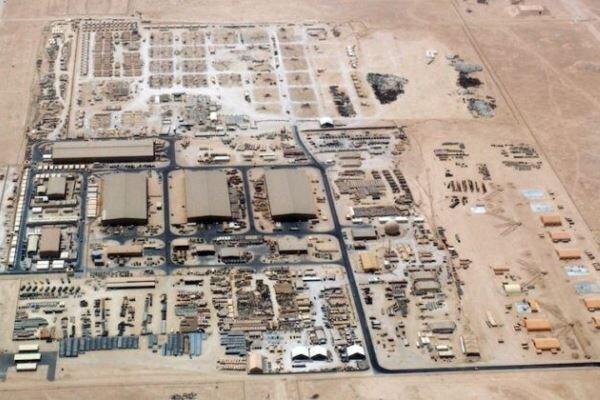
Iran Damaged At Least 16 U.S. Military Sites Across Eight Middle Eastern Countries, CNN Says
10 sources compared
Iran Sends Seyed Abbas Araghchi to Pakistan, Oman, and Russia to Strengthen Deterrence
11 sources compared