Iran15 April, 20268 min read
Pentagon Chief Pete Hegseth Says U.S. Naval Blockade of Iran Ports Will Last ‘As Long As It Takes’
This article is an automated aggregation of coverage from news outlets. Our editorials offer in-depth analysis curated by the NewsCord team.
Blockade targets Iran's ports and coastline, not the Strait of Hormuz, per US statements. Hegseth vows the blockade lasts 'as long as it takes,' including energy facilities strikes.
Blockade, not just Hormuz
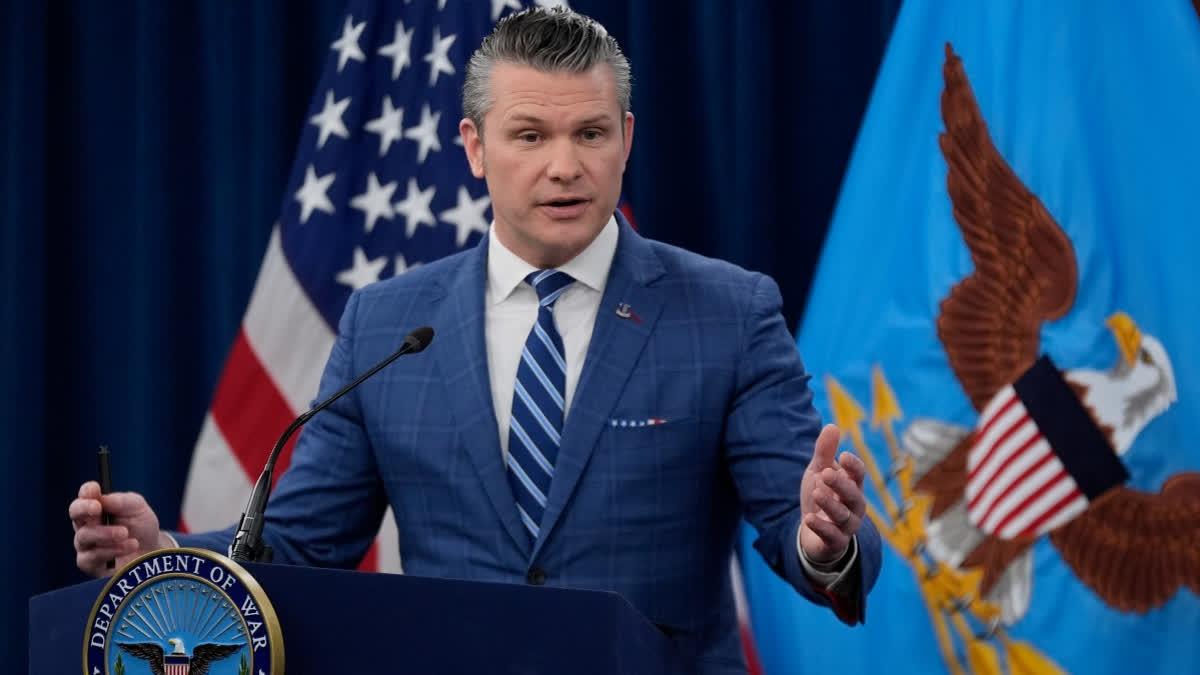
The United States has moved to enforce a naval blockade targeting Iran’s ports and coastline, with Pentagon chief Pete Hegseth saying it will continue “as long as it takes.” In remarks reported by Al Jazeera, Hegseth said the military blockade of Iran’s ports will continue “as long as it takes,” and he framed the pause in fighting as a period in which Washington remained “locked and loaded” to attack Iran’s energy facilities. Hegseth spoke as a “tenuous pause in fighting agreed to last week has continued,” and he said the U.S. was monitoring Iran’s military movements during the pause.
The scope of the blockade became a point of emphasis across outlets: Euronews reported that the U.S. would prevent all shipping from entering or exiting Iranian ports in the Strait of Hormuz for “as long as it takes,” while ANI reported the Pentagon’s clarification that the blockade is “not a blockade of the Strait of Hormuz.” Chairman of the Joint Chiefs of Staff General Dan Caine told reporters that “this blockade applies to all ships, regardless of nationality, heading into or from Iranian ports,” and he added that “The US action is a blockade of Iran's ports and coastline, not a blockade of the Strait of Hormuz.” CNBC also echoed the distinction, noting Caine said “The U.S. action is a blockade of Iran's ports and coastline, not a blockade of the Strait of Hormuz,” and that it “applies to all ships, regardless of nationality, heading into or from Iranian ports.”

Warnings, turnarounds, and force
As the blockade took effect, U.S. officials described a pattern of warnings and turnarounds rather than immediate boarding.
Al Jazeera reported that General Dan Caine said, “If you do not comply with this blockade, we will use force,” and it also stated that “so far, 13 ships leaving Iranian ports have turned around in response to US military warnings.”

Hindustan Times similarly said Caine warned that “the US military will “use force” if any vessels do not comply with the blockade,” and it added that “So far, 13 ships have made the wise choice of turning around.”
CNBC reported that “The U.S. Navy has turned back 13 ships since its blockade of Iranian ports in the Persian Gulf and the Gulf of Oman began more than 24 hours earlier,” and it described the warning script: “Do not attempt to breach the blockade. Vessels will be boarded for interdiction and seizure transiting to or from Iranian ports. Turn around or prepare to be boarded. If you do not comply with this blockade, we will use force.”
NBC News reported a slightly different count, saying “American warships issued warnings to 10 vessels, prompting them to turn around,” and it stated that “No shots were fired in the encounters, according to a U.S. official, and U.S. personnel did not board any of the vessels before they reversed course.”
PBS, citing Adm. Brad Cooper, said the blockade “has been fully implemented,” and it described how U.S. forces “have completely halted economic trade going in and out of Iran by sea.”
CBS News added that CENTCOM said the blockade was “fully implemented,” and it reported that a U.S. destroyer interdicted “two oil tankers on Tuesday in the Strait of Hormuz,” while also noting that “more than 20 other ships not from Iranian ports transited safely through the strait.”
Rearming during the ceasefire
U.S. officials tied the blockade to a broader military posture during a ceasefire pause, with repeated emphasis on rearming and intelligence. Al Jazeera reported that Hegseth said, “We are reloading with more power than ever before … even more importantly, better intelligence than ever before,” and it quoted him saying, “As you expose yourself with your movement to our watchful eye, we are locked and loaded on your critical dual-use infrastructure, on your remaining power generation and on your energy industry.” The same Al Jazeera account said the Pentagon chief maintained that the U.S. would prefer to resolve the conflict through diplomacy, but it warned that “for the people of Iran” the U.S. offered “a golden bridge,” while also saying “in the meantime and for as long as it takes, we will maintain this blockade.”
Euronews reported that Hegseth said the U.S. navy was employing “less than 10% of America’s naval power” to enforce the blockade, and it added a detailed inventory of U.S. warships in the Middle East: “16 warships, including 11 destroyers, three amphibious assault ships, an aircraft carrier, and a littoral combat ship.” ETV Bharat similarly quoted Hegseth saying the U.S. navy is employing “less than 10% of America’s naval power,” and it stated that “The Navy currently has 16 warships, including 11 destroyers, three amphibious assault ships, an aircraft carrier, and a littoral combat ship.” Al Jazeera also reported that Admiral Brad Cooper said the U.S. was using the ceasefire period to “rearm” and “adjust” tactics, techniques and procedures, and it quoted him: “We’re rearming, we’re retooling, and we’re adjusting our tactics, techniques and procedures.”
PBS described the blockade’s enforcement approach as “impartially against all vessels of all nations entering or leaving coastal areas or ports in Iran,” and it said the U.S. relied on tracking beacons called AIS to determine merchant ships’ origins. In parallel, ANI reported that the Pentagon said the joint force remained “postured and ready to resume major combat operations at "literally a moment's notice",” and it said the U.S. would actively pursue Iranian-flagged vessels and “dark fleet vessels carryingIranian oil.”
Negotiations and distrust
While the U.S. blockade hardened, diplomacy continued alongside it, but Al Jazeera described persistent distrust around the talks.
Al Jazeera reported that “On Wednesday, a Pakistani delegation arrived in Tehran to coordinate a new round of talks,” and it said both sides indicated they remained open to further negotiations.

The same report quoted Major-General Ali Abdollahi, commander of the Khatam al-Anbiya Central Headquarters of the Islamic Revolutionary Guard Corps (IRGC), warning that the U.S. blockade could end the current pause in fighting.
White House spokesperson Karoline Leavitt told reporters, “At this moment, we remain very much engaged in these negotiations, in these talks,” and Al Jazeera’s reporting from Tehran said “deep-seated distrust remains.”
Al Jazeera’s Ali Hashem said, “Clearly, there have been several messages conveyed to the Iranians. But rather than consolidating a feeling of trust and optimism, it seems that it’s already shaken,” and he added that a platform associated with the foreign ministry was tweeting that media optimism was “just hype.”
The report also connected the negotiations to Lebanon, quoting Iran’s speaker of parliament, Mohammad Bagher Ghalibaf, telling his Lebanese counterpart on Thursday that a ceasefire in Israel’s invasion and ongoing bombardment of Lebanon is “as important” as the pause in fighting in Iran.
It further stated that “Getting Israel to agree to a Lebanon ceasefire has emerged as one of the main sticking points in talks,” alongside control of the Strait of Hormuz and the future of Iran’s nuclear programme.
Hindustan Times added that Pakistan army chief Asim Munir was set to meet Iranian officials in Tehran, and it said the White House indicated any further talks would likely take place in Islamabad.
CBS News reported that Pakistan Prime Minister Shehbaz Sharif would travel to Saudi Arabia, Qatar and Turkey to facilitate a second round of U.S.-Iran talks before a two-week truce expires, and it said Trump told Fox Business that the next round of talks could take place “over the next two days.”
Economic pressure and global risk
The blockade’s stated purpose was to pressure Iran’s economy and energy infrastructure, and multiple outlets described immediate effects on shipping and trade. CBS News said CENTCOM reported the blockade was “fully implemented” and that “An estimated 90% of Iran's economy is fueled by international trade by sea,” adding that “In less than 36 hours since the blockade was implemented, U.S. forces have completely halted economic trade going into and out of Iran by sea.” PBS similarly said the blockade “has been fully implemented” and that U.S. forces “have completely halted economic trade going in and out of Iran by sea,” while describing how Iran-linked or sanctioned vessels that left the Persian Gulf “have stopped or turned around.”
Euronews reported that the blockade came into effect on Monday and that Trump warned any attack ships would be “eliminated” if they attempted to break it, while also quoting Trump’s Truth Social post that “Warning: If any of these ships come anywhere close to our blockade, they will be immediately eliminated.” Euronews also tied the blockade to global energy constraints, stating that traffic through the waterway had been “almost completely blocked” since US-Israeli air strikes on 28 February and that the International Energy Agency chief warned on Thursday that Europe only has “maybe six weeks or so of jet fuel left,” if supplies remain blocked. Al Jazeera’s account similarly said the U.S. was “locked and loaded” on Iran’s “energy industry,” and it quoted Hegseth’s warning that “if Iran chooses poorly, then they will have a blockade and bombs dropping on infrastructure, power and energy.”
PBS provided a granular view of evasion tactics, describing ships that “jammed or faked their locations,” and it cited the Chinese-owned tanker “The Rich Starry,” which “turned off its transponder for more than a week” in a tactic called “running dark.” NBC News reported that the U.S. military was using “more than 100 U.S. fighter and surveillance aircraft” and “more than a dozen ships” to enforce the blockade, and it said the U.S. was stopping vessels as they enter the Gulf of Oman after they go through the Strait of Hormuz.