
Pentagon Email Floats Suspending Spain From NATO Over Iran War Access Dispute
Key Takeaways
- Internal Pentagon email floated suspending Spain from NATO over Iran war rift.
- Memo proposed reviewing the U.S. position on Britain's Falkland Islands claim.
- Spain dismissed the reports and refused access to bases or airspace.
Pentagon email and NATO
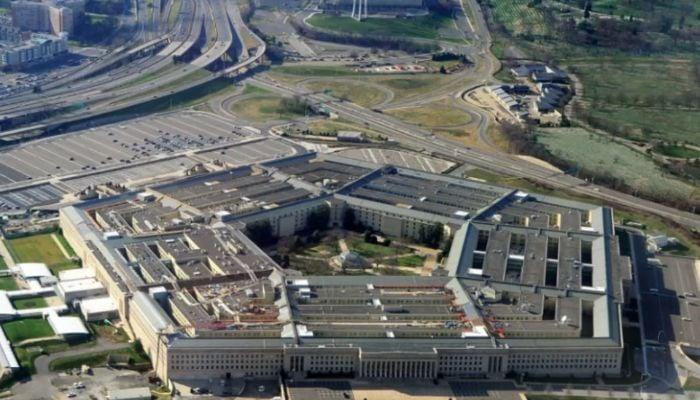
An internal Pentagon email outlined options for the United States to punish NATO allies it believes failed to support U.S. operations in the war with Iran, including suspending Spain from the alliance and reviewing the U.S. position on Britain's claim to the Falkland Islands, a U.S. official told Reuters.
“Factbox-What to know about the Falkland Islands as US considers reassessing position By Sam Tabahriti LONDON, April 24 (Reuters) - The United States could seek to punish Britain for its lack of support on the Iran war by reviewing its position on London's claim to the Falkland Islands, an internal Pentagon email described to Reuters by a U”
The policy options were detailed in a note expressing frustration at some allies' perceived reluctance or refusal to grant the United States access, basing and overflight rights—known as ABO—for the Iran war, the official said on condition of anonymity.

The email stated that ABO is "just the absolute baseline for NATO," and the official said the options were circulating at high levels in the Pentagon.
One option in the email envisioned suspending "difficult" countries from important or prestigious positions at NATO, according to the official.
Reuters reported that the email does not suggest the United States would withdraw from NATO, and it also does not propose closing bases in Europe.
Pentagon Press Secretary Kingsley Wilson responded to the report by saying, "As President Trump has said, despite everything that the United States has done for our NATO allies, they were not there for us."
Wilson added, "The War Department will ensure that the President has credible options to ensure that our allies are no longer a paper tiger and instead do their part."
Spain rejects the report
Spain dismissed reports that the Pentagon was considering punitive measures against Madrid for its reluctance to support U.S. operations in the Iran war, as the rift with President Donald Trump deepened.
Reuters reported that the internal email outlined options including suspending Spain from NATO, after Spain refused to grant U.S. forces access to its military bases or airspace, saying that U.S.-Israeli actions in the Iran war contravene international law.

Spanish Prime Minister Pedro Sanchez told reporters, “Well, we do not work with emails," and he added, “We work with official documents and positions taken, in this case, by the government of the United States.”
In the Independent’s account, Sanchez doubled down on Spain’s stance by saying, “The position of the government of Spain is clear: absolute collaboration with the allies, but always within the framework of international legality.”
The India Today report similarly described Sanchez dismissing the Reuters report and quoting him: “We do not work off of emails, we work from official documents and position.”
Jang’s report said Sanchez was attending a summit in Cyprus when he dismissed the threats with “absolute calm,” and it quoted him saying, “We do not work with emails. We work with official documents and positions taken by the government of the United States.”
Jang also described Sanchez defending Spain’s stance as a “loyal partner” that acts “always within the framework of international legality.”
Trump, Hormuz, and bases
The Pentagon email reporting sits alongside President Donald Trump’s public criticism of NATO allies over the Iran conflict and the closure of the Strait of Hormuz to global shipping.
“Gift this articleShare to FacebookPrint article Article printing is available to subscribers only Print in a simple, ad-free format Subscribe Comments: SaveZen Reading Zen reading is available to subscribers only Ad-free and in a comfortable reading format Subscribe”
CNBC reported that Trump “has harshly criticized NATO allies for not sending their navies to help open the Strait of Hormuz,” which CNBC said was “closed to global shipping following the start of the air war on February 28.”
CNBC also reported that Trump said he was considering withdrawing from the alliance, and it quoted him asking Reuters on April 1, “Wouldn't you if you were me?”
The same CNBC account said the email did not suggest the United States would withdraw from NATO, and it said it also did not propose closing bases in Europe.
The CNBC report described the U.S. frustration with Spain’s Socialist leadership, saying Spain said it would not allow its bases or airspace to be used to attack Iran.
CNBC specified that “The United States has two important military bases in Spain: Naval Station Rota and Morón Air Base.”
In the CNBC account, the internal email’s approach was described as sending a signal to NATO allies with the goal of “decreasing the sense of entitlement on the part of the Europeans,” and it said suspending Spain would have “a limited effect on U.S. military operations but a significant symbolic impact.”
Falklands and historical framing
The internal Pentagon email also floated reviewing the U.S. position on Britain’s claim to the Falkland Islands, according to Reuters reporting described in Al-Monitor.
Al-Monitor said the proposal on the remote British-ruled archipelago in the South Atlantic was among a range of options being considered by President Donald Trump’s administration to pressure NATO allies it believed failed to support U.S. military operations in the war with Iran.

Al-Monitor provided background on the Falklands, describing them as “a group of islands in the South Atlantic Ocean” about “500 km (300 miles) east of the Argentine mainland” and roughly “13,000 km from Britain.”
It said the islands consist of “two main islands, East Falkland and West Falkland, and 778 smaller islands,” and it described the population as “about 3,660.”
Al-Monitor traced the dispute to Argentina’s claim of sovereignty over the islands, which it said Argentina calls “the Malvinas,” and it described Britain’s argument that islanders have a right to decide their own future.
It also recounted the 1982 war, saying Argentina’s military government led by Leopoldo Galtieri ordered the invasion and that Britain’s then-Prime Minister Margaret Thatcher sent a naval task force and regained control after “74 days of fighting.”
Al-Monitor stated that “Argentina surrendered in June 1982,” and it gave the casualty totals as “649 Argentine soldiers” and “255 British service personnel” plus “three Falkland islanders.”
Different outlets, same dispute
While Reuters reporting anchored the story, the outlets diverged in how they framed the significance of the Pentagon email and the response from Spain.
CNBC emphasized the internal email’s options and linked them to Trump’s broader NATO pressure campaign, saying the email’s approach aimed at “decreasing the sense of entitlement on the part of the Europeans,” and it described the suspension of Spain as having “a limited effect on U.S. military operations but a significant symbolic impact.”
The Independent focused on Spain’s dismissal, stating that Spain “has dismissed reports suggesting the Pentagon is considering punitive measures against the country,” and it centered Sanchez’s insistence that Spain works from “official documents and positions taken.”
Al-Monitor, by contrast, treated the Falklands as a background issue, presenting the Reuters-described proposal as part of a pressure package and then laying out the islands’ geography, governance, and the 1982 war details.
Jang framed the episode as a “boiling point” and described the email as “leaked correspondence,” while quoting the claim that the email said the operation is “just the absolute baseline for NATO” and that it explored punishing “difficult” allies by stripping them of prestigious roles.
The Diplomatic Insight similarly described the email as suggesting measures against “countries seen as uncooperative,” and it said the email floated “the possibility of sidelining certain allies, most notably Spain, from key NATO roles.”
Haaretz, in its Reuters-based item, presented the same core claim that “An internal Pentagon email outlines options for the United States to punish NATO allies it believes failed to support U.S. operations in the war with Iran,” including suspending Spain and reviewing the Falklands position.
What comes next
The reporting also set out what the U.S. and Spain said about next steps and the limits of what the email would do.
CNBC reported that the Pentagon email did not suggest the United States would withdraw from NATO and did not propose closing bases in Europe, while it said the options were circulating at high levels in the Pentagon.
It also reported that the official declined to say whether the options included a widely expected U.S. drawdown of some forces from Europe, leaving that element unspecified.
CNBC said the email did not disclose how the United States might pursue suspending Spain from the alliance, and it reported that Reuters could not immediately determine whether there was an existing mechanism at NATO to do so.
In response to the report, Kingsley Wilson said, "The War Department will ensure that the President has credible options to ensure that our allies are no longer a paper tiger and instead do their part."
The Diplomatic Insight added that it remained unclear how any proposals could be implemented, especially given NATO’s structure, while it said the discussion highlighted “growing strains within the alliance.”
Al-Monitor’s factbox underscored that the Falklands dispute is still active in international diplomacy, saying the United Nations lists the Falklands as a non-self-governing territory and has called on Britain and Argentina to resume talks to resolve the dispute peacefully.
More on USA

DOJ Ends Criminal Probe Into Fed Chair Jerome Powell, Clearing Way for Kevin Warsh Confirmation
20 sources compared

Trump Administration Sanctions Hengli Petrochemical And 40 Shippers Over Iranian Oil
16 sources compared

Trump Administration Considers Suspending Spain From NATO Over Iran War Support
15 sources compared
Pentagon Email Outlines Options To Suspend Spain From NATO Over Iran War Access
16 sources compared