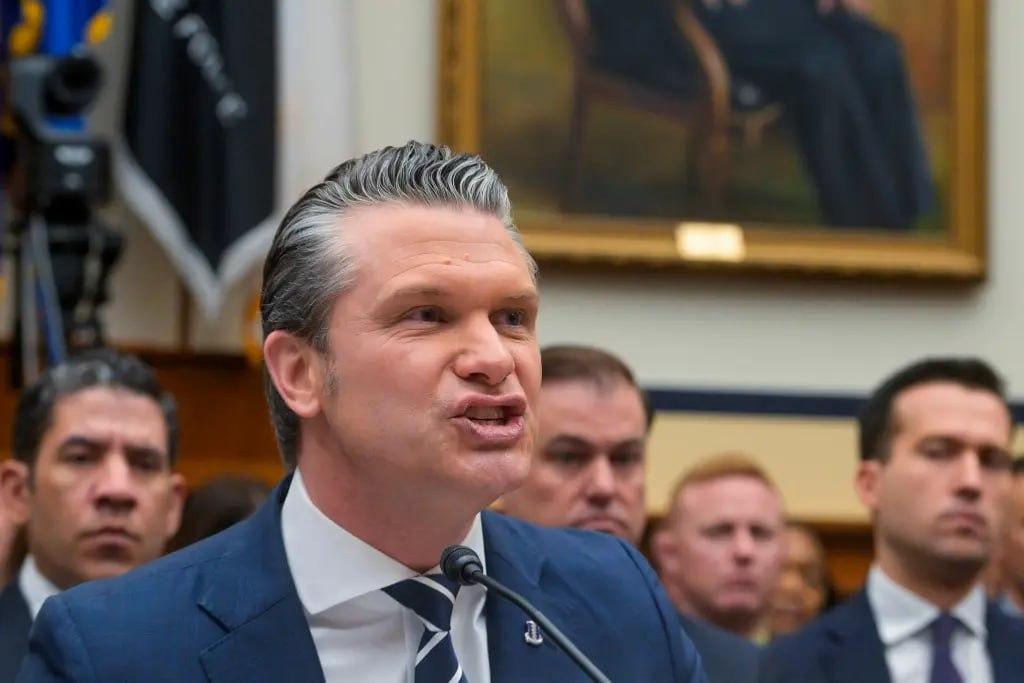
Pentagon Says Iran War Costs $25 Billion So Far, Acting Comptroller Jules Hurst III Tells Congress
Key Takeaways
- Iran war has cost about $25 billion to date, says Pentagon comptroller Jules Hurst III.
- He testified during a long House Armed Services Committee hearing on war costs.
- Some reports say the figure excludes base repair costs, possibly higher.
Pentagon’s $25B figure
The Pentagon told U.S. lawmakers that the Iran war has cost about $25 billion so far, with acting Pentagon comptroller Jules Hurst III describing the spending as concentrated in munitions.
In a House Armed Services Committee hearing, Hurst said, “Approximately [to] this day, we’re spending about $25 billion on Operation Epic Fury, most of that in munitions,” and he added that there was “part of that, it’s obviously [operations and maintenance] and equipment replacement.”

CNN reported that three people familiar with the matter said the $25 billion estimate was a “lowball figure” that “does not include the cost of repairing extensive damage suffered by US bases in the region.”
CNN said one source put the real cost estimate “closer to $40-50 billion when accounting for the costs of rebuilding US military installations and replacing destroyed assets.”
Politico described the $25 billion number as “the most specific price tag the administration has provided” for the conflict, which it said had stretched “two months.”
NBC News similarly quoted Hurst telling the committee’s top Democrat, Rep. Adam Smith, “Approximately, of this day, we're spending about $25 billion on Operation Epic Fury,” and said Hurst told lawmakers most of the costs were from munitions while also including “operations, maintenance and equipment replacements.”
TRT World framed the same $25 billion estimate as “the first official estimate of the military's price tag for the conflict,” while also noting that Hurst did not detail whether the figure included rebuilding and repairing base infrastructure damaged in Iranian retaliation.
What the Pentagon said it included
Across multiple outlets, Hurst’s testimony emphasized that the $25 billion figure reflected munitions spending and that the Pentagon had not finalized a comprehensive damage estimate for overseas installations.
CNN reported that Hurst told reporters during budget briefings last week that the Pentagon does not “have a final number for what the damage is to our installations overseas,” and that it depends “on how we decide to rebuild those, or if we do.”

CNN also said Hurst noted the cost to repair facilities was “not reflected” in the Pentagon’s $1.5 trillion budget request for fiscal year 2027 because the department was still assessing “what we want to construct in the future.”
NBC News described Hurst’s explanation to lawmakers as a response to questions about whether Congress had been updated on costs, with Hurst saying the total “reflects the munitions that have been spent to date and other operational costs.”
The Hill and USA Today both quoted Hurst’s remarks that “Most of that is ammunitions,” and The Hill added that Hurst said the supplemental request would be formulated “once we have a full assessment of the cost of the conflict.”
Politico reported that Hurst told lawmakers the administration would make a supplemental request “once we have a full assessment of the cost of the conflict,” and it quoted Ranking member Adam Smith saying, “I’m glad you answered that question, because we’ve been asking for a hell of a long time, and no one’s given us the number.”
NBC News also captured a specific exchange with Rep. Maggie Goodlander, who criticized the lack of a breakdown, telling Hegseth, “We are 60 days in to your war of choice in Iran and you can’t give us an answer on the basic breakdown of American taxpayer dollars that have been spent?”
Damage claims and the $40-50B dispute
CNN’s reporting added a second layer to the cost debate by tying the lower $25 billion estimate to damage at U.S. sites across the Gulf and to equipment losses that CNN said were caused by Iranian strikes early in the war.
CNN wrote that “Iranian strikes across the Gulf in the early days of the war significantly damaged at least nine US military sites in just 48 hours,” and it listed facilities in Bahrain, Kuwait, Iraq, the UAE and Qatar.
CNN also said “Several critical US radar systems and other equipment across the Middle East were also apparently destroyed by Iranian strikes,” including “the radar system for an American THAAD missile battery in Jordan” and “buildings housing similar radar systems at two locations in the United Arab Emirates.”
CNN further reported that “A US Air Force E-3 Sentry aircraft was also destroyed in an Iranian strike on a Saudi Arabia air base.”
In the same CNN account, three people familiar with the matter said the $25 billion estimate was a “lowball figure” because it “does not include the cost of repairing extensive damage suffered by US bases in the region,” and one source said the “real cost estimate is closer to $40-50 billion” when rebuilding and replacing destroyed assets are included.
NBC News referenced earlier reporting that “several U.S. officials and congressional aides told NBC News that Iran has damaged American military bases and equipment in the Middle East far worse than publicly acknowledged and the damage could lead to billions of dollars in repairs.”
TRT World, while repeating the $25 billion figure, said Hurst did not detail whether the estimate took into account “the projected costs of rebuilding and repairing base infrastructure in the Middle East damaged in Iranian retaliation.”
Hegseth’s pushback and the hearing tone
The cost disclosure unfolded during a broader confrontation on Capitol Hill, with Defense Secretary Pete Hegseth attacking lawmakers who questioned the war.
The New York Times reported that Hegseth “lashed out at lawmakers in both parties who have questioned the conflict,” and it quoted his prepared remarks: “The biggest challenge, the biggest adversary we face at this point are the reckless, feckless and defeatist words of congressional Democrats and some Republicans.”

The Times also described the hearing as “contentious,” noting that the Republican chairman of the committee halted proceedings to urge Hegseth to show respect, after Representative Mike D. Rogers of Alabama told him, “Once I recognize a member, they have control of that five minutes,” and “The witness has to recognize it’s their time.”
Politico similarly quoted Hegseth’s line about “the reckless, feckless, and defeatist words of congressional Democrats,” and it added that he also criticized “some Republicans.”
NBC News and NBC 6 South Florida described Democrats pivoting quickly to costs, munitions drawdown, and other consequences, while Republicans said they would keep faith with Trump’s wartime leadership “for now,” citing Iran’s nuclear program and the potential for talks to resume.
NBC 5 Dallas-Fort Worth reported that Hegseth faced “nearly six hours of questioning” from House lawmakers for the first time since President Donald Trump’s administration launched the war against Iran.
In the same NBC 5 account, Trump told Axios he was rejecting Iran’s proposal to reopen the Strait of Hormuz in exchange for a lift of the U.S. blockade, a plan that would “postpone discussions of Iran’s nuclear program.”
Supplemental funding, War Powers, and next steps
The cost debate is tied to looming congressional decisions about supplemental funding and the legal timeline for the war’s continuation.
CNN reported that the department asked the White House last month to approve a request to Congress for “over $200 billion in additional military funding for the ongoing war,” and it said Hurst declined to say whether the $25 billion figure included repairing damage to U.S. bases.
Politico said the $25 billion price tag came as administration officials discussed a supplemental request of “up to $200 billion” to pay for the conflict and weapons replenishment, while also noting officials had stressed publicly that they hadn’t yet settled on a price tag for a supplemental request.
NBC News described Hurst’s promise that the Pentagon would “formulate a supplemental, through the White House, that will come to Congress once we have a full assessment of the cost of the conflict,” and it reported that Hurst later promised to provide a cost breakdown after questions from Rep. Maggie Goodlander.
NBC News also tied the congressional interest in costs to the conflict’s expected duration, saying the cost estimate comes as the conflict is slated to exceed “60 days this week,” at which point lawmakers may be called on to approve or reject the ongoing use of military force in Iran.
NBC News quoted the War Powers Resolution’s 60-day framework, saying a presidential administration can use military force without congressional approval for up to 60 days, after which the president can request a 30-day extension or Congress can vote to authorize the war.
TRT World added that the U.S. and Israel started carrying out attacks on Iran on “February 28,” and it said the two sides were “currently maintaining a fragile ceasefire brokered by Pakistan.”
More on Iran

Trump Says U.S.-Iran Memorandum Will Be Signed Sunday, Strait of Hormuz Reopens
10 sources compared

Donald Trump Says U.S.-Iran Deal Will Be Signed Sunday, Strait of Hormuz Reopening
16 sources compared

Trump Says U.S.-Iran Memorandum Will Be Signed Sunday as U.S. Shoots Down Iranian Drones
11 sources compared

Donald Trump Says U.S.-Iran Memorandum Will Be Signed Sunday, Strait of Hormuz To Reopen
12 sources compared