South America22 October, 20252 min read
Peru’s President José Jerí Deploys Army and Declares 30-Day State of Emergency to Suppress Rising Crime and Protests in Lima
This article is an automated aggregation of coverage from news outlets. Our editorials offer in-depth analysis curated by the NewsCord team.
President José Jerí declared a 30-day state of emergency in Lima and Callao. The emergency authorizes deployment of armed forces alongside police to combat rising crime.

15 outlets told this the same way.
Outlets did split on Alexandre de Moraes Orders Eduardo Bolsonaro Arrest, Cancels Passport, Enforces Four-Year Sentence →
Peru's Emergency Measures
Peru’s interim president Jose Jeri has declared a 30-day state of emergency in Lima and the adjacent port/province of Callao. The decree authorizes the army to support police and enables restrictions on civil liberties to address rising crime and unrest. Reports differ on when the measure takes effect: some say it starts at midnight Wednesday, others say midnight Tuesday, while another source claims it is effective immediately.
“Peru’s interim president, Jose Jeri, declared a 30-day state of emergency in Lima and the nearby port of Callao in response to ongoing anti-government protests over corruption and organized crime. Starting at midnight Wednesday, the government will be able to deploy the army to patrol streets and impose restrictions on freedom of assembly and other rights.”
The decree was approved by the Council of Ministers and empowers security forces to patrol the streets. According to several outlets, the decree also allows restrictions on freedoms such as assembly in the capital region. This is Jeri’s first major action since taking office nearly two weeks ago.


Crime and Protest Coverage
The government presents the decision as a reaction to a surge in crime linked to extortion, homicides, and organized crime, which is connected to anti-government protests over corruption. West Asian outlet Al Jazeera reports a 30% increase in extortion this year and notes that rights such as the right to protest may be limited. Western tabloid thesun.my highlights public anger and a significant rise in killings related to extortion.
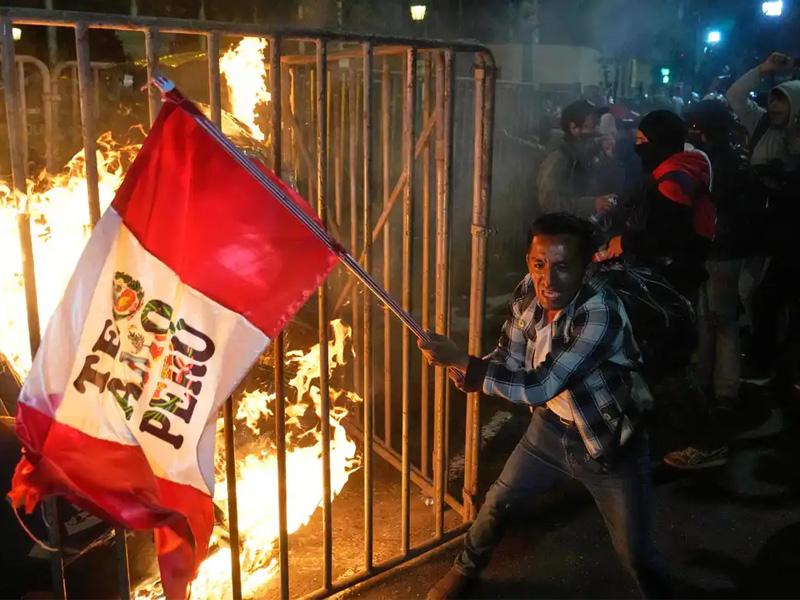
Western mainstream media France 24 describes protests against corruption and organized crime. Local Western coverage from The Impartial Reporter provides additional details about attacks on public places as part of the violence that Jeri says he must address.
Political Turmoil and Protests
The emergency also unfolds amid political turmoil following the removal of former president Dina Boluarte. This removal fueled protests that, by some accounts, led to one death and over 100 injuries. Other reports put injuries at over 200.
“This marks Jeri’s first major move since taking office nearly two weeks ago amid a worsening crime crisis.”
Several outlets say Jeri took office recently, nearly two weeks ago, and is serving in an interim capacity. One Western tabloid adds he will serve until July 2026.
Local Western outlets note that Gen Z–led protests in Lima are demanding Jeri’s resignation. These protests reflect a generational challenge to the new administration’s legitimacy alongside security concerns.
Security Measures and Rights Restrictions
The decree allows soldiers to patrol alongside police in the capital region. It also limits rights such as assembly and, according to some reports, freedom of movement. The government promises to take strong action against crime to restore peace and public trust.
Several sources highlight the Council of Ministers' approval of the decree. Others focus on the patrols and suspension of rights rather than bureaucratic details. Reports differ on when the measure takes effect, mentioning midnight Tuesday, midnight Wednesday, or immediate implementation.

Evaluating Crime Crackdown Efforts
Whether this renewed crackdown will work is contested. Arise News notes similar emergency declarations under Dina Boluarte did not durably reduce crime, even as Jeri’s team casts the move as a bid to regain peace and public trust.
“Despite similar emergency declarations under Boluarte, crime remains a significant issue, but the current government insists this is a renewed effort to regain peace and public trust in Peru’s security institutions.”
NewsBreak reports experts saying such measures have had limited impact, while Al Jazeera points out that details on intelligence gathering remain unclear. France 24 highlights the administration’s intent to ‘change the country’s narrative of insecurity,’ and thesun.my underscores how the crime wave and extortion-related killings have already strained daily life, including transportation.
