Pete Hegseth Orders Six-Month Pentagon Review of U.S. Forces in Europe at NATO Meeting
Key Takeaways
- Defense Secretary Pete Hegseth announced a six-month review of U.S. forces in Europe.
- He criticized NATO allies as 'free riding' for not providing base access or funding.
- The review aims to accelerate European leadership within NATO and reduce U.S. footprint.
Hegseth orders six-month review
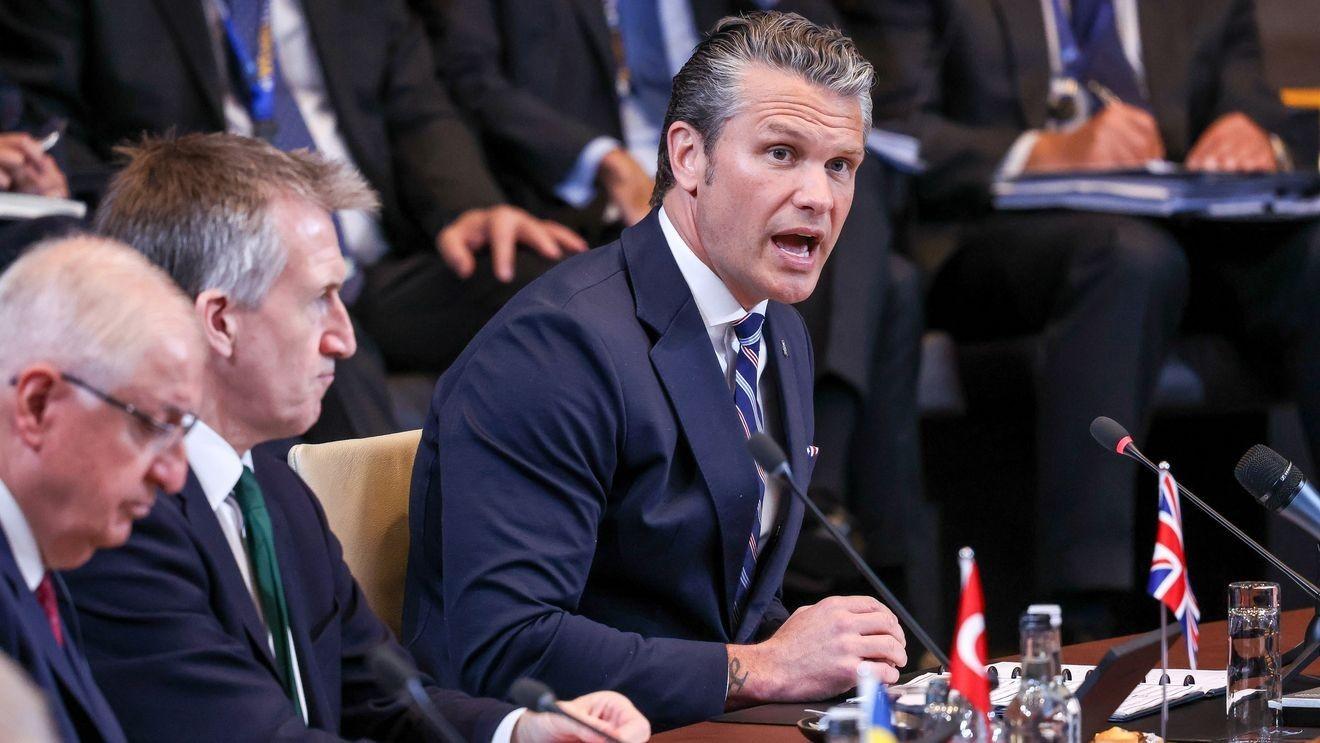
U.S. Defense Secretary Pete Hegseth announced a Pentagon-led six-month review of U.S. forces and bases in Europe at a meeting of NATO defense ministers in Brussels, framing it as a shift toward Europe taking primary responsibility for the defense of Europe.
“BRUSSELS—Secretary of Defense Pete Hegseth told NATO on June 18 that the U”
Hegseth said the review would be “designed to ensure that NATO is moving fast and irreversibly toward Europe leading,” and he warned that “some countries will fail and others will pass with flying colours.”

The review comes as Hegseth accused allies of “free riding” and of denying U.S. access to bases for launching aircraft or ships during the U.S. war with Iran.
NATO Secretary-General Mark Rutte said the reduction of U.S. contributions to NATO’s crisis forces was already in effect, telling reporters, “It is immediate,” while also insisting the U.S. remained committed to the alliance’s nuclear umbrella.
The U.S. review also includes consultations with Congress, which has legislated a minimum number of U.S. forces in Europe, according to the accounts of the meeting.
Dues tied to spending
Hegseth told NATO allies that the U.S. would make its annual NATO dues “contingent on other countries meeting their defence spending targets,” and he said the U.S. would lower its dues if allies “do not spend with urgency.”
At the same Brussels meeting, Hegseth also attacked allies for limiting their involvement in the war in Iran, calling it “shameful” and arguing that denying predictable access put “America’s sons and daughters” at risk.

NATO’s Mark Rutte pushed back on the immediate impact of the U.S. changes, saying, “We have looked at the division of labor in the context of conventional forces,” and he said European allies and Canada were ready, willing and able to do more.
The Hill reported that Sen. Roger Wicker of Mississippi and Rep. Mike Rogers of Alabama warned that “Any significant change to the U.S. force posture in Europe warrants a deliberate review process and close coordination with Congress and our allies.”
CNN added that Hegseth said the review would “examine America’s force posture and basing in Europe,” as he sought to characterize it as transforming NATO toward “hard power and real deterrence.”
What comes next for NATO
The U.S. review is set against a backdrop of already-announced reductions to NATO’s force model, with Al Jazeera saying the U.S. has not publicly disclosed details but that the reductions range from refuelling aircraft to fighter jets, drones and ships.
The Guardian reported that proposed cuts under consideration included a redeployment of a third of the 150 U.S. F-16 and F-15 jets designated for NATO, alongside refuelling and reconnaissance aircraft, bombers and drones.
France 24 said Hegseth told NATO that Washington would review its military presence in Europe within the next six months and that U.S. dues to cover NATO organisational running costs—roughly some $790 million in 2026—would be “contingent” on allies reaching spending targets.
The Washington Post described NATO officials working out which countries can fill gaps and how fast, while noting that the reduction in U.S. wartime forces available to Europe takes effect immediately and is a cut to the U.S. contribution to NATO’s emergency response rather than to existing U.S. military presence in Europe.
In Brussels, NATO’s Mark Rutte said the U.S. reductions were “immediate” but did not mean the U.S. would not be there if NATO faced an attack, adding, “Then all allies, including the US, will max out what they can do to make sure we can fight the war.”
More on USA

Trump Signs Iran MOU, Lifts Blockade, Reopens Strait of Hormuz for 60-Day Talks
14 sources compared

Supreme Court Rules Federal Gun Ban Unconstitutional for Texas Man Using Marijuana
11 sources compared

Trump Administration Compares Lincoln Memorial Reflecting Pool Algae Cleanup to Destroyed Iran’s Navy
10 sources compared
US Lifts Naval Blockade of Iranian Ports as JD Vance Says Oil Flows Through Strait of Hormuz
18 sources compared