%2Fhttps%3A%2F%2Ftf-cmsv2-smithsonianmag-media.s3.amazonaws.com%2Ffiler_public%2Fa7%2F84%2Fa7845c48-ed26-4e29-89c3-3e71ff7bf62b%2Fbeluga_whale_1_use_mildener_et_al-2_copy_2_png.png&w=3840&q=75)
PLOS One Study Finds Beluga Whales Recognize Themselves in Mirrors at New York Aquarium
Key Takeaways
- Belugas demonstrate mirror self-recognition in a controlled study.
- The study was published in PLOS One.
- Belugas’ self-recognition places them among a small list of self-aware nonhuman species.
Belugas Pass Mirror Test
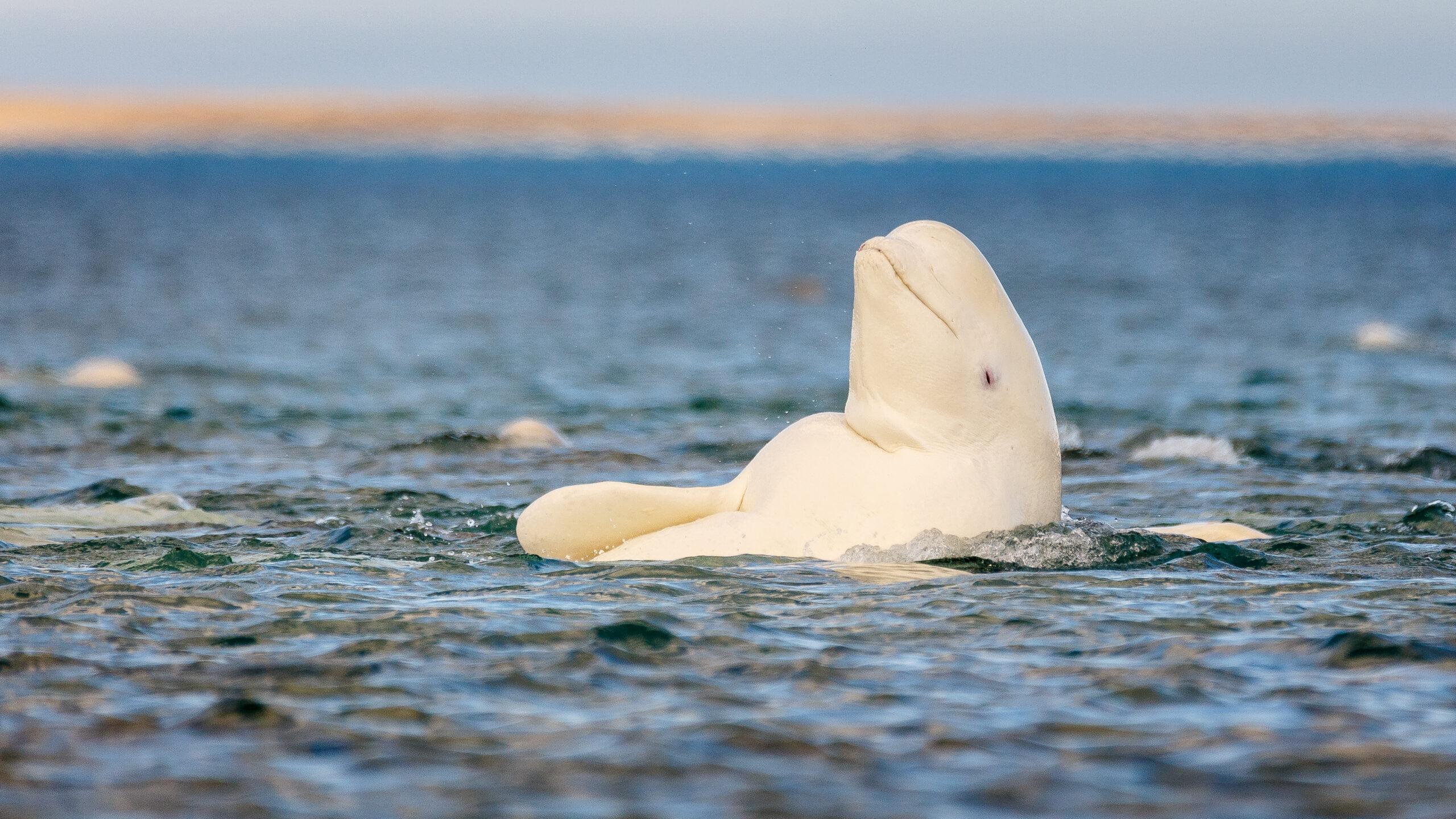
A new study published in PLOS One suggests beluga whales can recognize themselves in mirrors, adding the toothed whales to a short list of nonhuman species showing signs of self-awareness.
“In hours of underwater video footage from a New York aquarium, a beluga whale named Natasha stretches her neck, pirouettes, nods, and shakes her head in front of a two-way mirror”
The research, described by Smithsonian Magazine, was published May 20 and involved four captive belugas at the New York Aquarium of the Wildlife Conservation Society, where researchers used a two-way mirror and a transparent plexiglass control.
Smithsonian Magazine reports that Natasha and Maris showed behavioral hallmarks during their first two-hour encounter, including clapping their jaws and jerking their heads upward, then moving their heads around and shaking them horizontally.
In a second session, the same source says Natasha and Maris looked at themselves, peered inside their own mouths, watched themselves do barrel rolls, and pressed a temporary mark up against the mirror.
Science X similarly describes that the experiments took place about 25 years ago at the New York Aquarium, but were published now because the video data wasn’t fully analyzed at the time.
Natasha, Maris, and Mark Tests
Ars Technica describes hours of underwater video footage from the New York aquarium showing Natasha stretching her neck, pirouetting, nodding, and shaking her head in front of a two-way mirror, with her daughter Maris doing similar behaviors.
The same Ars Technica piece says the mirror self-recognition test involves researchers placing a mark on a spot the animal can only see via a reflection, then watching whether the animal touches or examines the mark while looking at its reflection.
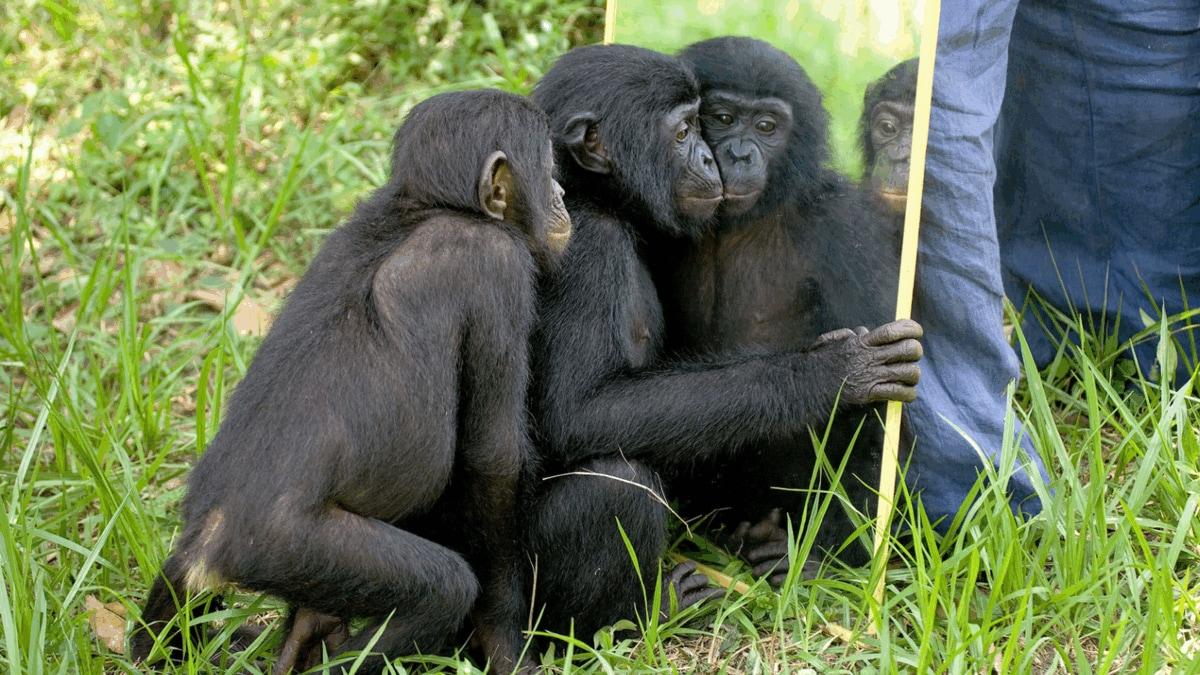
Smithsonian Magazine reports that researchers drew marks on parts of the creatures’ bodies that the whales couldn’t see unless they looked in the mirror, and it says Natasha swam laps with her marked side facing the mirror and pressed the mark up against it.
Science X adds that Natasha turned toward the mirror to look at the marked area on her body, while Maris did not show the same response.
Science X also quotes the study’s conclusion that "Such self-directed behaviors provide compelling evidence in support of the belugas' capacity for MSR," and notes that self-directed behavior emerged in two beluga whales and mark-directed behavior in one.
Why It Matters for Conservation
Beyond the lab, Smithsonian Magazine says an estimated 136,000 mature belugas live in Arctic and sub-Arctic waters, including off the coast of Alaska, and it notes the International Union for Conservation of Nature considers them a species of least concern.
“Lisa Lock Scientific Editor Robert Egan Associate Editor Paul Arnold Author For humans, recognizing our reflection comes naturally, and we barely give it a second thought”
The same Smithsonian Magazine source lists threats facing belugas, including disturbances from fisheries, shipping, oil and gas exploration and climate change, and it frames the new findings as potentially bolstering efforts to protect the species.
Smithsonian Magazine also reports that Diana Reiss, a cognitive psychologist at Hunter College, City University of New York, told IFLScience that "Belugas demonstrate a high level of self-awareness and a sense of self," and that this includes comprehension that the mirror can be used as a tool to view oneself.
Science X quotes the researchers’ paper, saying the emergence of self-directed behavior in two beluga whales and mark-directed behavior in one indicates the capacity may be more widespread beyond the family Delphinidae and extend to Monodontidae.
Ars Technica closes the loop by reiterating that if the result holds up, belugas join a short list of species that have passed the mirror test, with the article noting that the test is considered a marker of self-awareness and cognitive development.
More on Technology and Science

Meta Disables Ray-Ban Meta Camera After Users Tamper With Capture LED
18 sources compared

OpenAI Launches GPT-Live Voice Models With Full-Duplex Listening And Speaking
15 sources compared

Venus Aerospace Closes $91 Million Series B To Scale Rotating Detonation Rocket Engine Production
11 sources compared

SambaNova Raises $1 Billion Series F Led By General Atlantic At $11 Billion Valuation
12 sources compared