Full Analysis Summary
Modi's Israel State Visit
Indian Prime Minister Narendra Modi accepted the Speaker of the Knesset Medal during a two-day state visit to Israel (Feb. 25–26, 2026).
He received the medal in a ceremony noted across international press.
Multiple reports state Modi was awarded the Speaker of the Knesset Medal by Amir Ohana and that he became the first Indian prime minister to address the Knesset.
Coverage framed the visit as historic and ceremonial and noted he offered condolences for lives lost in the October 7 Hamas attack.
In his Knesset address Modi underscored shared values and solidarity.
The Indian Express reports Modi invoked Israel’s "Tikkun Olam" and India’s "Vasudhaiva Kutumbakam" to highlight common values.
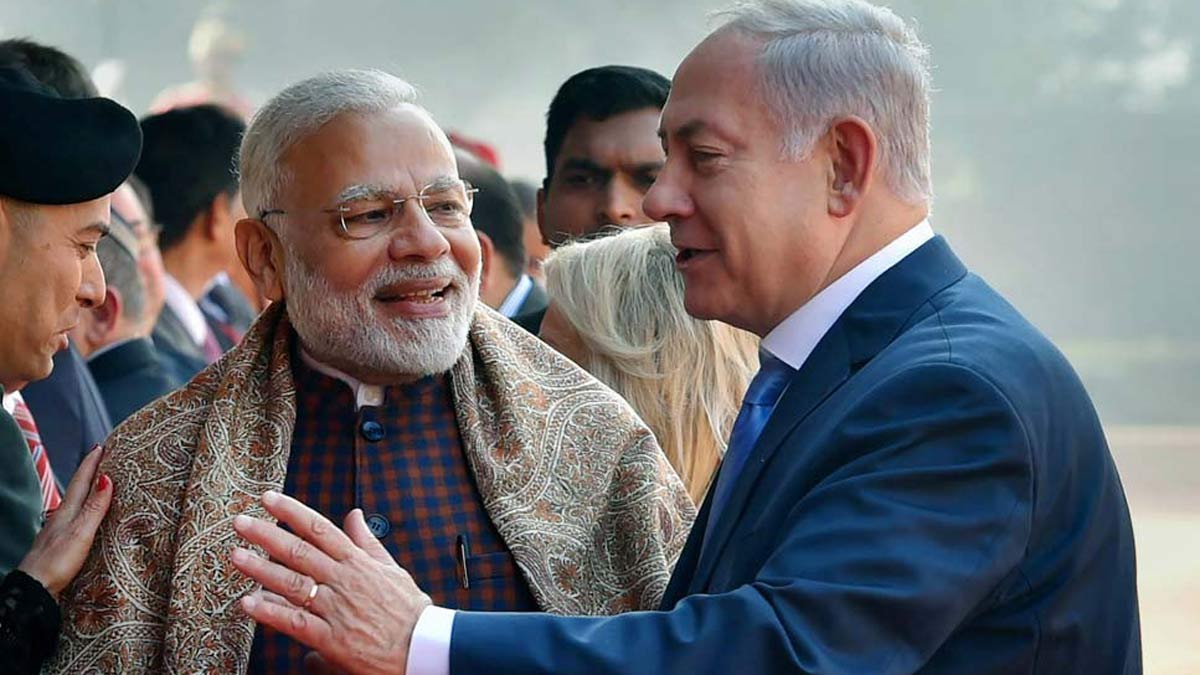
Prime Minister Benjamin Netanyahu greeted Modi on arrival and the coverage noted a warm reception.
Coverage Differences
Tone
Indian mainstream outlets emphasise the ceremonial and historic nature of the visit and the medal (e.g., awards, Knesset address and warm reception), while some outlets focus more on strategic outcomes or controversy. The Indian Express (Asian) frames the visit as a ceremonial honor and shared-values speech; The Economic Times (Western Mainstream) highlights the formal welcome (Guard of Honour) and the Speaker medal; Hindustan Times (Asian) notes both the warm reception and domestic criticism. These differences reflect source emphasis: Indian outlets foreground protocol and symbolism; others add diplomatic or political context.
Narrative Framing
Some reports foreground Modi’s expressions of solidarity with Israel after October 7 and his condolences (e.g., ETV Bharat, Economic Times), while others simultaneously note Modi’s call for a Gaza peace initiative (Indian Express). That shows variation in which political gestures (condolence vs peace initiative) sources elevate.
India-Israel defence cooperation
A central theme across Israeli and Western mainstream reporting was a pledge to deepen defence cooperation, with several outlets reporting Bangladesh-to-India-style technology transfers and explicit plans for co-development.
Israeli outlets and defence-focused pieces highlighted discussions on advanced air-defence work.
Globes flagged "air-defense (ballistic missile defense, laser systems)" as a main agenda item.
The Jerusalem Post reported a classified defense framework that could provide India access to advanced systems such as Israel's "laser-based Iron Beam," enabling collaboration on "more sensitive" technologies.
Indian reporting and News18 describe a security memorandum of understanding for India-Israel co-development of defence systems as part of the visit's deliverables.
Coverage Differences
Emphasis
Israeli and defence‑specialist sources (Globes, The Jerusalem Post, Outlook India) stress advanced military cooperation and specific systems (e.g., Iron Beam and laser systems), while Indian mainstream outlets (News18, India Today) emphasise a broader security MoU, co‑development and the strategic partnership without always naming specific platforms. That indicates a more technical, capability‑focused framing from Israeli/defence outlets and a policy‑level framing from Indian media.
Specificity
Some outlets (Outlook India, The Jerusalem Post) explicitly name potential platforms like Iron Beam; others (Economic Times, India Today) keep language general — "defence and security cooperation," "deepen defence ties" — which could reflect editorial caution or differing access to classified details.
India–Israel economic ties
India and Israel have begun negotiations on a Free Trade Agreement, and officials discussed bolstering bilateral commerce and investment.
Multiple sources report the first round of Free Trade Agreement talks and note existing trade levels, with Globes and Forbes figures used to contextualise recent defence deals while The New Indian Express and Dainik Jagran provide bilateral trade figures and itemised trade flows.
Indian officials framed the FTA talks and a Bilateral Investment Agreement as milestones to deepen economic ties alongside defence and technological cooperation.
Coverage Differences
Focus
Business and Israeli outlets (Globes, The Jerusalem Post) highlight the scale of recent defence and industrial deals (Forbes India figures) alongside FTA talks; Indian domestic outlets (Dainik Jagran, The New Indian Express, India Today) emphasise the formal launch of FTA negotiations, trade composition, and the Bilateral Investment Agreement as steps to broaden non‑defence cooperation.
Detail
Indian regional reporting (Dainik Jagran) lists specific exports and imports in the bilateral relationship, while Western outlets typically summarise trade volume and strategic targets; this shows Indian sources supplying granular trade composition and Israel/Western sources emphasising headline deal values.
Political reactions to visit
The visit also attracted political pushback and differing portrayals of its moral and diplomatic implications.
Indian opposition figures urged Modi to raise civilian suffering in Gaza and questioned the optics of embracing Netanyahu.
Hindustan Times reports Congress leaders accused Modi of "abandoning Palestinians" and urged him to speak on Gaza.
Several Israeli opposition lawmakers threatened to boycott Modi's Knesset address over domestic judicial disputes.
Some outlets noted India participated in meetings connected to a US-led Gaza peace initiative without formally joining it, underlining New Delhi's cautious diplomatic balancing.
Coverage Differences
Criticism vs Support
Indian opposition outlets and domestic reporting (Hindustan Times, The New Indian Express) foreground moral and political criticisms — calls to speak about Gaza and condemnations of Israeli policies — while government‑aligned or neutral outlets (Economic Times, News18) foreground strategic gains and protocols, reflecting divergent domestic narratives in India.
Diplomatic Positioning
Coverage varies on New Delhi’s diplomatic posture: The Financial Express reports India "attended a meeting tied to a US‑led Gaza peace initiative but did not formally join it, while expressing support for President Trump’s plan," showing a cautious approach; other outlets stress Modi’s public condolences and backing for a peace initiative without confirming formal alignment.
Ceremony and diplomatic outreach
Ceremony, symbolism and outreach to shared constituencies were recurring motifs in the reports.
Reports detail Modi being personally greeted by Netanyahu, the Knesset lit in India’s tricolour, a planned visit to Yad Vashem, and references to long-standing ties between the countries.
Several sources record the leaders describing their relationship as "personal friends" and stress people-to-people links and cultural references in Modi’s speech.
For example, Firstpost quotes Modi recalling Indian soldiers and saying India’s connection to the land is "written in blood and sacrifice," and The Indian Express cites Modi’s evocation of Jewish-Indian historical ties and shared ethical concepts.
Coverage Differences
Ceremonial Focus
Some sources highlight ceremonial symbolism (Knesset lighting, Guard of Honour, Yad Vashem visit) to underscore the visit’s diplomatic theatre (Reuters‑style/newscaps in Economic Times, Firstpost, Fox40), while others (Dainik Jagran, The New Indian Express) place the ceremony within a longer history of bilateral ties and trade, giving it both emotional and policy weight.
Audience Outreach
Coverage emphasised different audiences: Firstpost and ETV Bharat note symbolic outreach to Indian‑Jewish communities and remembrance at Yad Vashem, while Israeli outlets emphasise state‑level technology and defence cooperation—showing parallel public diplomacy and strategic messaging strands.