Ukraine War18 November, 20253 min read
Poland Charges Two Ukrainians With Russia-Orchestrated Railway Sabotage
Two Ukrainian citizens collaborating with Russian intelligence are suspected of sabotaging the Warsaw‑Lublin railway Suspects fled Poland into Belarus and Polish prosecutors will charge them with terrorist‑nature sabotage
57 outlets told this the same way.
Outlets did split on Russian Attack Kills At Least 33 On Two Buses In Kramatorsk →
Poland rail sabotage
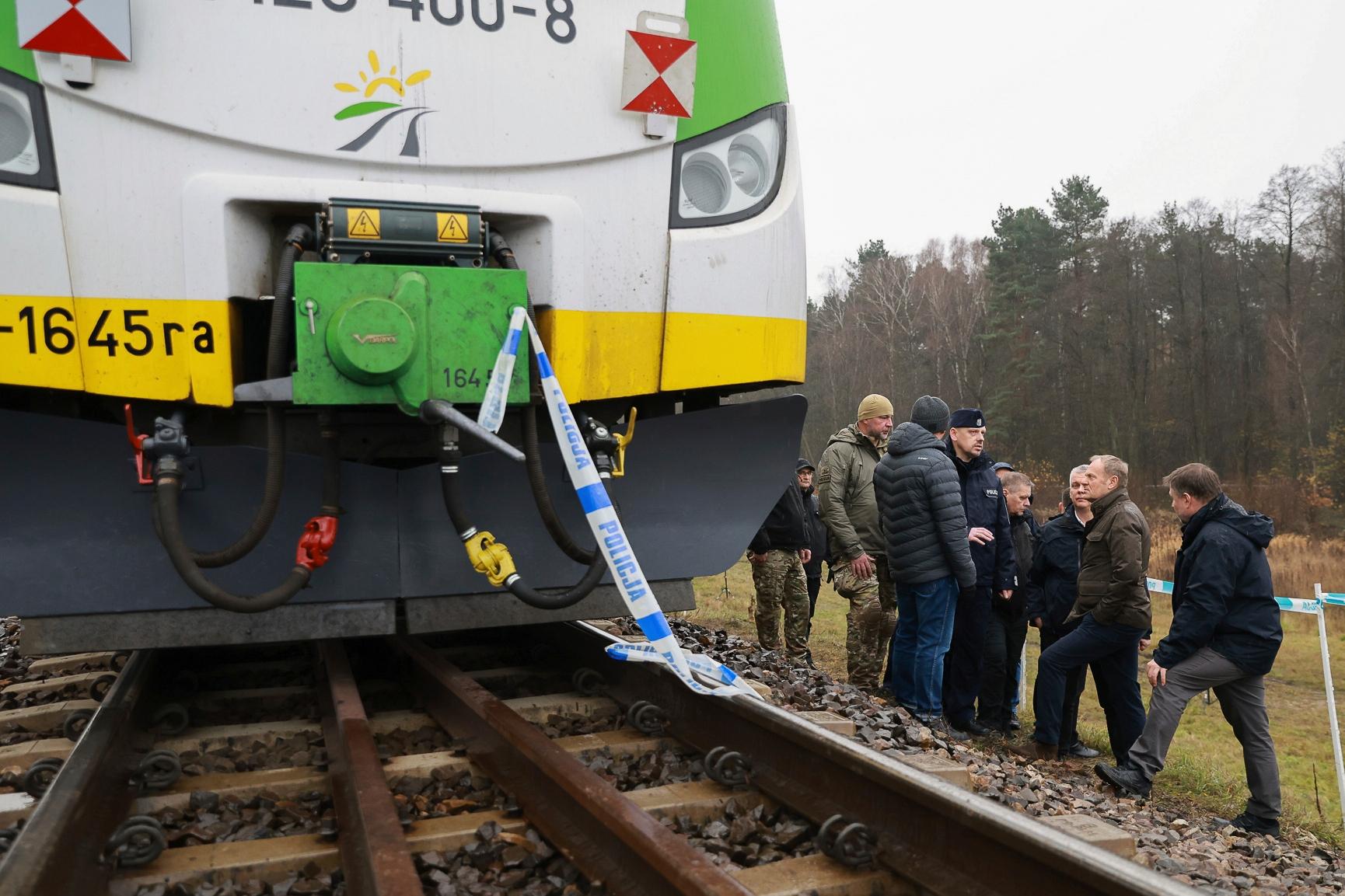
Poland says an explosion on the Warsaw–Lublin rail line near the village of Mika was an act of sabotage that damaged infrastructure used to move passengers and supplies to Ukraine; no injuries were reported and investigators say the blast occurred as a freight train passed. Prime Minister Donald Tusk told parliament that investigators have identified two Ukrainian men suspected of collaborating with Russian intelligence; they reportedly entered Poland from Belarus this autumn and fled back to Belarus after the incidents. Polish prosecutors have opened an investigation into acts of sabotage of a terrorist nature and described the actions as creating an immediate risk of a major land-traffic disaster.
“Polish Prime Minister Donald Tusk said investigators have identified two Ukrainian men suspected of collaborating with Russian intelligence to carry out an explosion on a Polish railway line before fleeing to Belarus.”
Polish rail sabotage response
Polish authorities said the sabotage prompted a stepped-up security response, with inspectors and senior military and intelligence officials convening and army patrols ordered to check infrastructure in the east. The government also raised the alert level on selected rail lines, moving some routes to a 'Charlie' level while keeping a lower 'Bravo' status nationwide.
Prosecutors and emergency services are preserving evidence as probes widened, and officials reported dozens detained with more than twenty held in custody. Rail and infrastructure bodies said affected operators followed safety procedures after drivers reported unevenness and that services were halted or braked as a precaution.
Alleged hybrid sabotage
Poland and several Western officials have linked the sabotage to a broader pattern of hybrid operations traced to Russia and its proxies since 2022, saying the incidents aim to intimidate supporters of Ukraine and sow social or political disruption. Prime Minister Tusk and other Polish military figures framed the episode as part of such a campaign. Kyiv's leaders and some EU officials have expressed solidarity and called for coordinated countermeasures.
“Tusk called it ‘perhaps the most serious’ security incident since Russia’s full‑scale invasion of Ukraine and said it fit a wider Russian campaign to sow chaos and anti‑Ukrainian sentiment.”
Moscow has rejected responsibility and accused Poland of Russophobia. At the same time, some international reports took a more cautious tone, noting that outlets such as the Washington Post reported Tusk did not explicitly accuse Russia even as he linked the attack to the war in Ukraine.
Rail sabotage technical summary
Reports differ on the technical specifics but agree the sabotage showed planning and tradecraft. Multiple accounts cite a military-grade explosive (C-4) and an initiating device tied to a long electrical cable as one method, while others describe a steel clamp placed on the tracks in a separate attempt.
Journalists and analysts pointed to imagery suggesting remote detonation or an electrical triggering mechanism, and investigators reportedly found evidence of remote-detonation methods at more than one damaged segment. Rail operators noted high daily traffic on the route and said drivers and controllers followed procedures that limited harm.

European sabotage and security
Analysts and defense officials place the episode within a broader European pattern of sabotage, arson and cyberattacks since Russia's 2022 invasion of Ukraine and warn it could test NATO and EU resilience and deepen political strains. The Institute for the Study of War reported damage to rail segments used for Western military deliveries and found evidence consistent with remote detonation.
“Separately, saboteurs damaged at least two segments of Polish rail (Lublin–Warsaw and Warsaw–Rzeszów lines) used for Western military deliveries to Ukraine. Investigators found evidence of remote‑detonation methods but Polish authorities have not assigned blame.”
Commentators say the incidents expose vulnerabilities in critical infrastructure and call for coordinated responses, while some leaders urge calm to avoid overreaction. Poland moved to bolster on-the-ground protection, saying military units could supplement police and reports indicate up to 10,000 soldiers may be available to protect critical sites as investigations continue.
