Gaza Genocide01 December, 20253 min read
Pope Leo XIV Declares Two-State Solution 'Only' Path, Urges Israel To Recognize Palestinian State
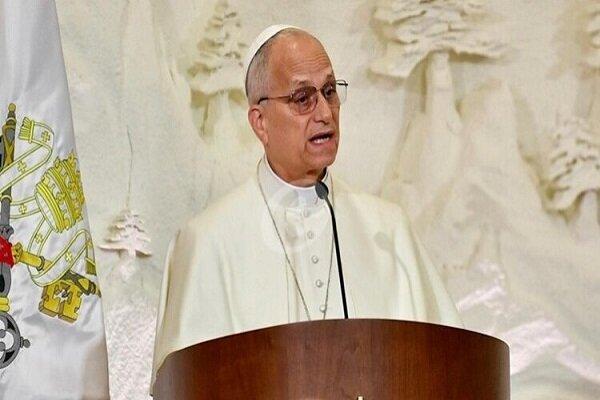
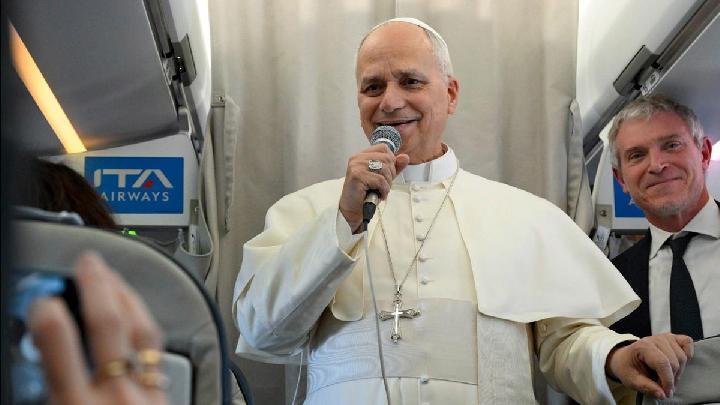
Pope Leo XIV declared a Palestinian state alongside Israel the only viable solution. Pope Leo XIV voiced this aboard the papal plane en route from Turkey to Lebanon.
18 outlets told this the same way.
Outlets did split on Israel Marks Oct. 7 Anniversary With Strikes on Gaza, Netanyahu Faces Election After Nova Tribute →
Papal call for two states
Pope Leo XIV, on his first foreign trip, forcefully reaffirmed that a negotiated two-state solution is the only way to deliver justice for Israelis and Palestinians. He urged recognition of a Palestinian state and pressed global powers to help secure a ceasefire and durable peace. He made the remarks aboard the papal plane en route from Istanbul to Beirut and reiterated the Vatican's 2015 recognition of a Palestinian state.
“Pope Leo XIV reiterated the Vatican’s long-standing support for a negotiated two-state solution to the Israel–Palestine conflict, saying it remains the only just and viable way to secure peace and justice for both sides.”
He stressed the Holy See's commitment to diplomatic dialogue and mediation. The pope framed the two-state framework as the best path forward amid international calls for renewed political talks and amid Israel's continued rejection of full Palestinian statehood.

Papal diplomacy with Turkey
The pope repeatedly singled out Turkey's diplomatic role after meetings with President Recep Tayyip Erdoğan. He said he had discussed both Gaza and Ukraine and praised Turkey as having an important role to play in regional mediation. Several outlets noted that the pope thanked Erdoğan for coordinating his trip, described shared support for a two-state outcome, and framed Ankara as a potential mediator to press for a ceasefire and political talks.
While the pope avoided detailed public criticisms in Turkey, he raised Gaza directly with Erdoğan. He urged international actors—the U.S., Turkey and Russia—to assist in securing peace.

Vatican mediation on Palestine
Pope Leo XIV positioned the Holy See as a 'mediating friend' to both Israel and the Palestinians while explicitly criticizing Israel's refusal to accept Palestinian statehood. Multiple reports quote the pope saying Israel currently rejects the proposal for a Palestinian state and that the Vatican seeks to be neutral yet active in diplomacy - offering itself as a mediator and friend to both parties. Several sources note the lack of an immediate response from Israeli officials and stress that Israel's government under Benjamin Netanyahu continues to oppose full Palestinian statehood.
“He acknowledged that Israel currently rejects Palestinian statehood but insisted the two-state framework ... is the best path forward.”
Statehood and ceasefire reactions
Reporting on reactions and the wider political context shows a clear division, with Israeli leaders rejecting Palestinian statehood while international mediators and some U.S. politicians treat statehood as conditional. Newsweek reports that Prime Minister Benjamin Netanyahu says he will continue to prevent creation of a Palestinian state, arguing statehood would pose an existential danger to Israel. Some U.S. voices, including Marco Rubio, emphasize specific conditions for any two-state process.
The U.N. and mediators are working on ceasefire, disarmament, and interim governance proposals for Gaza. The pope calls for renewed political talks and a ceasefire.
Media framing of papal visit
Coverage differs sharply by source type in tone, verbs used, and the aspects highlighted. Western mainstream sources (Newsweek, Jewish Telegraphic Agency, Irish Independent) generally report the pope’s diplomatic push alongside descriptions of statecraft and negotiations. Western alternative and regional outlets (Middle East Monitor, Central News South Africa, lokmattimes) emphasize Palestinian suffering, the pope’s moral admonitions and Turkey’s mediation role.
“Pope Leo XIV ... told journalists the Holy See continues to back a two-state solution for the Israeli-Palestinian conflict, calling it 'the only solution' despite Israel’s current refusal.”
Asian outlets (NewsX, Firstpost, Public TV English) foreground the trip’s ceremonial welcome, the pope’s outreach to Lebanon, and the Holy See’s long-standing diplomatic stance. These differences shape how readers perceive whether the pope’s statement is chiefly a diplomatic proposal, a moral rebuke of Israel’s policy, or a pastoral act of solidarity with Palestinians and Lebanon.
