Lebanon01 December, 20252 min read
Pope Leo XIV Urges Muslim and Christian Leaders in Beirut to Reject Sectarianism and Defend Coexistence
Pope convened Muslim and Christian leaders in Beirut's Martyrs' Square urging rejection of sectarianism Pope prayed for Lebanon and the wider Levant at Saint Charbel's tomb and Harissa shrine
9 outlets told this the same way.
Outlets did split on Lebanon’s Judiciary Prepares To Apply General Amnesty Law No. 70, Judge Ahmed Rami Al-Hajj Says →
Interfaith appeal in Beirut
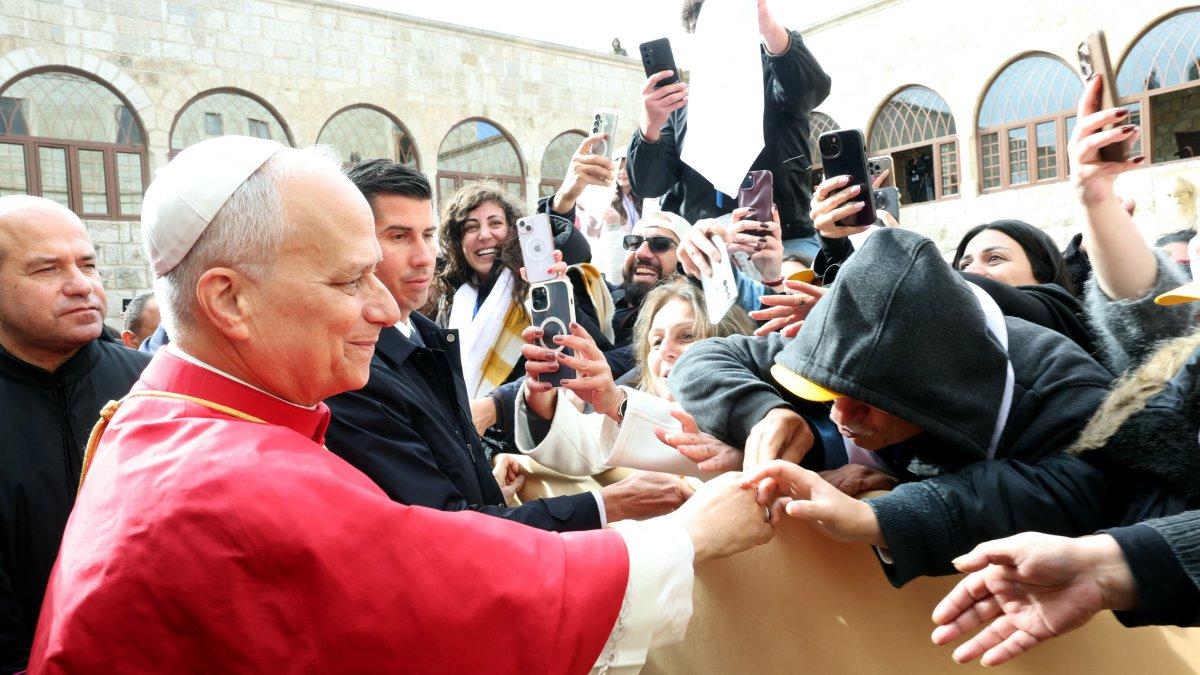
Pope Leo XIV used Beirut's Martyrs' Square as the focal point of a public appeal for interfaith unity, leading an assembly that sought to renew dialogue and reconciliation between Christians, Muslims and other faiths in Lebanon. France 24 reported that the pope led an interfaith assembly in Martyrs' Square, urging religious leaders to foster unity, coexistence and peace in Lebanon. Al Jazeera described the square as the former green line and quoted the pope urging that every bell and every adhan should blend into a single, soaring hymn.
“Pope Leo XIV led an interfaith assembly on Monday in Beirut’s Martyrs’ Square, urging Christian, Muslim and other religious leaders to foster unity, coexistence and peace in Lebanon.”
Crux recorded the pope praising Lebanon as an example of religious tolerance and calling faith leaders to be builders of peace, while The National reported similar mentions of interfaith talks and a call for bells and adhan to blend. These accounts show broad agreement that the visit was explicitly framed as a pastoral and symbolic effort to counter sectarian divisions.

Papal visit symbolism in Lebanon
The choice of Martyrs' Square — a place that once divided Beirut during the 1975–1990 civil war — was repeatedly noted as deliberate symbolism. France 24 says the site "once marked sectarian division during Lebanon’s 1975–1990 civil war," and Al Jazeera similarly describes it as the former "green line" between Muslim and Christian sectors. Crux highlights the pope’s planting of an olive tree and invocation of the olive as a regional symbol of endurance and reconciliation.
ETV Bharat and Bluewin record liturgical stops that underscored religious continuity, including a prayer at St Charbel’s tomb and a visit to the Our Lady of Lebanon shrine in Harissa. These combined accounts present the itinerary as both liturgical pilgrimage and public witness against sectarian memory.

Pope's Call for Coexistence
The pope urged religious leaders to repudiate sectarianism, confront intolerance and promote inclusion. Crux reports he called on leaders to 'confront intolerance, overcome violence and banish exclusion'. France 24 and Al Jazeera record appeals to 'renew dialogue' and to foster 'coexistence', noting that 'fear, distrust and prejudice do not have the final word'.
The National highlights similar themes and emphasizes the pope’s message of hope for young people. ETV Bharat notes the pope urged church workers to 'give young people hope'. Together, these sources present a pastoral call to defend coexistence and resist the politics of sectarian division.
Coverage of papal visit
France 24 highlighted Lebanon’s confessional political system — a Maronite president, Sunni prime minister, and Shiite speaker — and said recent crises have heightened sectarian tensions. It singled out Hezbollah’s clashes with Israel and the group’s alignment with Hamas as contributors to those tensions. Al Jazeera pointed to ongoing political paralysis even as the pope used public space to press for coexistence.
Bluewin highlighted popular enthusiasm, reporting the visit "drew thousands despite heavy rain." The National framed the visit as "a rare moment of hope amid conflict and divisions" and noted praise from the Grand Mufti.

Crux provided institutional Catholic context by linking the visit to significant anniversaries and church teaching. No source claimed the visit produced immediate political change, and coverage combined hopeful symbolism with caveats about persistent divisions.