
President Donald Trump Abruptly Declares Victory in War With Iran
Key Takeaways
- President Donald Trump declared the war with Iran won.
- He announced victory during a speech rally in Hebron, Kentucky.
- He delivered the remarks on March 11, 2026.
Trump's victory claim
President Donald Trump abruptly declared victory in the U.S. campaign against Iran during a March 11 rally in Hebron, Kentucky, telling supporters “We won. We have victory. We won within an hour of starting, and the war is over,” while also saying military operations would continue until he chose to “complete the mission.”
“Update: 3/11/26, 7:18 p”
The declaration was repeated in an Axios interview in which Trump said “The war will end whenever I want it to end,” and he has claimed the U.S. destroyed roughly 80% of Iran’s missile bases and launchpads.

Analysts cited in coverage suggested the sudden victory claim may be an effort to shape political optics ahead of U.S. elections and to present an exit strategy even as Tehran rejects unilateral declarations of an end to hostilities.
Iran's rejection
While Trump framed the campaign as a quick success, Iran and its representatives rejected unilateral end-of-war claims and insisted on broader terms for a ceasefire.
Iranian Foreign Minister Abbas Araghchi told U.S. PBS that even if the U.S. president declared victory, “the conflict does not end.”
Reporting cited by one outlet said Iran twice rejected U.S. ceasefire proposals and signalled it might continue some form of attacks unless a permanent agreement — including a U.S. pledge never to attack again — was secured.
Global diplomatic split
International and U.N. diplomatic responses were sharply divided: Russia’s U.N. ambassador accused the U.S. and Israel of launching a “premeditated, deliberate attack,” while Iran’s U.N. ambassador said Security Council text sought to reverse roles of victim and aggressor.
“Update: 3/11/26, 7:18 p”
U.S. and allied representatives defended strikes as necessary and condemned Iran’s actions, and the Security Council rejected a Russian-drafted resolution, underscoring diplomatic fracturing even as the fighting continued.
Regional consequences
Beyond politics and diplomacy, outlets noted tangible regional effects: the conflict and retaliatory strikes have disrupted trade routes, constrained shipments of fuel and fertiliser, raised air-travel risks through a busy corridor, and produced economic anxieties that prompted U.S. consideration of tapping the Strategic Petroleum Reserve.
With neither Washington nor Tehran signalling a willingness to step back, coverage suggested both sides were prepared to outlast the other even as questions remained over what terms would secure a lasting end to hostilities.
More on Iran
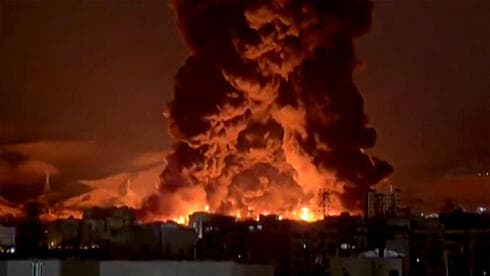
US obliterates military targets on Iran’s Kharg Island, Trump warns
13 sources compared

US Deploys About 2,500 Marines to Middle East After Iran Attacks Gulf Shipping
33 sources compared
FBI Warns of Iranian Drone Plot Based on Unverified Tip; California Says No Credible Threat
10 sources compared

White House Demands ABC Retract Report Claiming Iran Sought To Launch Drone Attacks On California
11 sources compared