USA21 February, 20263 min read
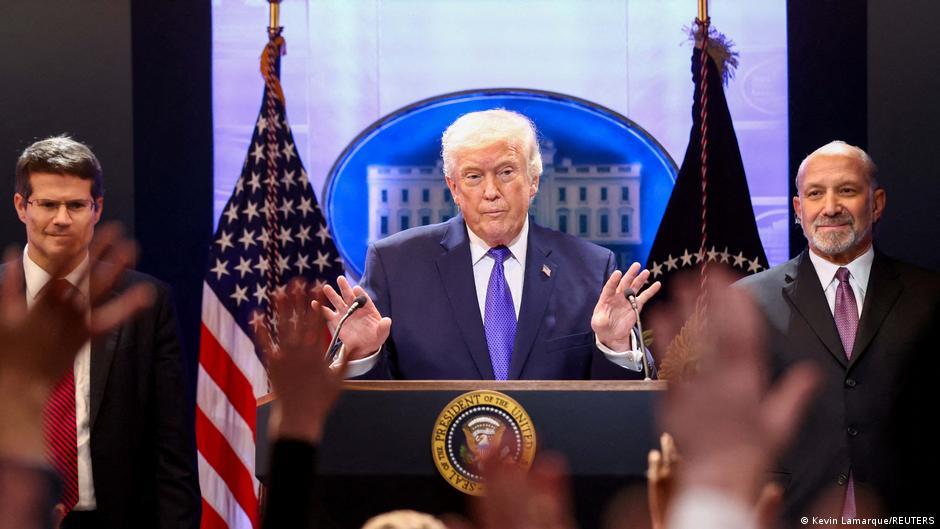
President Donald Trump Announces 10% Global Tariff to Circumvent Supreme Court Ruling
This article is an automated aggregation of coverage from news outlets. Our editorials offer in-depth analysis curated by the NewsCord team.
Supreme Court struck down most of Trump's sweeping tariffs by a 6–3 majority Trump announced a new 10% global tariff to take effect almost immediately
14 outlets told this the same way.
Outlets did split on Trump Interrupted by Protesters at San Antonio Rally for Ken Paxton →
Supreme Court tariff ruling
The U.S. Supreme Court ruled 6–3 that the administration lacked statutory authority under the 1977 International Emergency Economic Powers Act (IEEPA) to impose broad, peacetime import tariffs.
“The court held that IEEPA ‘does not authorize the President to impose tariffs,’ invalidating the legal basis for many of the administration's tariffs ... Trump called the ruling ‘deeply disappointing’ and criticized the justices.”
Chief Justice John Roberts wrote the majority opinion.

Justices Neil Gorsuch and Amy Coney Barrett joined the liberals.
Justices Clarence Thomas, Brett Kavanaugh and Samuel Alito dissented.
The decision invalidated many of the IEEPA‑based "reciprocal" tariffs and held that IEEPA "does not authorize the President to impose tariffs," a conclusion the court tied to the constitutional allocation of taxing and tariff power to Congress.
President Donald Trump reacted sharply, calling the ruling "deeply disappointing," "deeply wrong," and "a disgrace," and called out the justices in public remarks.
10% global tariff plan
Within hours of the decision, the White House signaled it would terminate the struck-down IEEPA duties, and President Donald Trump announced he had signed an executive order creating a new 10% 'global tariff' (referred to in some reports as 'Section 122') that he said would take effect 'almost immediately' and that would run for about 150 days. The White House described limited exclusions for certain food items, key minerals, and goods already subject to other tariffs. Different outlets described the new measure variously, calling it a signed order already in place (CNBC, dw, EL PAÍS) and, in contrast, a proposed alternative the president would use to pursue his trade agenda (NBC).
Legal and fiscal consequences
Legal and fiscal consequences were a central concern in coverage, with the majority referencing the major questions doctrine and emphasizing that Congress must clearly authorize policies with large economic effects. Outlets flagged uncertainty about whether importers would receive refunds for billions already collected. Reporters and analysts noted conflicting signals on refunds and fiscal exposure: EL PAÍS said the decision "raises the prospect" of returning "tens of billions" collected under the tariffs, The Jerusalem Post cited a Penn‑Wharton estimate that IEEPA‑based collections exceed $175 billion, and NJ and GreekReporter noted the majority left unresolved the question of refunds and practical steps for returning payments.
“The court applied the major questions doctrine, saying that policies with large economic effects require clear congressional authorization...”
Market and business reactions
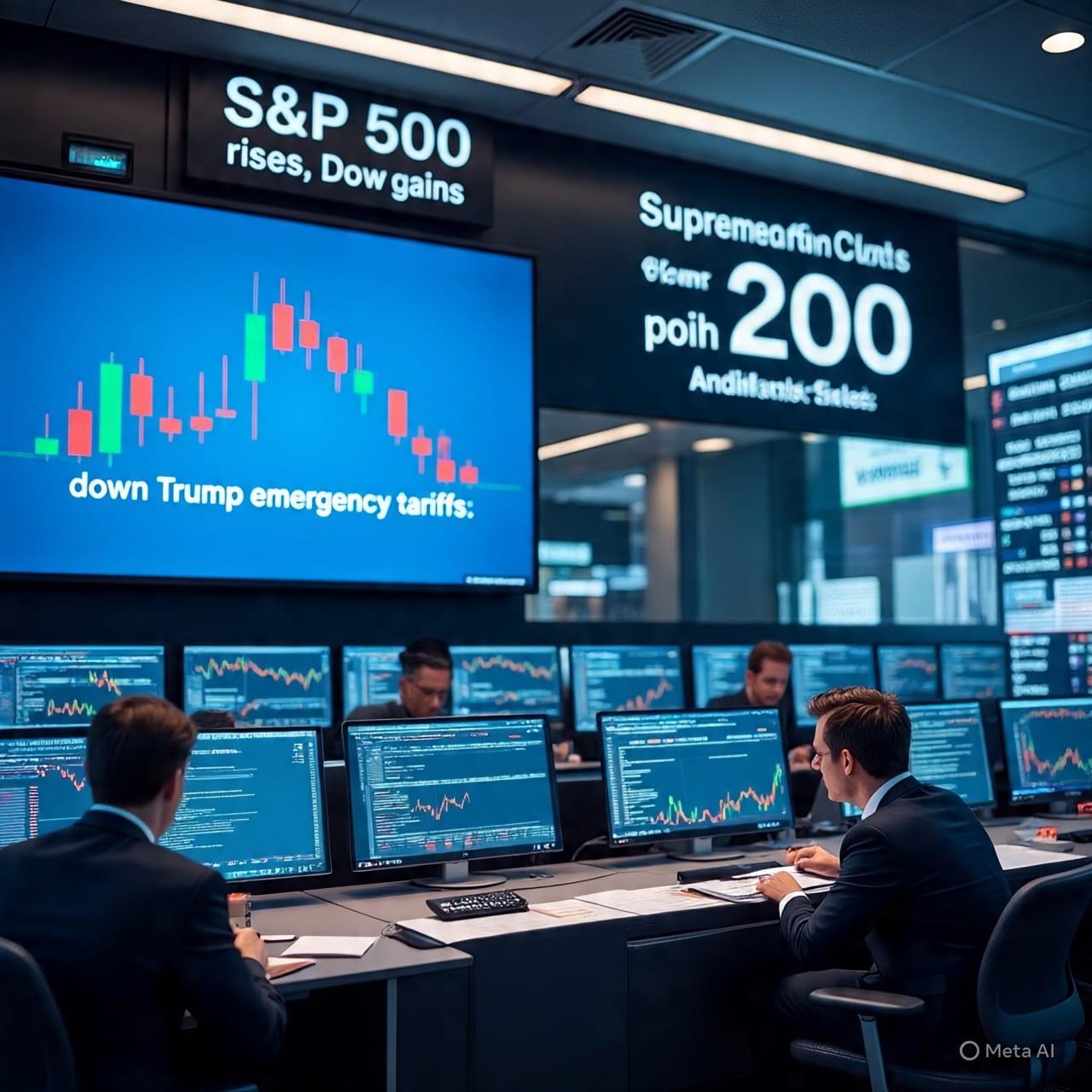
Markets and business groups reacted unevenly. Several outlets reported positive or modest market moves after the ruling, with GreekReporter noting the S&P 500 was up about 0.5% and NBC saying markets reacted positively. Trade groups warned the decision was a legal check rather than a policy reset and cautioned that governments might use different, potentially disruptive tools.
Dw cited the Canadian Chamber of Commerce and other business groups expressing concern that governments could resort to alternate measures. CNBC and NBC observed that businesses which had challenged the tariffs welcomed the outcome.

Responses to decision
Reports differ on political and strategic responses to the decision. EL PAÍS and dw detail Trump’s combative public remarks and his stated intent to pursue other legal and executive avenues, including praising dissenting justices and saying there are ways to 'circumvent' the decision. NBC and CNBC highlight his pledge to use other authorities to impose new global duties.
“Trump has said he may pursue additional or higher tariffs and insisted he does not need Congress’ approval.”
NJ and GreekReporter stress institutional consequences, saying the decision limits executive trade authority and prompts questions about the future shape of U.S. trade policy. Some reports describe international reaction as cautious.