South America16 February, 20263 min read
President Donald Trump Costs US Taxpayers Nearly $3 Billion With Venezuela Military Operation
This article is an automated aggregation of coverage from news outlets. Our editorials offer in-depth analysis curated by the NewsCord team.
U.S. military operations near Venezuela cost nearly $3 billion Naval strike-group operating costs peaked about $20 million per day mid-November to mid-January

8 outlets told this the same way.
Outlets did split on Brazil Police Kill Suspect After 13 Kindergarteners Held Hostage In Curitiba →
President Donald Trump's Venezuela costs
A Bloomberg-based accounting, reported across multiple outlets, places the cost of President Donald Trump's Venezuela operation at roughly $3 billion to date, with operating spikes that peaked at tens of millions per day. AlterNet summarizes Bloomberg's findings that Trump's recent and threatened military actions "are costing — or could cost — U.S. taxpayers 'billions,'" and specifically cites Operation Southern Sphere at "about $31 million per day — over $11 billion a year if sustained." Balkanweb and CiberCuba both report Bloomberg's near-$3 billion figure and note daily peaks: Balkanweb says operating costs "peaked above $20 million per day" and totals "more than $2.9 billion," while CiberCuba reports a similar total and peak of "about $20 million per day."
“A Bloomberg report says President Donald Trump’s recent and threatened military actions around the world are costing — or could cost — U.S. taxpayers ‘billions.’”
National Today likewise paraphrases Bloomberg as estimating "roughly $3 billion," but stresses that this number only covers certain operating costs and omits many other expenses. The outlets therefore differ on peak daily cost figures, with AlterNet citing about $31 million per day and Balkanweb and CiberCuba citing peaks of about $20 million per day.
Bloomberg cost breakdowns
Bloomberg's math behind the headline totals is presented with varying levels of detail across outlets.
National Today reproduces Bloomberg's line-item breakouts, listing $200.8 million for three amphibious dock ships, $873.6 million for a Marine expeditionary unit, $417.5 million for the carrier USS Gerald Ford, and $323.4 million for its air wing to show how ship and unit operating costs add up.
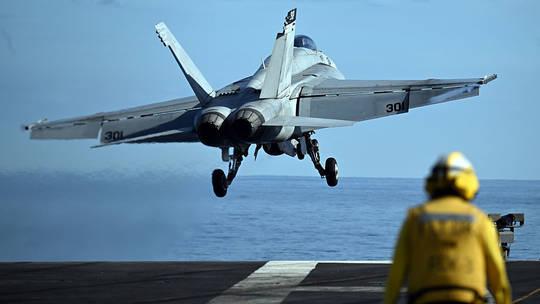
CiberCuba and Balkanweb highlight daily spending estimates for major units and both cite the Gerald R. Ford strike group at an estimated $11.4 million per day.
CiberCuba also reports that the USS Iwo Jima, USS Fort Lauderdale, USS San Antonio and the 22nd Marine Expeditionary Unit combined cost about $8.59 million daily.
AlterNet cites a different per-operation figure for Operation Southern Sphere—about $31 million per day—which, if applied long term, would yield far larger annualized totals.
Costs and political risks
Observers and analysts quoted across these pieces highlight broader political and economic risks tied to the operation's cost. AlterNet cites Heidi Peltier of Brown University's Costs of War project warning that rebuilding Venezuela's oil sector "would effectively require a U.S. occupation." AlterNet also reports comments from former national security figures like John Bolton who said instability would deter oil investment, and it quotes energy executives skeptical about returning to Venezuela.
“Heidi Peltier of Brown University’s Costs of War project, who warned that rebuilding Venezuela’s oil sector would effectively require a U.S. occupation, and former national security figures like John Bolton, who said instability would deter oil investment.”
CiberCuba quotes former Pentagon official Elaine McCusker saying Operation Southern Spear has "likely cost around $2 billion since August 2025," and says analysts expect expenses to "exceed the Department of Defense's planned FY2026 budget." Balkanweb describes political consequences on the ground, noting the U.S. has "arranged a 50 million-barrel oil deal with Venezuela's interim authorities" and is using its presence to influence revenue management. National Today underscores that many categories—reconnaissance hours, satellite use, weapons expended and training—are "missing from that tally," which affects how one judges scope and effectiveness.
Disagreement on total costs
What the sources do not agree on — and what several explicitly flag as unclear — is the true, comprehensive bill once all direct, indirect and follow‑on costs are included. National Today and CiberCuba both emphasize that Bloomberg’s operating‑cost figure omits reconnaissance, satellite time, weapons expended, training, port calls and likely reconstruction or occupation costs; AlterNet and Balkanweb stress the political dimension (unsustainable debt, broader flashpoints, and the capture and custody of Venezuelan officials). All four outlets therefore treat the $3 billion as a significant but incomplete accounting that requires fuller transparency to judge long‑term fiscal and strategic effects.