
President Donald Trump Delays Iran Strikes, Oil Prices Plunge 14%
Key Takeaways
- Oil prices fall about 14% after Trump halts planned Iran strikes.
- Trump says productive talks with Iran; pause on strikes signals de-escalation.
- Brent near $96 and WTI around $84.37 amid price plunge.
Market Reaction Overview
US President Donald Trump announced a significant diplomatic shift in Middle East tensions by confirming ongoing talks with Iran and ordering a five-day pause on planned strikes targeting Iranian energy infrastructure.
“Oil Prices Drop 14% After Trump Pauses Iran Strikes, Tehran Denies Talks With US A statement from the Iranian Foreign Minister Abbas Araghchi, carried by Mehr news agency, said Trump’s comments were part of an effort to reduce energy prices and buy time to prepare military action”
This announcement triggered a dramatic 14% drop in global oil prices, with Brent crude falling from around $113 to $96 per barrel.
The market reaction was swift and substantial, reflecting how quickly energy markets recalibrated once the risk of immediate military escalation began to ease.
Trump stated that discussions involving US envoys Steve Witkoff and Jared Kushner had been productive regarding 'a complete and total resolution of our hostilities in the Middle East,' even as Iran insisted there was no direct dialogue with Washington.
The scale of the decline indicates that oil markets had been pricing in significant disruption risks from potential conflict around the Strait of Hormuz, one of the world's most important oil routes.
Diplomatic Discrepancy
The Trump administration framed the pause in military action as a result of 'very good and productive conversations' between Washington and Tehran over the previous two days.
President Trump specifically instructed the Department of Defense to postpone all military attacks on energy facilities and energy infrastructure in Iran for a five-day period, contingent on the success of ongoing meetings and negotiations.

However, Iran's Foreign Minister Abbas Araghchi, speaking through Mehr news agency, denied any direct talks with the US, instead characterizing Trump's comments as part of an effort to reduce energy prices and buy time to prepare military action.
This discrepancy between the two nations' accounts of diplomatic engagement highlights the complex and often contradictory nature of such high-stakes negotiations.
The Iranian position suggests they view Trump's announcement more as tactical maneuvering than genuine de-escalation, despite the positive market reception.
Market Psychology
Energy markets exhibited dramatic volatility based on diplomatic sentiment rather than fundamental supply changes, revealing the intricate psychology that governs modern petroleum trading.
“Trump Iran Talks Spark 14% Oil Price Plummet to $96 By Muflih Hidayat on March 23, 2026”
The swift 14% intraday price swing in Brent crude illustrates how sophisticated algorithmic trading systems parse news feeds and social media within milliseconds, executing trades based on keyword recognition and sentiment analysis before human traders can react.
This phenomenon creates feedback loops where diplomatic rhetoric can trigger billion-dollar market movements within minutes, regardless of whether actual physical supply conditions change.
The Strait of Hormuz represents more than a shipping lane; it functions as a critical valve controlling approximately 20% of worldwide oil and LNG flows, creating systemic dependency that extends far beyond regional Middle Eastern politics.
When disruption fears ease, markets can rapidly reassess global inventory calculations, though physical market participants must evaluate actual supply conditions over extended timeframes.
Historical Context
The current situation follows established patterns from previous Middle East energy disruptions, where prolonged tensions like those during the 1980s Iran-Iraq War could sustain elevated price environments for years, while brief disruptions like the 2019 attacks on Saudi Aramco facilities showed how quickly markets could recover when physical flows resumed.
Trump's announcement came as the Middle East conflict entered its fourth week, which had already triggered massive selling across global markets, including the US stock market that held relatively better compared to sharper declines seen in Asian markets.
The geopolitical context includes Iran's warning that it would retaliate by targeting energy and water assets across the Gulf, as well as recent missile launches targeting Dimona in Israel near a facility key to its nuclear weapons program.
These interconnected factors create a complex web of risks that energy markets must constantly evaluate, with the current de-escalation representing a potential turning point in the regional conflict dynamic.
Broader Market Impact
The easing of geopolitical tensions didn't just affect oil markets - precious metals also reacted positively, erasing most of their earlier losses.
Comex gold rebounded $314 per troy ounce to trade at $4,406, while Comex silver recovered $7.10 per troy ounce to $68.30.
This broader market response suggests that investors were moving away from safe-haven assets as the immediate threat of Middle East conflict diminished.
The US has been actively trying to reopen the Strait of Hormuz, the narrow mouth of the Persian Gulf, for energy shipments, highlighting the strategic importance of this critical waterway for global energy distribution.
The market's rapid response to diplomatic signals demonstrates the interconnected nature of modern financial markets, where geopolitical developments can trigger coordinated movements across multiple asset classes simultaneously.
This phenomenon underscores how sentiment-driven trading can override fundamental analysis in the short term, even as physical supply and demand factors ultimately determine longer-term price trends.
More on Iran

President Trump Says Iran Deal Within Reach Amid Talks With Senior Iranian Official
10 sources compared

Trump Approves Iran Operation After Netanyahu Presses for Joint Strike on Khamenei
12 sources compared

President Donald Trump orders ICE officers deployed to airports amid DHS shutdown.
227 sources compared
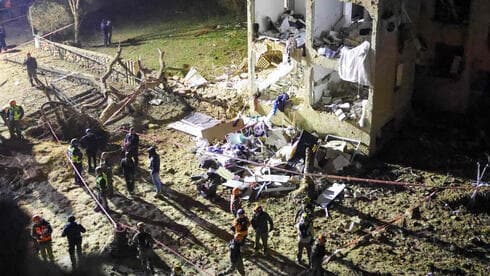
Iranian Missiles Strike Israel; Officials Report 180 Injured Amid Conflicting Casualty Figures.
12 sources compared