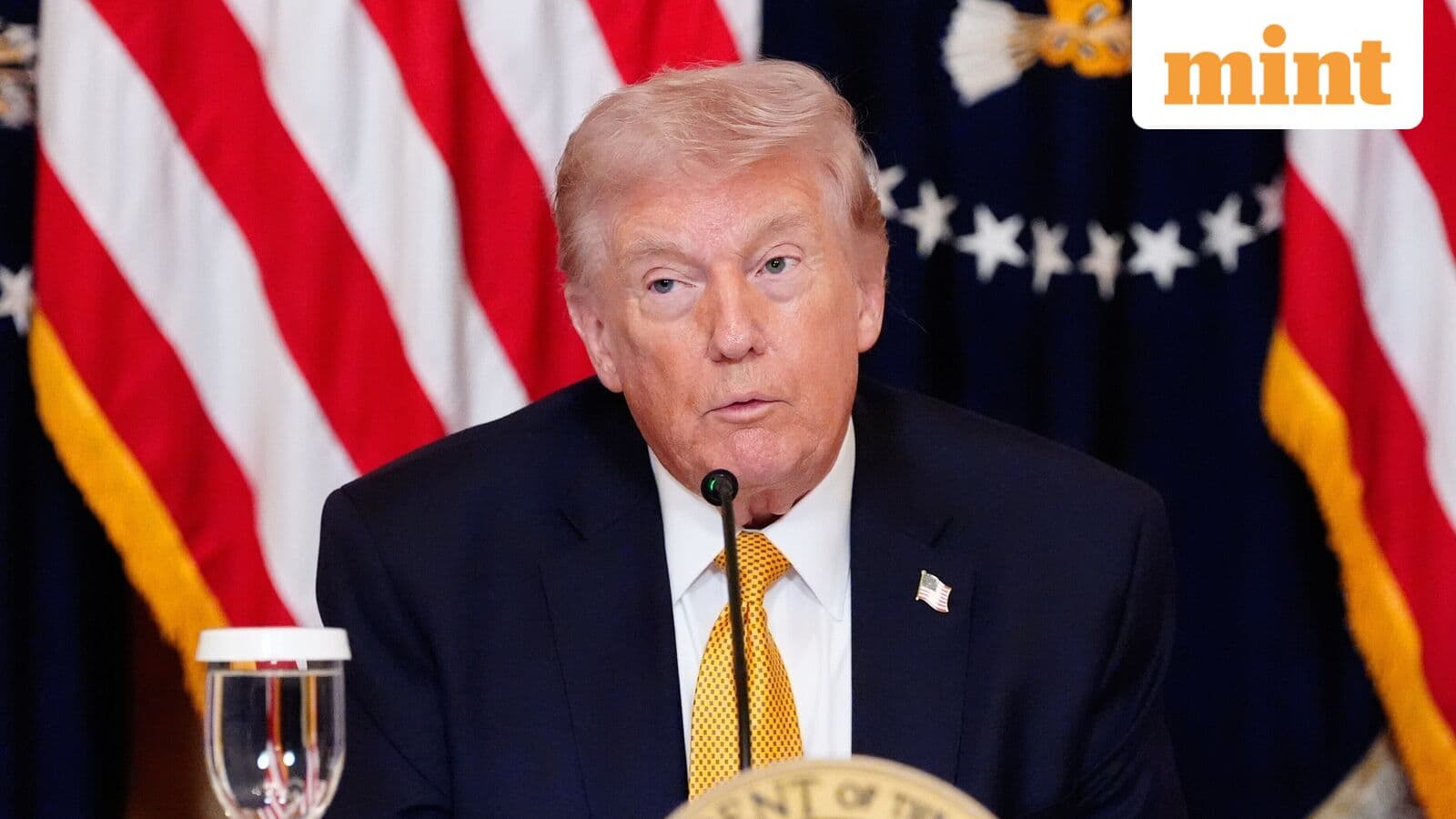
President Donald Trump Initiates War Over Strait of Hormuz as Allies Remain Silent
Key Takeaways
- Trump launched war without allied buy-in; allies largely ghosting.
- Strait of Hormuz effectively closed amid Iranian attacks; trade halted.
- Conflict has persisted for about two weeks, signaling escalation.
Trump's Hormuz War Initiation
President Donald Trump has initiated military action in the Strait of Hormuz region, marking a significant escalation in tensions with Iran.
“More than two weeks into a war President Donald Trump started without asking allies for buy-in, he is now asking for backup, and mostly getting left on read”
The conflict began in late February with US-Israeli strikes against Iran, leading Tehran to effectively shut down the strategically vital waterway.

The strait handles about a fifth of global oil supplies, making its closure a major economic concern.
Trump's administration has been actively seeking international support for clearing mines and restoring navigation.
Treasury Secretary Scott Bessent attempted to clarify the situation, claiming the U.S. "allowed" Iranian oil tankers to cross the strait.
Only a handful of ships have actually passed through the strait in recent days despite these claims.
Meanwhile, Trump's planned trip to China faces potential postponement due to the conflict.
Bessent insisted any delay would be logistical rather than diplomatic pressure.
Allied Reluctance and Divisions
Allied nations have largely remained silent or refused direct military involvement in Trump's Hormuz campaign.
This has created significant divisions within traditional coalitions and alliances.

Germany bluntly stated that "this war has nothing to do with NATO. It is not NATO's war," according to a spokesperson for Chancellor Friedrich Merz.
EU foreign policy chief Kaja Kallas emphasized that the request for assistance falls "out of NATO's area of action" under Article 6.
Luxembourg's Deputy Prime Minister Xavier Bettel was equally dismissive, offering only satellite and communications support while rejecting what he called "blackmail."
Britain's Prime Minister Keir Starmer offered the most supportive language among European leaders.
Starmer stated the UK is "working with allies, including our European partners, to bring together a viable collective plan" to restore navigation.
However, Starmer carefully avoided committing any military assets or specific timelines.
Asian powers have been equally noncommittal in their responses to Trump's requests.
China sidestepped questions about sending ships, while Japanese Prime Minister Sanae Takaichi offered no promises.
Australia ruled out sending naval vessels but said it would send a surveillance aircraft.
South Korea merely noted Trump's requests while exploring "various measures from multiple angles."
Iran's Accusations Against Allies
Iran has responded to the international silence with sharp criticism of Muslim countries.
“US-Iran war LIVE Updates: The conflict between US and Israel on one side and Iran on the other has crossed the two-week mark, and peace remains nowhere in sight with both Washington and Tel Aviv indicating that fighting will rage on for at least a few more weeks”
Iran's top security official Ali Larijani issued a scathing statement addressed to Muslim governments worldwide.
Larijani lamented that "no Islamic government stood alongside the people of Iran except in rare cases and limited to political positions."
He singled out the United Arab Emirates for criticism.
Larijani accused the UAE of calling Iran an enemy after attacks on Emirati targets.
He questioned "Is Iran expected to sit idly by while American bases in your countries are used to attack it?"
Larijani condemned governments that had called Iran an enemy for targeting "American bases and US and Israeli interests on their soil."
He framed the conflict as a battle between "the United States and Israel on one side and Muslim Iran and the forces of resistance on the other."
Larijani called for Muslim unity against what he referred to as the "Great Satan" and "Little Satan" - meaning the United States and Israel respectively.
Economic Impact and Regional Alliances
The economic impact of the Hormuz crisis has been significant, with oil prices fluctuating dramatically.
Global energy markets are reacting to the uncertainty surrounding the strait's status.
U.S. oil prices "lowered significantly" after Treasury Secretary Bessent's comments.
Oil is now trading "under $95 a barrel," according to Fortune reporting.
The long-term consequences could be far more severe given the strait's importance.
The strait handles approximately 20% of the world's oil and 20% of its liquefied natural gas supplies.
European officials have particular cause for concern due to their reliance on Gulf oil supplies.
They also fear Trump may declare victory soon and leave Europe "holding the minesweeper."
France and Netherlands, with advanced mine-hunting technologies, could be particularly vulnerable.
The UAE has emerged as a key supporter of U.S. efforts in the region.
The UAE doubled down on U.S. ties after absorbing nearly 2,000 Iranian projectiles.
UAE Minister Reem Al-Hashimy stated "We don't take to being bullied around."
UK Prime Minister Starmer announced £53 million in financial relief measures linked to the crisis.
Trump's Frustration with Allies
President Trump has publicly expressed frustration with allied nations' lack of enthusiasm for the Hormuz military campaign.
“President Donald Trump on Monday criticized some of the United States’ allies for not heeding his calls to help reopen the Strait of Hormuz, which has been effectively closed due to Iranian missile and drone attacks”
He specifically criticized countries that have benefited from American security guarantees while refusing to contribute.
Trump stated in a Washington DC news conference: "Some are very enthusiastic about it, and some are in. Some are countries that we've helped for many, many years. We've protected them from horrible outside sources, and they weren't that enthusiastic."
He mentioned having "45,000 soldiers, great soldiers, protecting them from harm's way" across various countries.
Trump lamented that when asked about mine sweepers, these countries responded with "we'd rather not get involved."
He revealed his long-standing skepticism about the U.S. protection role.
Trump stated: "When I've been a big critic of all of the protecting of countries, because I know that we'll protect them, and if ever needed, if we ever needed help, they won't be there for us."
This public airing of grievances comes amid Trump's desire to know China's position before his planned summit.
Treasury Secretary Bessent acknowledged the trip could be delayed due to the ongoing conflict.
More on Iran

Israel strikes Iran's Pars gas field as Tehran vows revenge
14 sources compared
Trump threatens to blow up South Pars gas field if Iran attacks Qatar again
10 sources compared
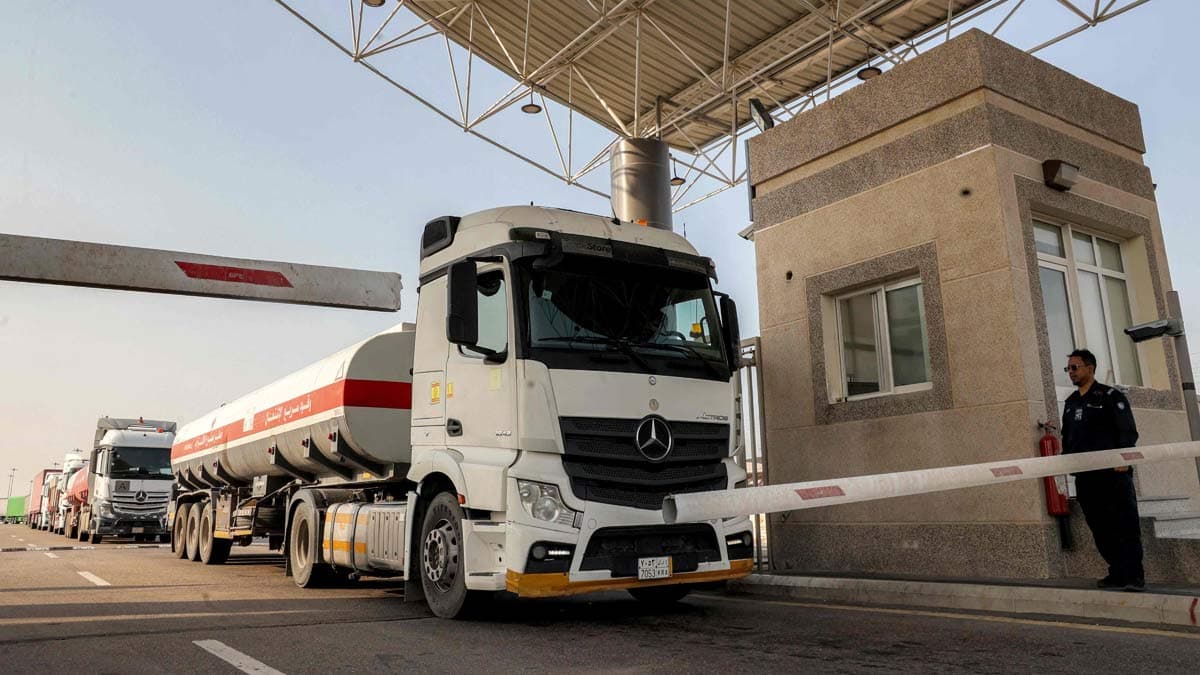
UAE Halts Habshan Gas Facility Operations After Debris From Intercepted Missiles
10 sources compared

Iran Threatens Gulf Energy Facilities After Israel Strikes South Pars Gas Field
11 sources compared