
President Donald Trump orders U.S. forces to apprehend Nicolás Maduro, ending two decades of Chavismo
Key Takeaways
- Nicolás Maduro was apprehended by U.S. forces in January 2026.
- U.S. forces attacked targets in Caracas as part of the operation.
- The event is described as a major geopolitical shift with long-term regional consequences.
Maduro's Capture
President Donald Trump ordered U.S. forces to apprehend Nicolás Maduro in a military operation named 'Absolute Resolution,' marking the end of over two decades of Chavismo rule in Venezuela.
“For years, Venezuela policy has been marked by a shared fiction: that the conflict could be managed indefinitely on the terrain of pressure without rupture, of condemnation without intervention, of rhetoric without immediate consequences”
This norm-shattering event represents one of the most significant interventions in Latin American recent history.

Trump declared that 'the Cuban dictatorship is ready to fall' following Maduro's capture.
The operation signaled a dramatic shift in U.S. policy toward the region, moving from strategic withdrawal to direct military intervention.
The capture of a sitting president by foreign forces represents an unprecedented escalation that could fundamentally alter international relations and the balance of power in the Western Hemisphere.
Regional Fallout
The operation triggered immediate regional repercussions, with Trump issuing direct threats to other Latin American leaders during the aftermath.
In a phone interview with Fox News, Trump warned that 'something will have to be done about Mexico' and questioned President Claudia Sheinbaum about drug cartels.
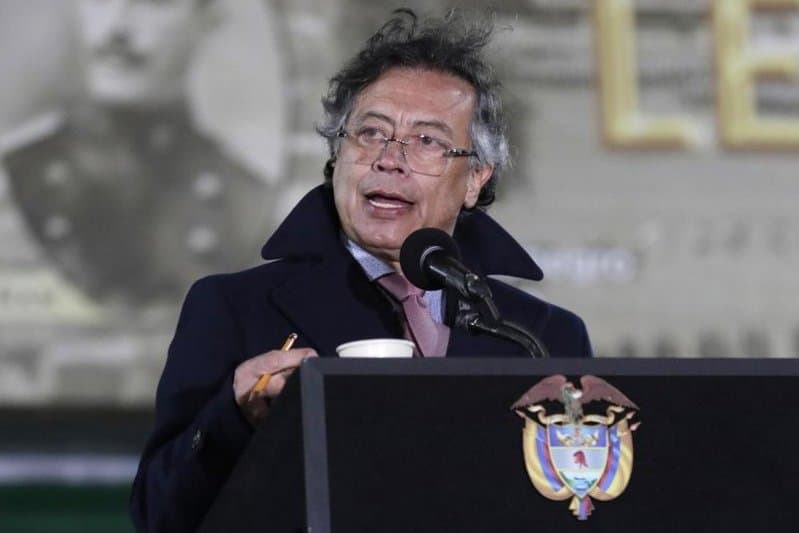
He also accused Colombian President Gustavo Petro of drug production, stating: 'He's making cocaine and they're sending it into the United States, so he does have to watch his ass.'
These aggressive statements from Trump created widespread concern among South American leaders about the direction of U.S. policy and potential further military interventions in the region.
Cuba's Crisis
Cuba faces existential vulnerability following Maduro's capture, as the island nation has long relied on Venezuela for most of its energy supply.
“Speaking just hours after the successful operation to depose Nicolás Maduro, President Donald Trump issued a stark warning: “American dominance in the western hemisphere will never be questioned again”
Between January and November 2025, Venezuela sent 27,000 barrels of crude oil and fuel per day to Cuba at subsidized rates, according to Reuters data cited by TIME.
This partnership is credited with keeping the Cuban economy afloat despite decades of U.S. pressure.
With Maduro now in U.S. custody, Cuba's energy lifeline is threatened, leading Trump to declare Cuba 'a failing nation' and hint at future action.
Secretary of State Marco Rubio explicitly linked the Venezuelan operation to Cuba, stating that 'one of the biggest problems Venezuelans have is they have to declare independence from Cuba,' while Senator Lindsey Graham directly called for targeting Cuba next as 'one of his greatest allies and one of the most oppressive regimes in our backyard.'
Spain's Stance
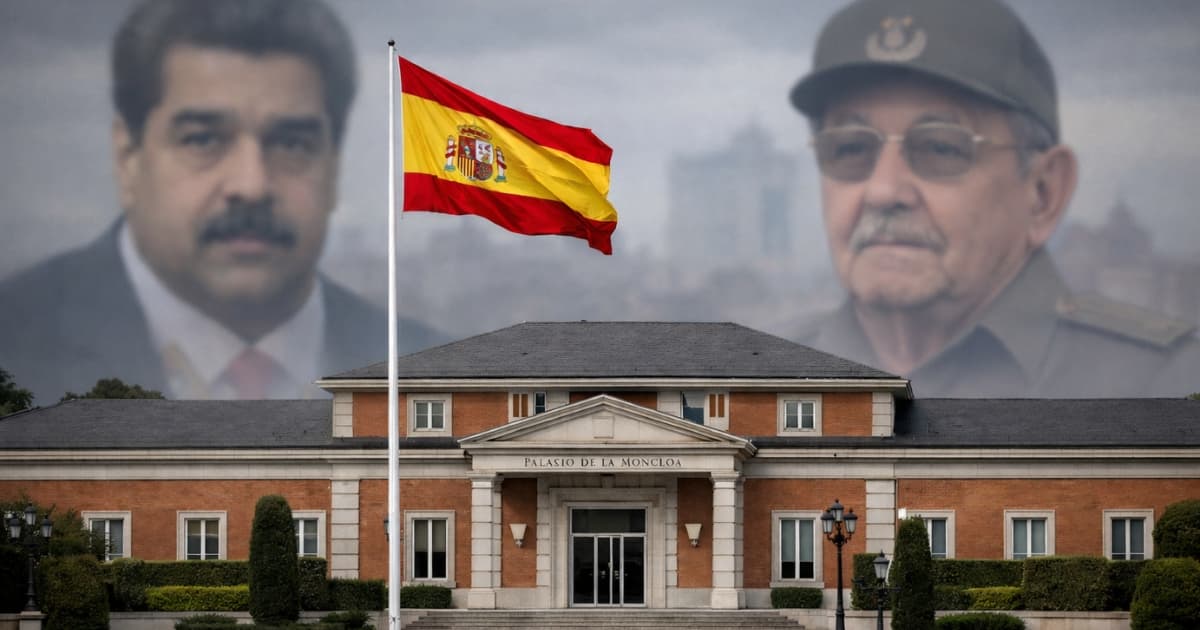
Spain's response to the Maduro capture was characterized by 'distant disapproval,' with Prime Minister Pedro Sánchez's government condemning the U.S. operation for 'violating international law' and warning of 'regional instability risks.'
This criticism raised uncomfortable questions about Spain's actual commitment to democracy in Cuba and Venezuela over the past three decades.
CubaHeadlines reports that Spain has maintained an ambiguous relationship with both regimes, prioritizing business interests and diplomatic appeasement over human rights.
Spanish companies dominate Cuba's tourism sector and have remained involved despite accumulating losses and unpaid debts, while major Spanish corporations like Repsol continued business in Venezuela hoping to recover investments.
This 'business first, freedom later' approach has indirectly supported both dictatorships, extending their 'artificial lifespan at the cost of their peoples' suffering.'
Global Shift
The capture of Maduro represents a fundamental shift in international norms and strategic calculations, signaling the collapse of previous ambiguities that allowed countries to position themselves without taking clear sides.
“In January 2026, a momentous event unfolded: the apprehension of Nicolás Maduro by U”
According to analysis in Agenda Pública, today's attacks appear as 'the culmination of a process, not as an anomaly,' stemming from the conceptualization of Venezuela as a 'narco-state' and the U.S. strategy described as a 'war without war.'
The operation sends a broader message about the limits of strategic autonomy for certain states, even in a formally multipolar world.
This intervention could prompt Russia and China to accelerate their own geopolitical ambitions, as TIME notes that both countries 'could take Trump's flouting of international norms as an invitation to do the same, or to continue doing so, in Russia's case.'
The capture thus marks not just the end of Chavismo but potentially the beginning of a new era of more assertive great power competition and interventionism.
More on South America
Colombia’s Petro Accuses Ecuador of Bombing Near Border
11 sources compared

Former Venezuelan President Nicolás Maduro Captured by U.S. in Venezuela Strike
14 sources compared
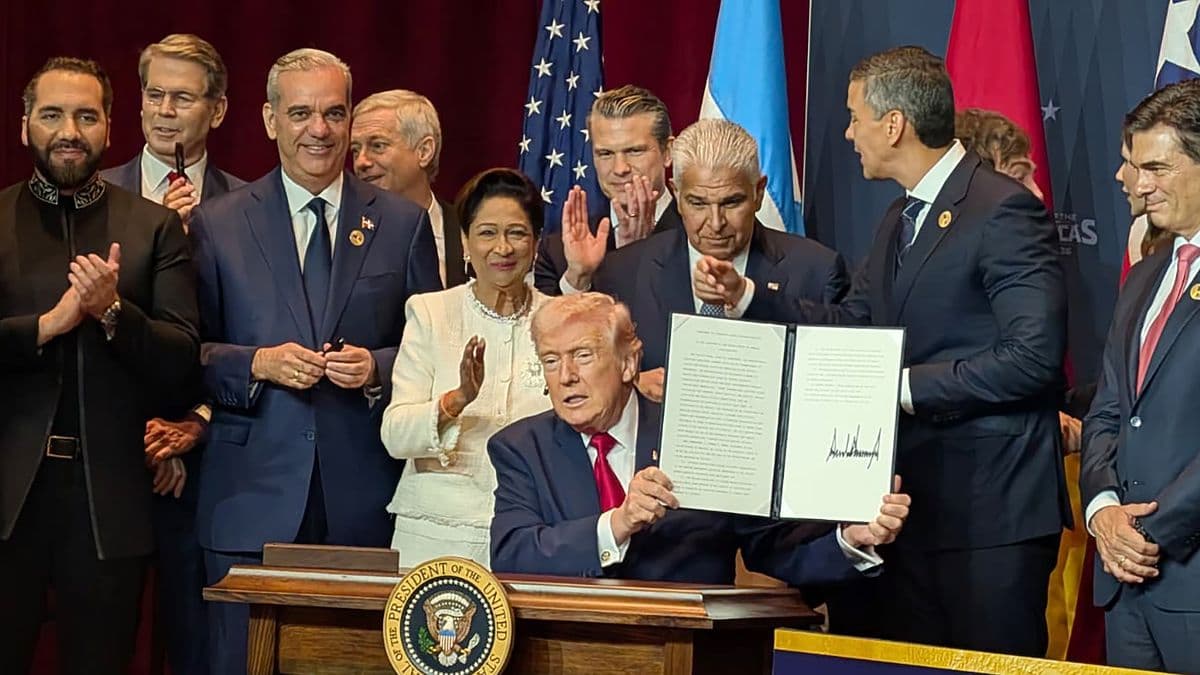
President Trump Offers Missiles to Latin America to Destroy Cartels
54 sources compared

US Restores Diplomatic Relations With Venezuela Months After Trump-Ordered Raid Captured Maduro
68 sources compared