USA21 February, 20263 min read
President Donald Trump Raises Global Import Tariff to 15% After Supreme Court Strikes Down His Sweeping Tariff Program
This article is an automated aggregation of coverage from news outlets. Our editorials offer in-depth analysis curated by the NewsCord team.
Supreme Court struck down Trump’s earlier sweeping tariffs in a 6–3 decision. President Trump immediately raised a global import tariff from 10% to 15%.

57 outlets told this the same way.
Outlets did split on Trump Interrupted by Protesters at San Antonio Rally for Ken Paxton →
Court ruling on tariffs
On Feb. 20–21, 2026 the U.S. Supreme Court issued a 6–3 decision striking down the broad tariff program President Donald Trump had imposed using emergency economic powers.
“The U.S. Supreme Court ruled 6–3 that former President Trump exceeded his authority by using the International Emergency Economic Powers Act (IEEPA) to impose broad tariffs in April 2025, finding that IEEPA—intended for national emergencies—does not authorize the president to levy tariffs.”
Within a day the White House announced it would immediately raise a temporary worldwide import levy from the 10% rate announced earlier to the 15% maximum allowed under a separate statute.

Multiple outlets reported the Court found the International Emergency Economic Powers Act (IEEPA) did not authorize the sweeping tariffs the administration had tried to impose.
Those outlets also reported the administration moved to Section 122 (or similar trade statutes) to claim a 15% cap that lasts 150 days unless Congress acts.
Sources described the decision and the rapid shift to a 15% temporary duty as legally contentious and politically charged.
Legal basis for tariffs
The administration cited Section 122 of the Trade Act of 1974 as the legal route for the 15% rate. Multiple outlets say Section 122 permits up to 15% duties for 150 days without prior congressional approval, and that extensions beyond that window would require Congress. The administration also signaled it will pursue other authorities such as Section 301 investigations to design narrower, 'legally permissible' tariffs and to target specific unfair trade practices.
Several reports stress Section 122 is temporary and could be used repeatedly to create rolling measures. Legal analysts in other pieces warn the step is narrower than the broad emergency power that the Court struck down.
Trump response to ruling
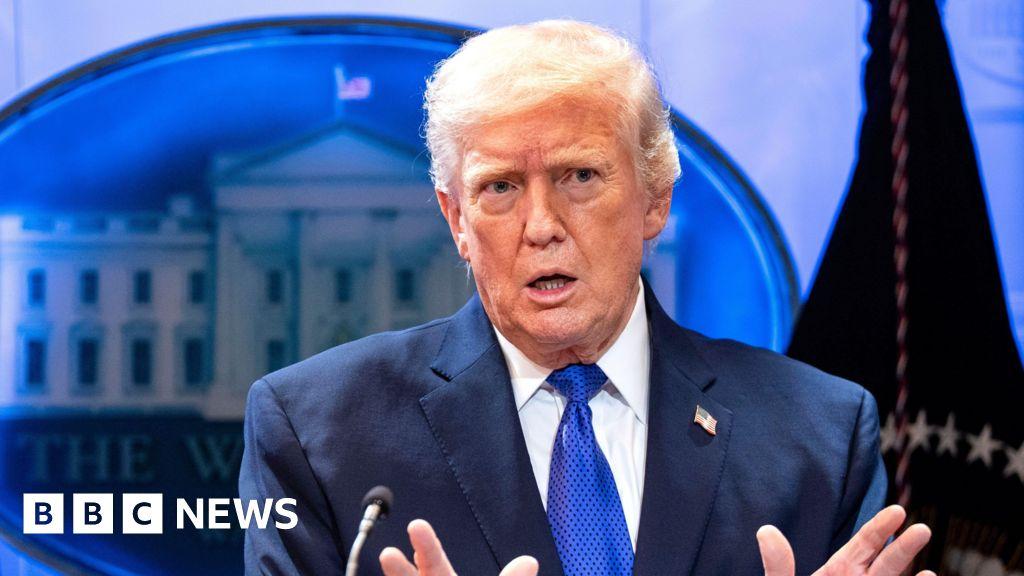
Trump’s immediate public response on Truth Social mixed legal defiance with sharp personal attacks on several justices. Multiple outlets recorded him calling the decision 'ridiculous,' 'poorly written' and 'extraordinarily anti‑American,' and said he used epithets such as 'lapdogs,' called some justices 'an embarrassment,' and said he was 'ashamed' of certain members.
“Trump reacted by announcing he was immediately raising that 10% tariff to 15% and, in a Truth Social post, slammed the justices as 'lapdogs,' 'disloyal to our Constitution,' called the ruling 'ridiculous,'...”
He also praised the three dissenting justices in the 6–3 ruling; some reports say he singled out Justice Brett Kavanaugh as a 'new hero' and commended Justices Clarence Thomas and Samuel Alito. Coverage varies on whether the rhetoric is presented as a political performance, a legal strategy, or both.
Coverage of tariff changes
Coverage differs on the immediate economic effects and the practicalities of enforcement. Several mainstream business-oriented outlets report companies preparing to seek refunds and warn of market and supply‑chain disruption.
Other outlets highlight the revenue already collected and the likelihood of litigation over duties and refunds. Some pieces underline that sector‑specific duties tied to other statutes — steel, aluminium, autos and semiconductors — remain intact and that exemptions for critical sectors are being retained as the administration refines its approach.

Regional media reactions
International and regional outlets emphasise different geopolitical and country impacts. Asian outlets focus on consequences for India and trade partners. West Asian and European outlets highlight the move as an attempt to sidestep the Court’s limit and note industry and diplomatic reactions.
“A court ruling undercut the president’s use of emergency economic powers to impose tariffs, prompting business leaders to urge clearer, more predictable trade rules so companies can plan investments and supply chains.”
Latin American and African outlets report the factual sequence and possible follow-on measures. Indian and regional papers underline that the 15% temporary duty interacts with existing MFN and negotiated rates.

They add that New Delhi is reviewing the implications. Other outlets point out the ruling reduces one executive route for tariffs while leaving other statutory tools intact.