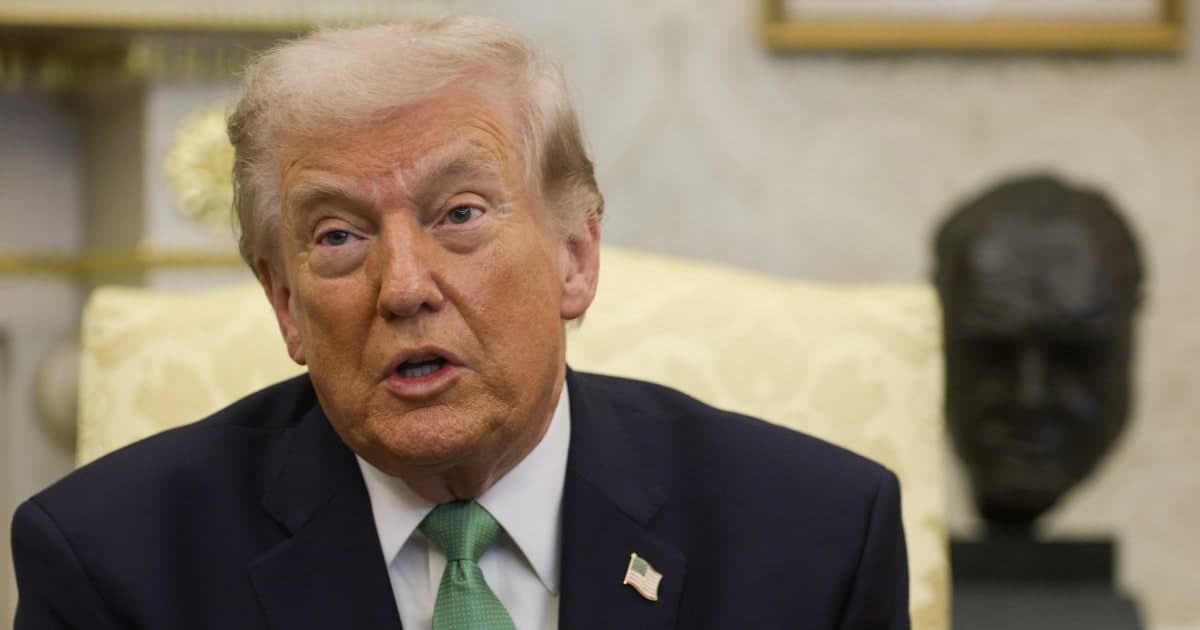
President Donald Trump says US no longer needs allies to secure Strait of Hormuz
Key Takeaways
- Trump says US no longer needs allied help to defend Hormuz.
- Trump expressed anger allies aren’t pitching in to secure the Strait of Hormuz.
- Allies showed little interest and rebuffed Trump's requests for joint Hormuz security.
Trump's About-Face
President Donald Trump dramatically reversed course on Tuesday, abandoning his previous calls for international allies to help secure the Strait of Hormuz amid the ongoing war with Iran.
“WASHINGTON — President Donald Trump dropped his push Tuesday for U”
The president's abrupt about-face came just one day after he had repeatedly urged nations to 'get involved' in protecting the crucial shipping lane, which had been effectively shut down due to Iranian attacks.
Trump made his new position clear both on social media and during an Oval Office meeting with Ireland's Prime Minister Micheál Martin, declaring 'We don't need any help, actually.'
This shift reflects Trump's 'America First' approach to global conflicts, as he claimed military success had rendered external assistance unnecessary.
The reversal highlights the evolving nature of Trump's foreign policy, which he has consistently framed as challenging traditional alliance structures and questioning the value of multinational cooperation in U.S. military endeavors.
Alliance Rejections
Trump's change in position followed a chilly reception from key U.S. allies whom he had tried to enlist in a joint effort to police the strait.
German Defense Minister Boris Pistorius bluntly stated, 'This is not our war; we have not started it,' while French President Emmanuel Macron announced his country would 'never take part in operations to open or free the Strait of Hormuz in the current context.'

Luxembourg's Deputy Prime Minister Xavier Bettel went further, calling Trump's push for European assistance 'tantamount to blackmail.'
These rejections deeply angered Trump, with his close ally Senator Lindsey Graham revealing he had 'never heard him so angry in my life.'
Graham shared Trump's frustration, writing that 'The arrogance of our allies to suggest that Iran with a nuclear weapon is of little concern and that military action to stop the ayatollah from acquiring a nuclear bomb is our problem not theirs is beyond offensive.'
The diplomatic friction demonstrated the persistent tensions between Trump's unilateralist approach and traditional alliance commitments.
NATO Criticism
The president seized on the opportunity to criticize NATO more broadly, framing the alliance as fundamentally unfair to American interests.
“WASHINGTON (Kyodo) -- The United States no longer needs naval support from Japan and other allies to help secure the Strait of Hormuz, President Donald Trump said Tuesday, claiming military success has been achieved in its war with Iran”
Trump declared that 'NATO's making a very foolish mistake' and asserted that 'I always considered NATO, where we spend Hundreds of Billions of Dollars per year protecting these same Countries, to be a one way street — We will protect them, but they will do nothing for us, in particular, in a time of need.'
While Trump claimed he was not currently considering pulling out of NATO, he suggested it was 'certainly something that we should think about' and controversially asserted he would not need congressional approval to leave the alliance.
This rhetoric reflects Trump's long-standing skepticism of military alliances and his belief that the U.S. bears an disproportionate burden in global security arrangements.
The confrontation over the Strait of Hormuz has become a test case for Trump's 'America First' foreign policy approach, challenging decades of alliance management and collective security principles.
Asian Allies Targeted
Beyond Europe, Trump also targeted U.S. allies in Asia for their reluctance to contribute to the Strait of Hormuz security mission.
Taking to social media, Trump specifically named Japan, Australia, and South Korea, declaring 'Because of the fact that we have had such Military Success, we no longer 'need,' or desire, the NATO Countries' assistance -- WE NEVER DID! Likewise, Japan, Australia, or South Korea.'
This rebuke came as Trump prepared to meet with Japanese Prime Minister Sanae Takaichi at the White House on Thursday.
The timing was particularly sensitive given Japan's heavy dependence on Middle Eastern energy—more than 90 percent of Japan's crude oil imports come from the region, with most traveling through the Strait of Hormuz.
Japan faces constitutional constraints that make it difficult to deploy its Self-Defense Forces to war zones, a limitation Trump appeared to dismiss in his criticisms.
The president's broader framing of the military operation as an effort on behalf of many others to ensure world peace suggests he continues to view international cooperation through the lens of American leadership rather than alliance solidarity.
Political Implications
The diplomatic fallout from Trump's demands and subsequent reversal carries significant implications for both domestic politics and international stability.
“WASHINGTON — President Donald Trump dropped his push Tuesday for U”
Domestically, the Iran war has triggered a spike in gas prices, creating political problems for Trump ahead of the congressional midterm elections in November.
While Trump had initially claimed 'numerous countries have told me they are on their way' to help, no announcement or list of participating nations was ever released, leaving questions about the international support he had promised.
The situation has exposed deep divisions within Trump's own administration and coalition, with some domestic allies reportedly worrying that securing the Strait of Hormuz could require sending American troops into Iran.
Internationally, the effective closure of the Strait of Hormuz threatens global energy supplies and economic stability, particularly for nations heavily dependent on Middle Eastern oil.
Trump's increasingly unilateral approach risks further isolating the U.S. at a time when coordinated international action may be most needed to address the regional crisis and its economic consequences.
More on Iran

Israel strikes Iran's Pars gas field as Tehran vows revenge
14 sources compared
Trump threatens to blow up South Pars gas field if Iran attacks Qatar again
10 sources compared
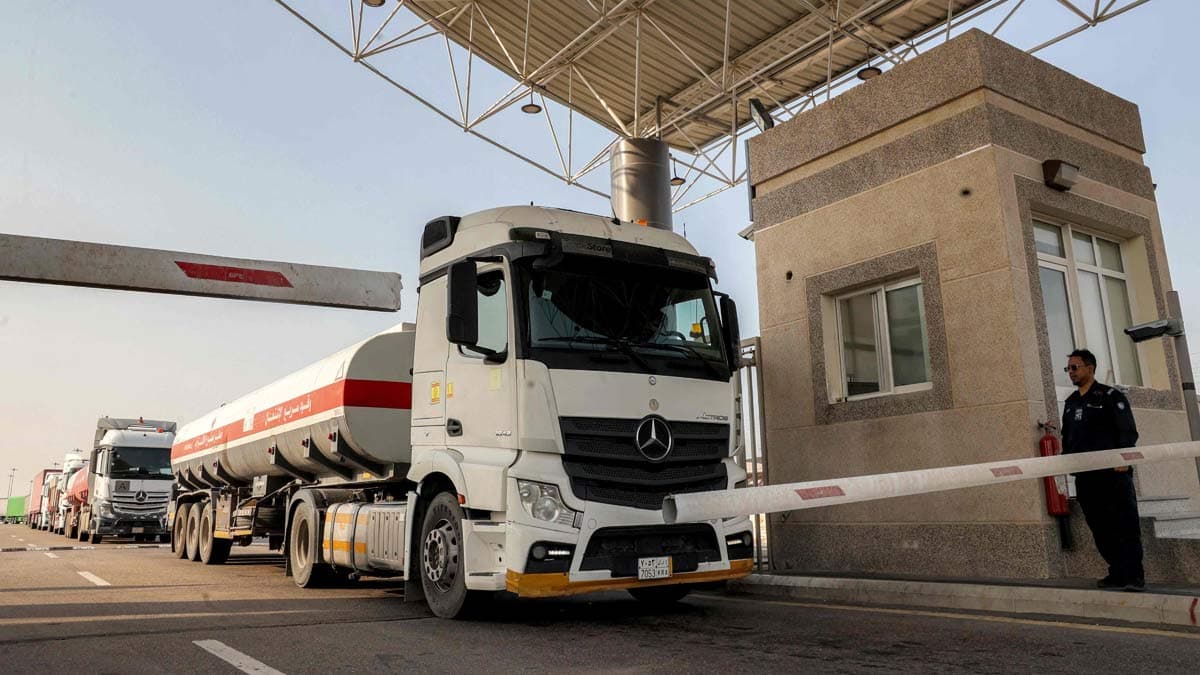
UAE Halts Habshan Gas Facility Operations After Debris From Intercepted Missiles
10 sources compared

Iran Threatens Gulf Energy Facilities After Israel Strikes South Pars Gas Field
11 sources compared