South America16 February, 20264 min read
President Donald Trump’s Venezuela Raid Costs U.S. Taxpayers Nearly $3 Billion
This article is an automated aggregation of coverage from news outlets. Our editorials offer in-depth analysis curated by the NewsCord team.
U.S. military operations around Venezuela cost about $3 billion, Bloomberg estimates. Naval operational costs reached about $20 million per day from mid-November to mid-January.

8 outlets told this the same way.
Outlets did split on Brazil Police Kill Suspect After 13 Kindergarteners Held Hostage In Curitiba →
Costs of U.S. buildup
A Bloomberg-based tally published in multiple outlets places the direct operating bill for the U.S. military buildup around Venezuela at roughly $3 billion, but sources emphasize important caveats about what that number covers. National Today reports that Bloomberg estimated the U.S. military operation against Venezuela cost about $3 billion, but experts say that figure only covers operating costs for ships and aircraft and omits many major expenses. Balkanweb likewise notes Bloomberg’s total approaches $2.9 billion while flagging daily operating-cost peaks above $20 million.
“Bloomberg estimated the U.S. military operation against Venezuela cost about $3 billion, but experts say that figure only covers operating costs for ships and aircraft and omits many major expenses.”
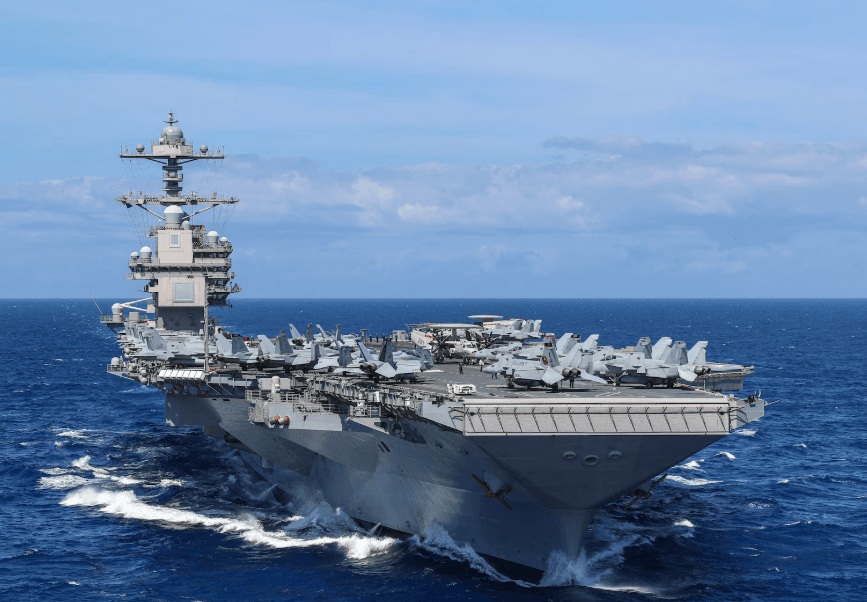
Latin Times says the Ford-centered buildup has cost more than $20 million per day and as much as nearly $3 billion in total. AlterNet places Bloomberg’s figures in the wider context of multiple operations and expert estimates that suggest larger, sustained costs if deployments continue. Together the outlets present the $3 billion figure as a headline estimate derived from ship and strike-group operating costs, while several analysts say that headline leaves out other significant categories of spending.
Military cost estimates
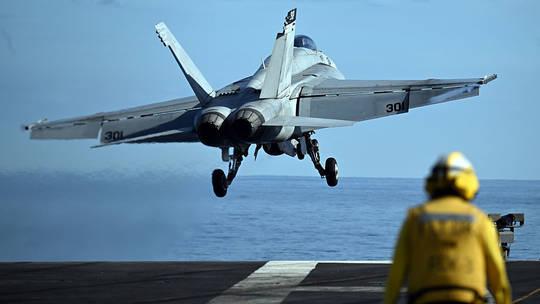
A Bloomberg-derived breakdown, reproduced across outlets, lists specific platform and unit costs but leaves out many operational line items. National Today reproduces Bloomberg’s itemized totals—$200.8 million for three amphibious dock ships, $873.6 million for a Marine expeditionary unit, $417.5 million for the carrier USS Gerald Ford and $323.4 million for its air wing—and warns that the Bloomberg total omits reconnaissance and tactical flight hours, satellite support, training, weapons expended, port calls and other logistics. Balkanweb quantifies per-day operating rates and notes the USS Ford strike group alone is estimated at $11.4 million per day.
Latin Times describes the buildup at “more than $20 million per day.” AlterNet highlights alternative expert estimates, citing CSIS’s $31 million per day, to show how different assumptions about included costs dramatically change annualized totals. These sources provide differing per-day estimates, reflecting varying assumptions about which operational costs are included.
Debate over bill costs
Sources diverge on how much of the bill requires new appropriations versus coming from existing budgets and on whether the headline figure understates longer-term fiscal exposure. Latin Times and Balkanweb note that much of the spending was already budgeted in Pentagon appropriations or that most costs are being covered from existing defense funds. That view is echoed by reporting that the White House says no additional taxpayer money was spent because forces were already deployed.
“Much of the spending was already budgeted in Pentagon appropriations, but analysts warn extended deployments add extra costs (additional flight hours, munitions use and allowances).”
By contrast, National Today and AlterNet stress omitted cost categories and warnings from analysts that a full accounting is needed. National Today lists missing items as costs for reconnaissance and tactical flight hours, satellite support, training, weapons expended, port calls and other logistics. AlterNet quotes experts who say rebuilding or occupation scenarios could multiply the bill into the tens of billions or more.
Coverage of Venezuela operation costs
Beyond budget math, some outlets frame the operation as part of a broader political and military posture that alters the interpretation of costs. Balkanweb reports an expansive narrative—saying the operation was "initially presented as a counter-narcotics mission" and later expanded "after President Donald Trump ordered the early-January abduction of Venezuelan President Nicolás Maduro and his wife Cilia Flores," and that U.S. forces have "enforced a partial blockade while Washington supervises a 'power transition'; Trump has said the U.S. will 'run the country' until a 'smart transition' is completed."
AlterNet situates the Venezuela deployment among multiple threatened or actual operations (Colombia, Mexico, Nigeria, Gaza, Iran, Greenland) and warns that the fiscal cost is one element of a broader pattern of costly, sprawling commitments. Times of India also flags the $3 billion price tag in a video roundup, while Latin Times focuses on operational details such as the Ford’s redeployment history.

Calls for full accounting
Observers across outlets call for a fuller accounting and highlight open uncertainties about the long-term fiscal and strategic consequences. National Today ends by noting "Observers note the government has incentives to understate costs, and a full accounting is needed to judge the operation’s scope and effectiveness." Balkanweb records official pushback that stresses existing budgets.
“Observers note the government has incentives to understate costs, and a full accounting is needed to judge the operation’s scope and effectiveness.”
AlterNet warns that experts say reconstruction, occupation or prolonged deployments could multiply costs dramatically. Вектор Ньюз and some roundups (Times of India) do not elaborate operational detail in their excerpts, underscoring that several outlets covered the headline figure without the same depth on omitted categories. Taken together, the reporting shows agreement that headline totals are significant but disagreement and uncertainty about how much remains off-book or future liability, and that a transparent, comprehensive accounting is still lacking.