
President or Congress? Who in the US has the power to declare war?
Key Takeaways
- Democrats allege Trump sidelined Congress to start the war on Iran.
- They accuse him of failing to explain the war's reasons and endgame.
- Opposition lawmakers challenge Trump's authority to conduct the conflict.
War launch and backlash
On February 28, the United States and Israel launched strikes on Iran that President Donald Trump described as major combat operations, code-named Operation Epic Fury, which reportedly killed Iranian Supreme Leader Ali Khamenei and several other senior officials in Tehran.
“As United States President Donald Trump faces mounting global criticism for starting the war on Iran with Israel, he is also facing a battle at home with opposition lawmakers who have challenged his authority to conduct the conflict”
Democrats argued that Trump sidestepped Congress to start the war and has failed to explain the reasons or the endgame, while the Trump administration contended the president has the right to order emergency measures in self-defence against an imminent threat posed by Iran.
In early March, Republican senators and one Democrat rejected a Democratic-led war powers resolution by a vote of 53-47, with supporters arguing the measure would curb presidential overreach and opponents arguing it would hamper Congress’s authority.
Constitutional framework and guardrails
The article explains that the US Constitution divides war powers between Congress and the president, with Congress able to declare war, grant authorisations, fund military efforts, and regulate enemy property, while the president may direct military action in self-defence as commander in chief without prior approval.
It recalls the War Powers Resolution of 1973, which requires consultation with Congress and imposes time limits on deployments without legislative authorisation.
The piece notes that presidents have historically bypassed guardrails, citing Biden’s fast-tracking arms shipments to Israel after the October 2023 war, and mentions Trump’s bombing of Iran’s nuclear facilities on June 22 and the postponement of briefings to Congress from June 24 to June 26.
International law and civilian impact
Rights experts say Washington has violated international law in striking Iran, with civilian infrastructure targeted and hundreds of civilians killed.
“As United States President Donald Trump faces mounting global criticism for starting the war on Iran with Israel, he is also facing a battle at home with opposition lawmakers who have challenged his authority to conduct the conflict”
A US Tomahawk missile appears to have hit a girls’ primary school near an army base in Minab, killing more than 160 people, most of them children.
On March 7, US air strikes targeted a desalination plant on Qeshm Island in the Strait of Hormuz, cutting off freshwater supplies to 30 villages.
The US has been accused of torpedoing an Iranian warship filled with sailors near Sri Lanka, with at least 87 people killed and scores injured.
United Nations Secretary-General Antonio Guterres condemned the move and warned that the attacks and Iran’s retaliation would undermine international peace and security, calling for an immediate end to the hostilities.
Analysts cited by the piece say the strikes raise questions about legality, with some arguing they breach international law while others offer mixed assessments.
Funding leverage and political viability
Polls show most Americans do not support the conflict, with costs estimated at about $11 billion for the first six days and about $1 billion per day since then.
After the Democratic-led war powers resolution was voted down in the Senate, opponents must seek other means to counter the conflict, including using Congress’s funding power to stall additional war funding.
Republicans hold a 53-47 Senate majority, making the 60-vote threshold for most legislation difficult unless at least seven Democrats cross party lines.
The article notes historical precedents for restricting funding, including actions in 1970, 1973, 1982, and 1993, and highlights Ro Khanna as a central figure in the effort to curb funding.
More on USA
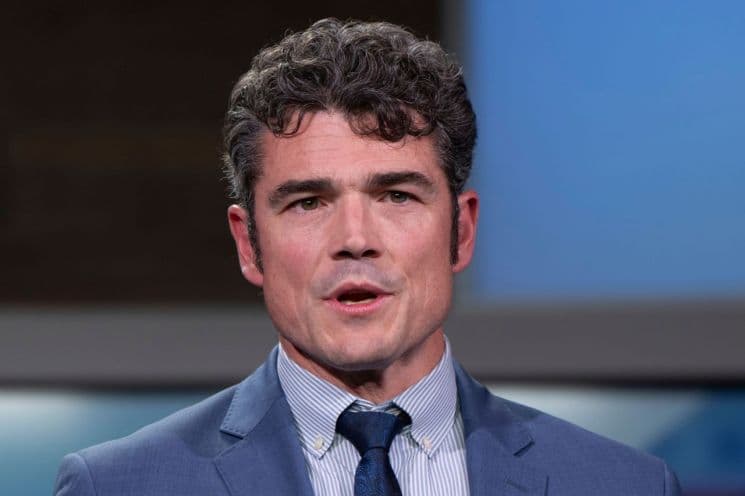
FBI investigates Joe Kent, former National Counterterrorism Center director, for allegedly leaking classified information.
81 sources compared

Lt. Gov. Juliana Stratton Wins Illinois Democratic Senate Primary to Replace Durbin
171 sources compared

Senators Grill Mullin Over DHS Nomination as Intel Officials Testify on Top Threats
91 sources compared

César Chávez Faces Sexual Abuse Allegations, Including Rape of Dolores Huerta and Other Survivors
34 sources compared