USA21 February, 20262 min read
President Trump Attacks Supreme Court, Calls Justices 'Fools' and 'Lapdogs' After Court Strikes Down His Tariffs
Supreme Court ruled 6–3 that IEEPA did not authorize Trump's broad global tariffs. President Trump signed an order imposing a 10% global tariff under Section 122.
43 outlets told this the same way.
Outlets did split on Trump Interrupted by Protesters at San Antonio Rally for Ken Paxton →
Supreme Court tariff ruling
The U.S. Supreme Court on Feb. 20 issued a 6–3 ruling that President Trump exceeded his authority by using the International Emergency Economic Powers Act (IEEPA) to impose broad global tariffs, with Chief Justice John Roberts writing that IEEPA does not authorize duties and the majority applying the major‑questions doctrine to limit unilateral presidential tariff power.
“The Supreme Court ruled 6–3 that President Trump exceeded his authority by imposing broad global tariffs under the International Emergency Economic Powers Act (IEEPA), holding that the 1977 law 'does not authorize the President to impose tariffs.'”
The decision voided many of the IEEPA‑based levies that had underpinned Trump’s trade agenda, and the Court left several practical questions — including how and whether importers should be refunded — unresolved.

Several outlets summarized the legal holding and its immediate effect on the administration’s tariff program.
Trump's response to justices
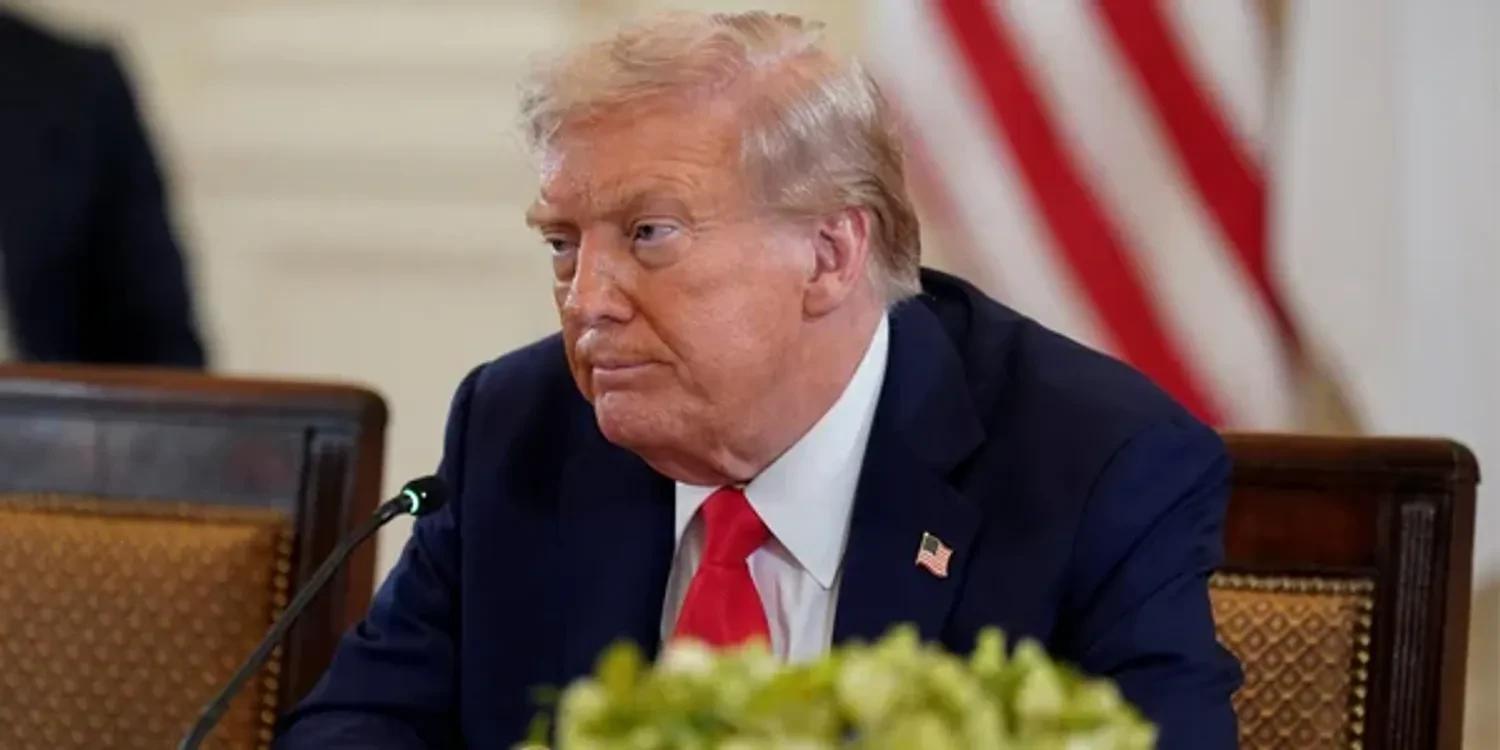
President Trump responded angrily at a White House briefing and on social media. He attacked the six justices who voted against him with personal insults and alleged foreign influence on the Court. The Nation reports he called the six justices 'ashamed' and accused them of being motivated by foreign interests.
Mahomet Daily records him calling those justices 'a disgrace to our nation' and saying he would not voluntarily refund collected tariffs. NCPR notes he 'did not substantiate' his accusations of outside influence when pressed.

U.S. trade action
Within hours the administration issued a new proclamation and executive actions meant to preserve much of the president’s trade posture.
“President Trump on Feb. 20 announced he had signed a global, uniform 10% tariff on 'all countries,' to take effect Feb. 24 for 150 days.”
Multiple sources report a 10% global ad valorem duty the White House described as effective Feb. 24 and set to last 150 days.
Other reports say the White House and the president said it would take effect "almost immediately."
Reports say the new measure invokes Section 122 of the Trade Act of 1974 and leaves extensive carve‑outs and procedural constraints in place.
Outlets differ on whether the new measure can genuinely replace the broader IEEPA‑based program.
Impact of IEEPA ruling
Legal and economic analysts told reporters the ruling and the administration’s response create major uncertainty. Analysts estimate the IEEPA‑based levies brought in roughly $142 billion in 2025 and say potential refund liabilities could be on the order of $134–$175 billion. NPR and other outlets note the decision could wipe out roughly half of about $30 billion a month in collections and that the courts left the refund mechanism unresolved.
Market reaction was muted in several accounts, in part because investors expected the administration to pursue narrower alternative authorities. Trade groups and lawyers warned about logistical questions for refunds and goods already en route.

Political and trade fallout
Political and policy fallout is already being tracked. State officials and business groups are calling for clarity and refunds. Congressional Republicans indicate they will continue coordinating with the administration on trade policy.
“Hours after the ruling, Trump called the six justices who struck down the tariffs 'a disgrace to our nation,' said he would sign an executive order imposing a 10% blanket import tariff under a different authority, and indicated he will not voluntarily refund collected tariffs.”
Trade officials signaled fresh investigations. Coverage differs on whether this episode strengthens Congressional control over trade or simply shifts the fight to other statutes. Outlets also vary in tone when describing Trump’s rhetoric and whether it undercuts institutional norms.
