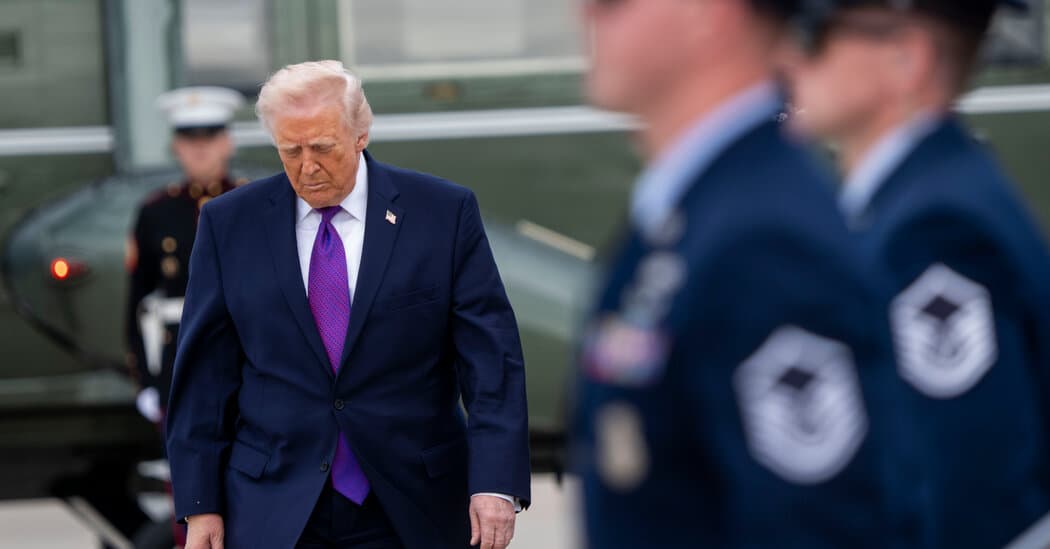
President Trump Faces Stark Choices as War Expands in the Middle East
Key Takeaways
- War in Iran is shaking the global economy.
- War enters its third week, forcing Trump to choose escalation or withdrawal.
- Trump pressures allies to form coalition to reopen Hormuz while opposing a deal with Tehran.
Trump's Strategic Dilemma
President Trump faces a stark strategic dilemma as the war against Iran enters its third week.
“One of the great paradoxes of Donald Trump’s war in Iran is that the U”
Both remaining options are fraught with significant consequences for the United States.

The choice comes two weeks after launching the conflict alongside Israel.
Trump must decide between continuing military operations or extracting from an expanding conflict.
The conflict has generated damaging military, diplomatic, and economic shock waves.
This dilemma tests Trump's campaign promise to avoid entangling the nation in new wars.
The conflict represents the region's most serious engagement in nearly a quarter-century.
Both options present problematic trade-offs initially downplayed by Trump's team.
Military Accomplishments
The U.S.-Israel coalition has achieved significant military objectives in the opening phase.
Military officials report wiping out much of Iran's missile arsenal and air defense systems.

The operations have also crippled Iran's naval capabilities.
The death of Ayatollah Ali Khamenei represents a major symbolic victory.
Iran's theocratic structure remains intact despite leadership changes.
The regime is reportedly commanded by Khamenei's injured son, Mojtaba.
The new leadership has sworn to continue Iran's asymmetrical warfare capabilities.
The Islamic Revolutionary Guards Corps and repressive militias remain in place.
Iran's Leadership Uncertainty
Iran's leadership situation remains unclear with conflicting reports about the new supreme leader.
“War in theMiddle East As the conflict with Iran expands and intensifies, President Trump’s options — to fight on, or to move toward declaring victory and pulling back — both carry deeply problematic consequences”
Mojtaba Khamenei was wounded in initial strikes and has not appeared publicly.
This has fueled speculation about his ability to govern effectively.
President Trump has publicly questioned whether Mojtaba is still alive.
Trump stated that if Mojtaba is alive, 'he should surrender.'
Iranian authorities project stability, dismissing leadership transition concerns.
Foreign Minister Abbas Araghchi insisted 'there is no problem with the new supreme leader.'
Iran has rejected ceasefire discussions, maintaining it must continue until terms are met.
The regime has organized pro-Palestinian rallies to demonstrate defiance.
Human Cost and Civilian Impact
The human cost of the expanding conflict has been substantial.
Authorities report more than 2,000 deaths in Iran and Lebanon combined.
In Lebanon, nocturnal Israeli strikes have killed at least four people in the south.
Lebanese authorities want to form a delegation to negotiate ceasefire with Israel.
Daily life in Iran shows signs of attempting to return to normalcy.
Cafes, restaurants, and shops have reopened in Tehran.
Public transportation has partially resumed in Iranian cities.
However, financial infrastructure remains severely impacted.
Melli Bank's online operations have been paralyzed for days.
Internet access remains heavily restricted across Iran.
Economic and Regional Impact
The war's economic consequences have rippled globally, disrupting energy markets.
“War in Iran: Donald Trump doesn't want a deal with Tehran, despite the cost of the war”
Trump has acknowledged rising economic costs but refuses to negotiate with Iran.
Trump stated: 'Iran wants to strike a deal, and I don't want to do it because the terms of the deal aren't good enough yet.'
He insists any agreement must include Tehran abandoning nuclear ambitions.
The conflict has driven oil prices higher and tied global energy markets in knots.
Iran has demonstrated ability to extract economic price through asymmetric tactics.
Financial disruptions affect ordinary Iranians queuing at ATMs.
Banking services remain severely restricted across the country.
The war has destabilized other regional countries like Iraq.
The American embassy in Iraq has been targeted by drone attacks.
U.S. officials have urged Americans to leave Iraq immediately.
Political Implications
Trump's handling of the Iran war has created significant political challenges domestically.
His base expresses growing concern over departure from anti-interventionist promises.
Trump has publicly wrestled with stay-or-leave options.
He has sometimes suggested the war is 'all but won'.
At other times, he acknowledged 'still heavy fighting ahead'.
This mixed messaging reflects difficult balancing between projecting strength and managing expectations.
Political stakes are high given Trump's criticism of previous administrations' Middle East entanglements.
His anti-interventionist position now seems compromised by launching a major regional war.
Uncertainty about Iran's leadership adds complexity to Trump's calculations.
He must weigh military objectives against domestic political considerations.
The risk of deeper involvement grows as the conflict shows no signs of quick resolution.
More on Iran

Israel strikes Iran's Pars gas field as Tehran vows revenge
14 sources compared
Trump threatens to blow up South Pars gas field if Iran attacks Qatar again
10 sources compared
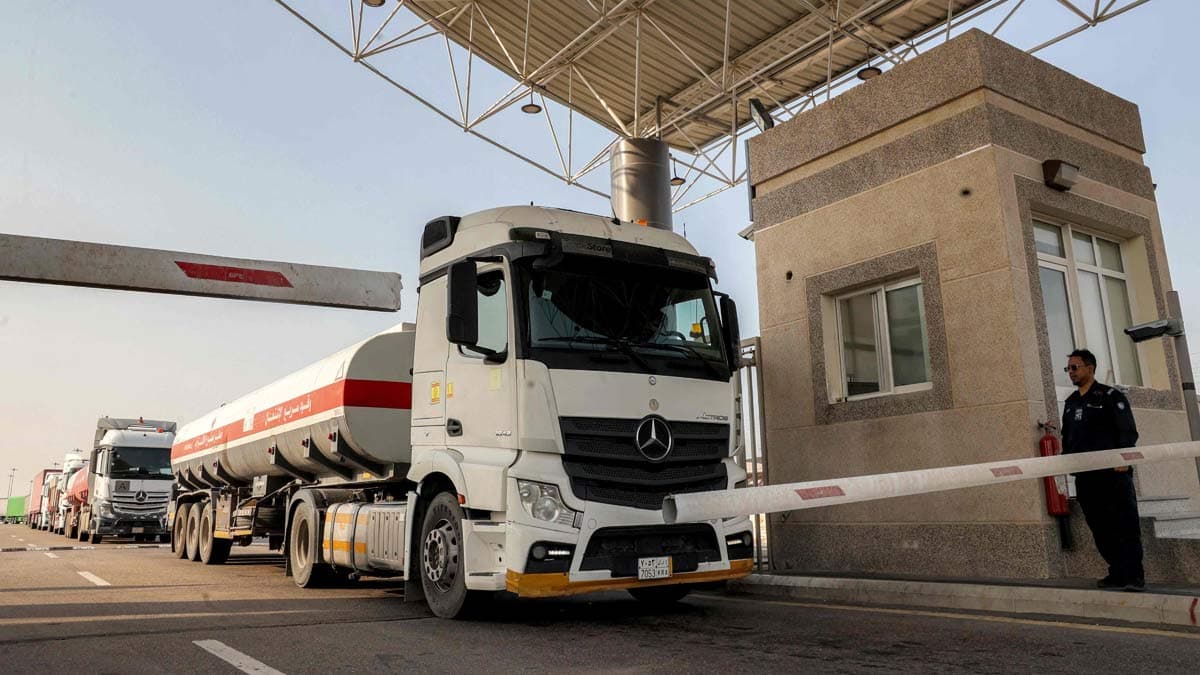
UAE Halts Habshan Gas Facility Operations After Debris From Intercepted Missiles
10 sources compared

Iran Threatens Gulf Energy Facilities After Israel Strikes South Pars Gas Field
11 sources compared