Iran27 February, 20263 min read
President Trump Says He Has Not Decided Whether To Attack Iran After Geneva Talks
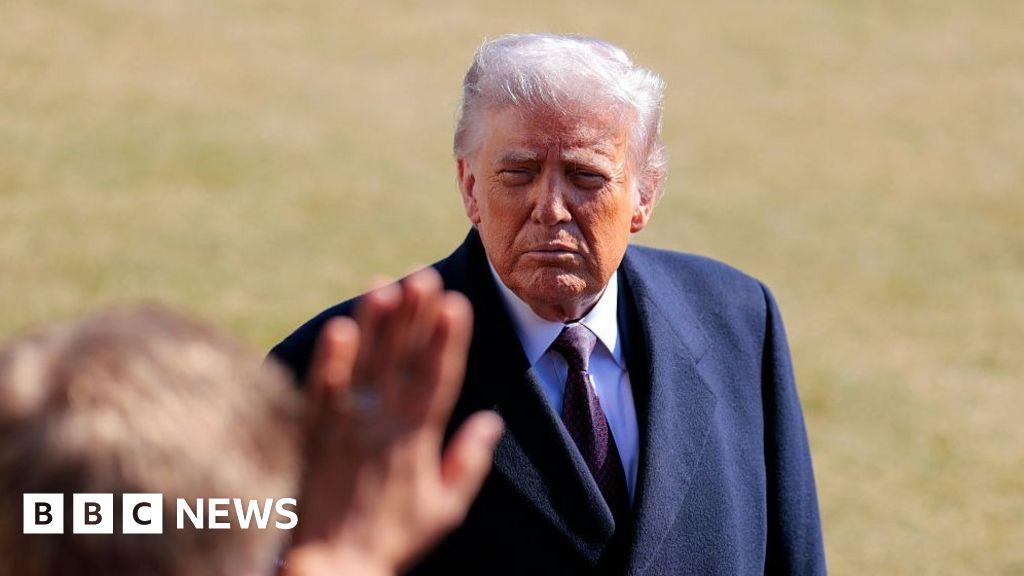
President Trump said he had not decided whether to order a military attack on Iran President Trump said he was 'not happy' with Iran after the Geneva nuclear talks

17 outlets told this the same way.
Geneva talks on Iran
Diplomatic talks in Geneva between U.S. envoys and Iranian officials, mediated by Omani intermediaries, produced no agreement but generated written proposals and the prospect of further technical sessions. Al Jazeera reported that Iran’s nuclear negotiator Abbas Araghchi handed written proposals to Omani mediator Yousef al‑Busaidi, who relayed them to a U.S. team. Al Jazeera also reported that the IAEA’s board was due to meet starting March 6, near a deadline set by President Trump.
“Iranian and US delegations held mediated talks, with Iran’s nuclear negotiator Abbas Araghchi handing written proposals to Omani mediator Yousef al-Busaidi, who then relayed them to a US team led by envoy Steve Witkoff and Jared Kushner. IAEA chief Rafael Grossi participated; the agency’s board meets starting March 6, near a 10–15 day deadline President Trump set, and could consider censuring Iran depending on outcomes.”
Spectrum News said Omani Foreign Minister Badr al‑Busaidi described "significant progress" while also noting neither side announced concrete steps. The Irish Times reported the Geneva talks ended without agreement, with technical talks expected in Vienna under IAEA auspices.

Trump on Geneva talks
President Trump conveyed frustration with the Geneva outcome. He repeatedly said he has not decided against military action, signalling that strikes remain on the table while administration officials pursue diplomacy. The BBC reported Trump was “not thrilled” by the talks and, although he stressed he did not want to use military force, said he “had not ruled it out.”
Spectrum News quoted Trump saying he was “not happy” with the talks, warning “They cannot have nuclear weapons,” and said he would wait for further negotiation rounds while acknowledging the risk of war. Forbes also said Trump was “considering” limited strikes as a negotiating tactic and has warned Iran of “bad things.”
US military buildup warnings
The U.S. has mounted a substantial military buildup and several governments issued travel warnings or evacuations amid fears of escalation. The BBC described the administration’s deployment as "the largest US military buildup in the Middle East since 2003," and noted multiple countries issued travel warnings and embassy staff withdrawals.
“The administration has ordered the largest US military buildup in the Middle East since 2003, and Iran has vowed to respond to any attack.”
The Irish Times said Trump had positioned two carrier strike groups and that non-essential government staff and families were authorised to depart Israel. Forbes reported U.S. embassies urged staff and families to leave and warned travellers to reconsider trips to the region.
U.S.-Iran negotiations
Substantive gaps remain between U.S. demands and Iranian positions, with each side framing differing red lines and incentives. Al Jazeera outlined Iranian proposals described as win-win, reportedly including diluting some 60% enriched uranium while keeping it in-country and possible economic incentives such as U.S. involvement in Iranian oil, gas and aircraft purchases. Al Jazeera also reported the U.S. insists Iran must not enrich uranium on its soil at any level and has pressed on ballistic missiles, while Iran refuses to discuss conventional weapons and says it will never pursue nuclear arms.
Spectrum News emphasized Tehran’s demand for relief from heavy sanctions in return for measures to limit — but not end — its nuclear programme. The IAEA’s upcoming board session and a confidential U.N. watchdog report about inspectors’ lack of access to bombed sites were also described as complicating verification of Iranian claims.

Diplomacy amid Iran tensions
Analysts, mediators and international officials warned of the high risk of miscalculation and urged diplomacy and restraint.
“The breakdown prompted widespread concern about possible US strikes: several countries issued travel warnings or evacuation orders, with the UK temporarily withdrawing staff from its Tehran embassy and advising against all but essential travel to Israel, China, India and Canada urging their citizens to leave Iran, and the US telling its citizens in Iran to leave ‘immediately.’”
Reactions among U.S. officials and allies were mixed.

The BBC and Forbes described widespread concern about possible U.S. strikes and noted multiple countries issuing travel warnings or evacuations.
Spectrum News quoted U.N. Secretary‑General António Guterres urging diplomacy and warning of "worrying military movements."
The Irish Times reported Omani mediator Badr Albusaidi flew to Washington to brief Vice‑President J.D. Vance and press for restraint.
Vance said he opposes prolonged Middle East wars and did not know whether Trump would back a strike.
Opinion and analysis outlets warned bombing Iran could have broader strategic costs.
Public polling showed limited U.S. support for military action.