South America16 February, 20263 min read
President Trump’s Venezuela Raid Costs U.S. Taxpayers $3 Billion
This article is an automated aggregation of coverage from news outlets. Our editorials offer in-depth analysis curated by the NewsCord team.
U.S. military operations near Venezuela cost about $3 billion, per Bloomberg. Naval operations peaked at about $20 million per day from mid-November to mid-January.

8 outlets told this the same way.
Outlets did split on Brazil Police Kill Suspect After 13 Kindergarteners Held Hostage In Curitiba →
U.S. Venezuela naval costs
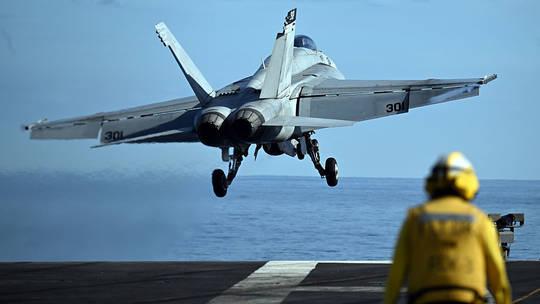
Bloomberg’s analysis, as summarized across multiple outlets, places U.S. naval and related operations tied to Venezuela at roughly $3 billion since the deployment began. The tally uses Pentagon and budget data to estimate major ship and air‑wing operating costs and cites examples such as $200.8M for three amphibious dock ships, $873.6M for a Marine expeditionary unit, $417.5M for the carrier USS Gerald Ford, and $323.4M for its air wing.
“Bloomberg reported the U.S. spent about $3 billion on its military operation against Venezuela, using Congressional Budget Office and Defense Budget data to tally operating costs (e.g., $200.8M for three amphibious dock ships; $873.6M for a Marine expeditionary unit; $417.5M for the carrier USS Gerald Ford; $323.4M for its air wing).”
Outlets report the tally draws on Congressional Budget Office and Defense Budget data and on ship‑tracking and satellite imagery to attribute daily operating costs to specific task forces. This figure is presented as a baseline for the operation’s direct operating costs, while other reporting stresses it is still rising and that the peak daily spending reached very high levels in the months around Nicolás Maduro’s capture.
Naval operating cost estimates
Multiple outlets cite peak daily operating rates during the mid-November to mid-January period.
Bloomberg-based tallies reported operating costs spiked to more than $20 million per day in that window, with the USS Gerald R. Ford strike group alone estimated at roughly $11.4 million per day and amphibious groups and their escorts adding several million more.
Some sources treat those peak-period daily costs as central to the $2.9–$3 billion aggregate number.
At least one outlet uses alternative per-day estimates for specific operations that produce higher annualized figures.
Uncounted deployment costs
Reporters and experts repeatedly caution that Bloomberg’s $3 billion tally likely omits substantial expenses beyond core ship and air‑wing operating costs. They say the omitted items include reconnaissance and tactical flight hours, satellite use, weapons expended, training, port calls, logistics, intelligence and cyber support, and special pay or combat‑related items.
“Experts say that figure only covers major ship and aircraft operating costs and omits substantial expenses such as reconnaissance and tactical flight hours, satellite use, weapons expended, training, port calls and other support.”
Several outlets quote analysts who say that omission means the real bill for the deployments — and any follow-on activities like occupation or reconstruction — would be higher. Those analysts also say the Defense Department lacks a contingency account to absorb such unplanned spending.
Differing reports on deployment
Reporting also differs on political framing and operational purpose. Balkanweb traces the deployment from an August counter‑narcotics posture to an escalation after what it describes as President Trump’s January order to abduct Maduro and Cilia Flores. Balkanweb reports they are in U.S. custody in New York on federal charges.
Balkanweb notes the White House’s public defense that no extra taxpayer cost occurred because forces were already deployed. Other outlets frame the presence as a regionally significant U.S. naval posture tied to securing Venezuelan oil revenues and pressuring regional actors. Some outlets note intensified interdictions of sanctioned oil transfers to Cuba.

Fiscal and investment risks
Analysts and business figures quoted across the coverage warn of wider fiscal and investment consequences if military action is prolonged or expanded. AlterNet highlights CSIS and Costs of War-linked estimates that prolonged operations or occupations would multiply costs into the billions or more and cites concerns about U.S. debt and private investment hesitancy. CubaHeadlines and CiberCuba underscore that the operations may exceed FY2026 budget projections and that the Defense Department lacks a contingency fund, increasing fiscal strain and political pressure for an accounting of costs.
“A Bloomberg analysis says President Donald Trump’s recent and threatened military actions are costing U.S. taxpayers ‘billions,’ with potential multi‑billion and even multihundred‑billion dollar implications if occupations or reconstruction follow.”