Sudan22 February, 20262 min read
President Yoweri Museveni Hosts RSF Chief Hemedti; Sudan Says Uganda's Reception Is 'Direct Support for Genocide' — Reports Differ on Entebbe vs Kampala
This article is an automated aggregation of coverage from news outlets. Our editorials offer in-depth analysis curated by the NewsCord team.
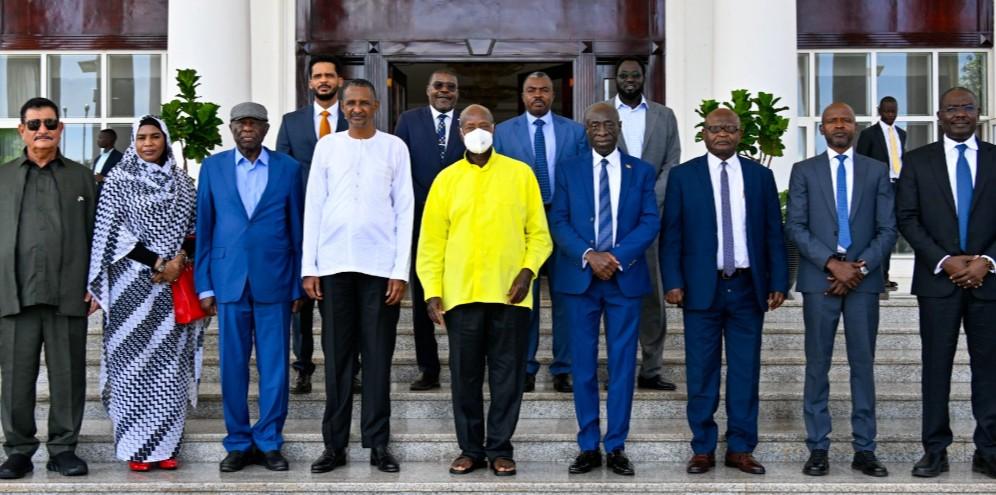
President Yoweri Museveni met RSF leader Mohamed Hamdan Dagalo (Hemedti) Sudan's Foreign Ministry strongly condemned Uganda's reception of the RSF leader
5 outlets told this the same way.
Museveni hosts RSF leader
President Yoweri Museveni hosted a public meeting in Entebbe with Rapid Support Forces (RSF) commander Mohamed Hamdan "Hemedti" Dagalo. Several reports described the appearance as Hemedti’s first public appearance since September.
“Sudan condemned Ugandan President Yoweri Museveni’s recent meeting in Entebbe with Rapid Support Forces (RSF) commander Mohamed Hamdan ‘Hemedti’ Dagalo, saying the reception dishonours victims of Sudan’s civil war and risks legitimising a figure accused of widespread human rights abuses.”
Ugandan officials, according to one source, said the talks aimed at pursuing a political solution. The visit has been reported as a formal reception in Uganda that prompted immediate diplomatic pushback from Khartoum.

Khartoum's critical response
Khartoum’s reaction, as reported across the sources, was sharply critical. Sudan’s Foreign Ministry and official spokespeople described the reception as dishonouring victims and warned it could signal a worrying policy shift by Uganda. They explicitly urged Uganda not to associate with Dagalo or allow its territory or airspace to be used for RSF operations.
The Sudan Horizon piece frames the statement as following international obligations and emphasises 'profound concern.' The Eastleigh Voice uses language that says the reception 'dishonours victims' and 'risks legitimising' an accused figure.

Allegations Against RSF
Accusations that the RSF have committed grave crimes, including ethnically motivated killings and actions characterised as genocide, appear consistently in the reporting but with different supporting references.
“Khartoum’s foreign ministry called the visit ‘unprecedented,’ accused the RSF of genocide and ethnically motivated killings, and warned the meeting could signal a worrying shift in Uganda’s stance.”
Sudan’s Foreign Ministry statements cited by The Eastleigh Voice and Sudan Horizon explicitly accuse the RSF of genocide and ethnically motivated killings.
Al-Jazeera reports that an independent UN committee’s Feb. 19 report found RSF operations in Darfur showed 'characteristics of genocide' and quotes regional officials who frame the reception as endorsing severe violations.
Media emphasis on Darfur
Reporting also differs in emphasis on the wider military and humanitarian context. Al-Jazeera supplies immediate battlefield context, noting fighting around North Darfur’s Al-Tina and efforts to repel RSF moves toward a Chad border crossing used by aid agencies, and situates the meeting amid growing international calls for a humanitarian ceasefire. The Eastleigh Voice and Sudan Horizon focus more narrowly on the diplomatic fallout, noting Khartoum’s demand that Uganda not associate with Dagalo and referencing regional and international condemnations.
Diplomatic and humanitarian reactions
The diplomatic consequences and regional implications are central to all accounts but are presented with different emphases. Sudan Horizon stresses legal and regional obligations, warning that hosting an armed figure would contradict duties not to support armed groups and signalling 'profound concern'.
“The events come amid growing international pressure for a comprehensive humanitarian ceasefire in Sudan’s war, which began in April 2023 and has killed tens of thousands and displaced about 13 million people.”
The Eastleigh Voice highlights the symbolic affront to victims and the risk of legitimisation. Al-Jazeera highlights both the regional condemnation and the broader humanitarian context, noting this comes amid international pressure for a comprehensive ceasefire in Sudan’s war that has killed tens of thousands and displaced millions.