Full Analysis Summary
Royal image and public support
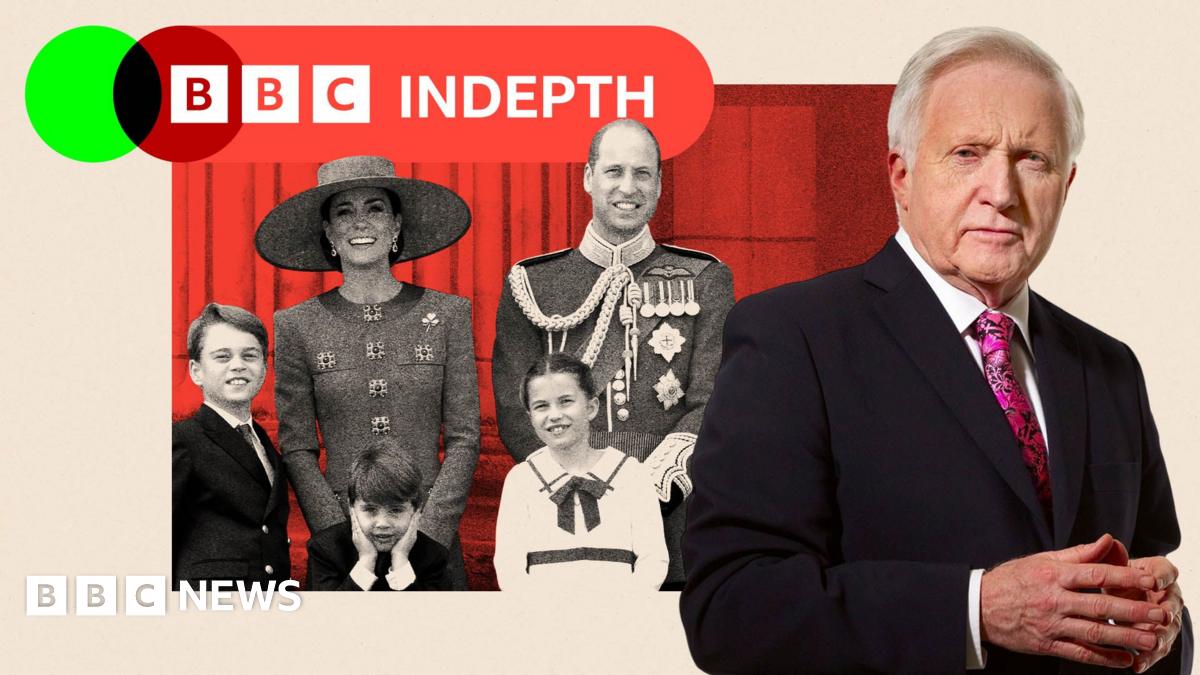
Prince William has deliberately adopted an 'ordinary Joe' persona in a new personal-view documentary strand presented by David Dimbleby, aiming to rebuild public support for the British monarchy by humanising its senior members.
Dimbleby draws on interviews with former private secretaries, communications advisers, historians and critics to examine why public attachment to the monarchy has fallen sharply, from 86% in 1983 saying the monarchy was very or quite important to 51% in last year's British Social Attitudes survey.
The programme frames the rebrand as a strategic, image-focused response rather than a reaction to a single scandal, positioning William's approachable style as a possible way to recover affection or at least the apathy that has historically sustained the institution.
Coverage Differences
missed information / single-source limitation
Only the BBC (Western Mainstream) coverage is available here. Because no West Asian, Western Alternative, or other international or domestic outlets are provided, I cannot compare or contrast how different types of sources frame William's 'ordinary Joe' rebrand, nor can I substantiate alternative narratives (for example, views that describe the move as cynical PR, generational rejection, or as insufficient in face of allegations). The BBC itself presents the rebrand as a strategic, image-based attempt to win back public affection, drawing on Dimbleby’s interviews and polling data rather than quoting outside outlets expressing differing views.
Decline in royal support
The BBC piece emphasizes that the decline in support is not driven solely by high-profile scandals but by a wider generational and cultural shift that questions the monarchy's relevance.
It notes particularly low approval for figures such as Prince Andrew and the Duke and Duchess of Sussex, but stresses Dimbleby's conclusion that the institution's issue is conceptual: what the monarchy stands for in a modern, diverse Britain.
Commentators in the documentary warn that the monarchy historically survives on public "affection or apathy," making branding, image and strategic communications crucial to its survival.
Hence the appeal of William presenting himself as an "ordinary" figure.
Coverage Differences
missed information / lack of alternative framing
Because only BBC reporting is present, we cannot show how other outlets might weight scandals versus structural critiques differently. The BBC reports that Dimbleby finds the problem 'less one scandal or individual' and highlights branding and image; without other sources we cannot verify if alternative outlets (e.g., critical opinion pieces or pro-republican analyses) place more emphasis on scandals or on calls for republican reform.
Royal image and strategy
The documentary, as summarised by the BBC, places William's rebrand in a historical context, recalling past efforts to humanise the royals such as the 1969 film Royal Family.
It suggests the current generation of royals faces a strategic fork: to modernise and reframe the monarchy's purpose, or risk further erosion of support.
Dimbleby and his interviewees reportedly explore how previous openness shaped public perception.
They consider whether similar techniques of controlled personal-access storytelling can work for Charles and William in the digital age.
Coverage Differences
tone / contextual emphasis
The BBC foregrounds historical precedents like the 1969 Royal Family film to frame the rebrand as continuity with previous humanising strategies. Without alternative sources, we cannot contrast this contextual emphasis with outlets that might frame the rebrand as either a radical departure or as insufficiently responsive. The BBC's tone is analytical and documentary-led rather than polemical.
Monarchy support and reform
The BBC notes generational divides in attachment: younger people show even lower support for the monarchy, while a majority overall still do not favour an elected head of state — a nuance that complicates the picture for reformers and for royal strategists alike.
Advisers featured in Dimbleby's reporting warn against complacency; the piece implies that a successful rebrand would have to address substantive questions about the monarchy's role and not only cosmetic changes in tone or media access.
Coverage Differences
missed information / lack of cross-source demographic analysis
While the BBC provides polling figures and mentions lower support among younger people, there is no comparative data here from other polling organisations or international commentators to show whether this trend is unique to Britain or how it compares regionally. Without other sources, we cannot show alternative interpretations of the demographic data or whether other outlets emphasise electoral republicanism versus soft PR fixes.
Limits of BBC-based analysis
Limitations and unresolved questions remain.
The available reporting is limited to the BBC summary of Dimbleby's documentary, so I cannot, from the provided materials, present competing narratives.
Those missing perspectives include critical views that might call William's rebrand cynical and voices from other regions or political perspectives that could characterise the move as inadequate or overdue.
Consequently, conclusions about the rebrand's likely success are necessarily tentative: the BBC frames the strategy as plausible and rooted in historical precedent, but whether it will reverse deep shifts in public attachment is unclear.
Coverage Differences
lack of diverse-source comparison
Because only BBC (Western Mainstream) material is present, this synthesis cannot identify genuine contradictions or alternative tones from other source types (e.g., West Asian, Western Alternative). The BBC 'reports' Dimbleby's views and the documentary's interviewees; absent other outlets, any statement about contrast with other narratives would be speculative. The documentary is presented as an analytic piece rather than an editorial condemnation or endorsement.