Full Analysis Summary
London Protest Over Sudan Conflict
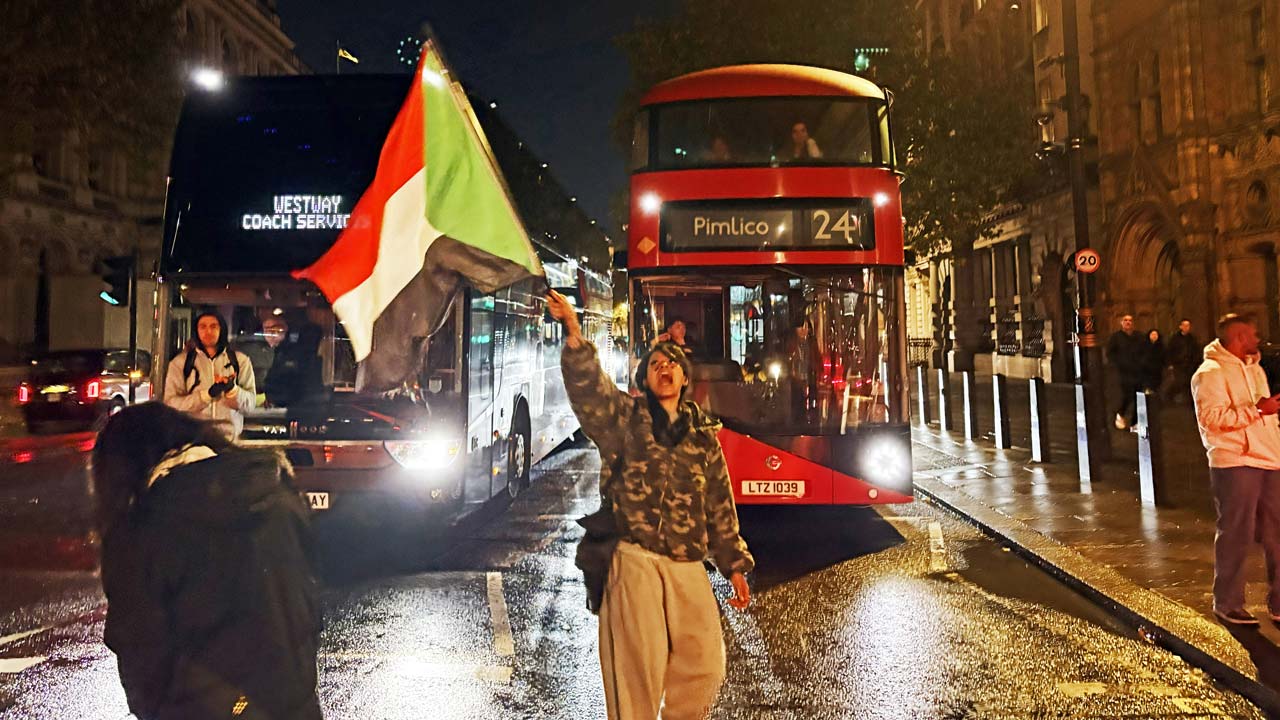
Pro-Sudan protesters brought central London to a standstill by blocking roads outside 10 Downing Street.
They shut down Whitehall and then marched to the UK Foreign Office.
The action escalated from a stationary protest into a moving demonstration.
It culminated in a confrontation with Members of Parliament who were dining nearby, according to reports from the scene.
The protest’s main demand was for immediate British accountability over the Sudan conflict.
Demonstrators also called for scrutiny of UK ties they implicated in the violence of the war.
Coverage Differences
missed information
Only Dabanga Radio TV Online (Other) is provided in the source set, so cross-source corroboration of crowd size, police response, or official UK statements cannot be assessed. The account emphasizes disruption at Downing Street and Whitehall and mentions a confrontation with MPs, but without additional Western Mainstream or West Asian sources in the dataset, differences in framing—such as public order focus versus human-rights framing—cannot be compared.
UK Arms and Sudan Conflict
Demonstrators accused the UK government of complicity in atrocities in Sudan’s El Fasher.
They alleged that British arms sales to the UAE are effectively funding genocide through support to the Rapid Support Forces militia.
The marchers’ message linked UK policy and arms export oversight to accountability for violence in Sudan.
They explicitly called for the UK and the UAE to end their involvement in the war.
These accusations were presented as protesters’ claims reported by the outlet, highlighting the political stakes around arms transfers and regional backing for Sudan’s paramilitaries.
Coverage Differences
tone
Dabanga Radio TV Online (Other) reports protesters’ allegations using direct terms like “genocide,” “complicit,” and references to UAE support for the RSF. Without other sources in the dataset, we cannot compare whether Western Mainstream outlets soften or contest such language, or whether West Asian sources emphasize regional geopolitics differently.
Protest Route and Impact
The route and escalation of the protest were notable.
It began as a stationary rally near the British prime minister’s residence, then moved to the Foreign Office, intersecting key government sites along Whitehall.
The disruption emphasized the demonstrators’ aim to force attention on UK foreign-policy decisions related to Sudan and to press for accountability mechanisms.
The incident involving MPs dining nearby highlighted the proximity of protester demands to lawmakers and the urgency with which activists sought a response.
Coverage Differences
narrative
Dabanga Radio TV Online (Other) centers the activists’ objectives and the symbolism of targeting Downing Street, Whitehall, and the Foreign Office. Without Western Mainstream or local UK press in the set, we cannot contrast whether other outlets framed the event primarily as a public-order disruption, a foreign-policy protest, or a security incident.
Protest Over UK and UAE Role
The protest primarily demanded an end to what demonstrators described as UK and UAE involvement in sustaining the conflict in Sudan.
Protesters called for British accountability due to alleged facilitation of RSF violence through arms supplies.
The reports highlight the protesters’ view of events in El Fasher as genocide and place the UK’s role within a broader regional network that includes the UAE’s support for the RSF.
However, the available information does not include government responses, independent investigations, or alternative media perspectives to verify or challenge these claims.
Coverage Differences
missed information
With only Dabanga Radio TV Online (Other) in the dataset, we lack Western Mainstream, West Asian, or African state media perspectives that might present official denials, legal context on arms export controls, or on-the-ground casualty verification. Therefore, potential contradictions or corroborations cannot be mapped.