
Péter Magyar Says Hungary Reached Minority Rights Deal With Kyiv, Clearing Ukraine EU Talks
Key Takeaways
- Hungary and Ukraine reached a comprehensive agreement on Hungarian minority rights.
- The deal prompts Hungary to lift its veto on Ukraine's EU talks.
- Formal EU membership negotiations for Ukraine are expected to begin in June.
Minority deal unlocks talks
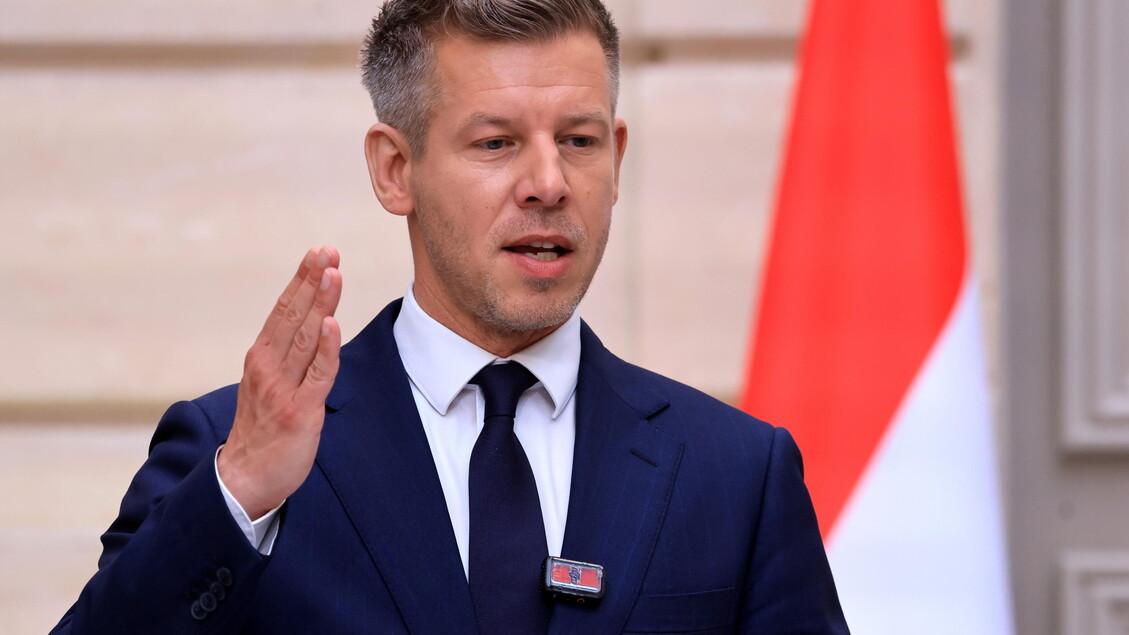
Hungary may lift its veto on Ukraine’s EU entry talks after Péter Magyar said a "comprehensive agreement" had been reached with Kyiv on Hungarian minority rights, potentially opening the way for Budapest to approve the start of accession talks.
Magyar, who won parliamentary elections in April, said his government does not support accelerated European Union entry talks for Ukraine and that any eventual EU membership would be put to a legally binding referendum if Kyiv completed all 33 accession chapters within 10 or 15 years.
The agreement covers linguistic, educational, cultural and political rights of the roughly 100,000-strong Hungarian minority, most of whom live in Ukraine’s western Transcarpathia region, and Magyar said Ukraine would incorporate the negotiated measures into its legal system in the near future.
Ukrainian commitments would also be included in Ukraine’s action plan submitted to the European Union, and Magyar said, "If this happens, the Hungarian government will agree to the opening of the first accession cluster for Ukraine."
EU process mid-June
EU officials confirmed that the next step in the EU accession process will proceed in mid-June after Magyar announced on June 3 that an agreement had been reached with Ukraine on the rights of the Hungarian-speaking minority.
EU’s Enlargement Commissioner Marta Kos said on X that "Prime Minister Magyar's announcement of the agreement between Hungary and Ukraine to advance minority rights opens the way for progress on the EU accession path of Ukraine," and an EU diplomat said "positive developments" meant discussions were to take place among EU ambassadors on June 3 about the formal process.
Diplomats told the Kyiv Independent that the plan is to hopefully open the first of six so-called enlargement clusters on June 15 in Luxembourg, and if that does not work, the expectation is that the opening would take place the day after at a meeting of European ministers on June 16, also in Luxembourg.
The Kyiv Independent reported that the Hungarian objection clears the way to opening the first of six enlargement clusters but that it is not yet known how many, if any, of the remaining clusters can also open in June, with an EU official doubting cluster two would open due to the war.
The same article said the remaining two clusters, four and five, will most likely not open because of ongoing Polish fears of Ukrainian competition, while it expected the sixth cluster on "external relations" to open without problems as well.
What is at stake next
The agreement and the lifting of Hungary’s opposition are framed as a gate to the formal opening of negotiations, with the EU accession procedure consisting of 33 chapters spread across six broad thematic areas and the first segment called the 'fundamentals' because it covers the rule of law, human rights, and the judiciary.
Euronews reported that the long-awaited breakthrough occurred Wednesday evening at a meeting of ambassadors in Brussels, when the Hungarian envoy lifted his reservations and allowed the 27 member states to launch the process unanimously, ending a veto that had halted momentum for two years.
Magyar said he remained opposed to accelerated accession and reiterated that "If Ukraine manages to close the 33 accession chapters within 10 or 15 years, our country will organize a legally binding referendum on the question," linking the timeline to a future vote.
The sources also show that the enlargement path is not the end of the story, because the intergovernmental conference marking the formal launch is expected to take place on 15 or 16 June in Luxembourg, and the EU Council would send a letter to Ukraine and Moldova for responses outlining their positions.
In parallel, the EU’s broader debate on how to integrate Ukraine is reflected in the proposal for an 'associated membership,' which one analysis described as a "Potemkin" approach, while it noted that Viktor Zelensky rejected "symbolic" EU accession ideas and said, "We deserve full membership in several alliances, certainly in the EU,".
More on Europe
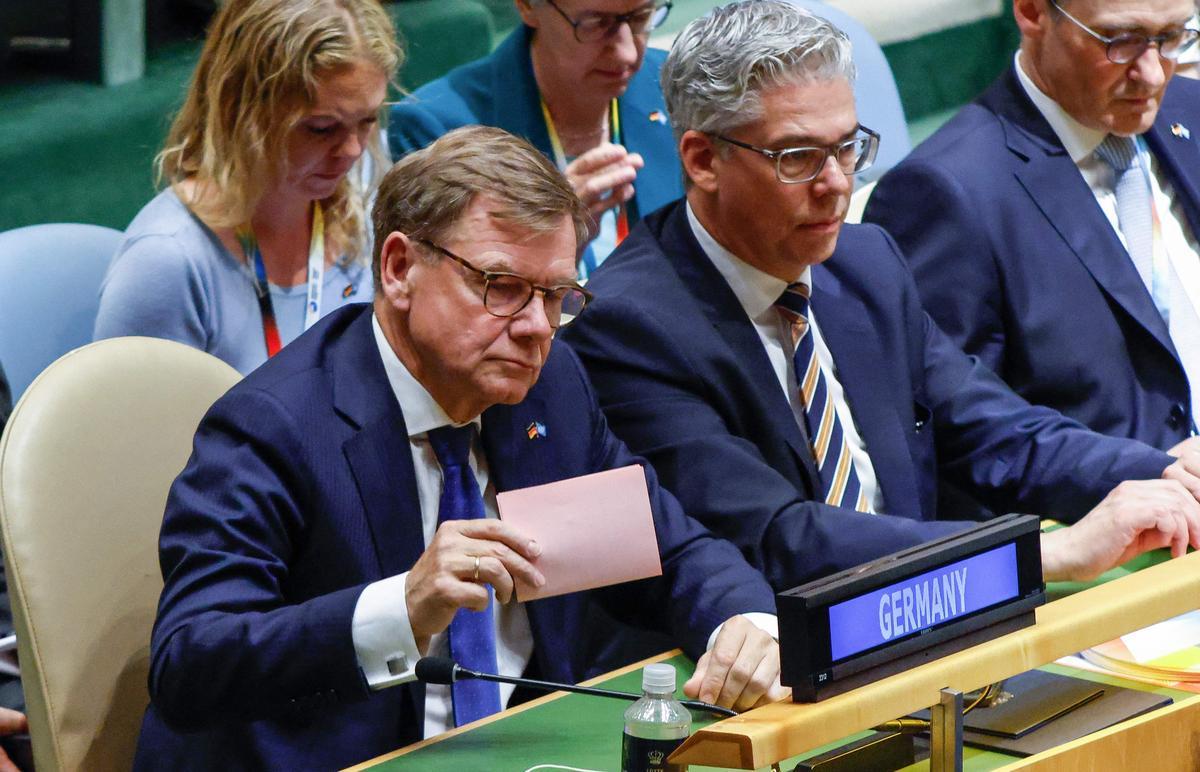
Germany Fails To Secure UN Security Council Seat, Loses To Portugal And Austria
12 sources compared
European Union Strikes Deal To Create Return Hubs Abroad, Speeding Deportations
13 sources compared

University of Bologna and CNRS MAP Build Notre-Dame Digital Twin After 2019 Fire
16 sources compared

King Frederik X Asks Mette Frederiksen to Form Four-Party Left-Of-Center Denmark Government
17 sources compared