Ukraine War02 December, 20252 min read
Putin Announces Russian Forces Fully Captured Pokrovsk
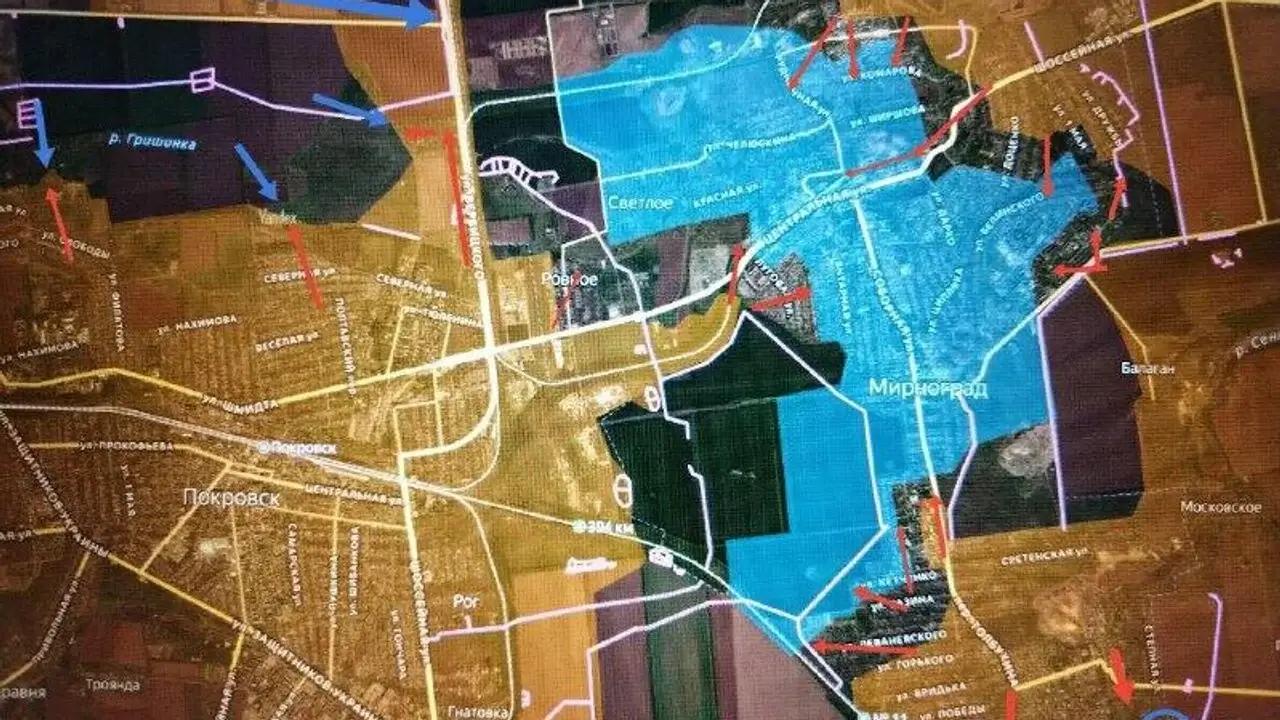
Russian authorities announced they had fully captured Pokrovsk. Ukrainian forces denied the capture and reported continued fighting in Pokrovsk.
48 outlets told this the same way.
Outlets did split on Russian Attack Kills At Least 33 On Two Buses In Kramatorsk →
Reported capture of Ukrainian towns
In late November and early December, Russian authorities announced their forces had fully captured the eastern Donetsk city of Pokrovsk and the Kharkiv city of Vovchansk. Kremlin and military officials and state media publicized the claims. Al Jazeera reported that Chief of Staff Valery Gerasimov announced the captures and that the Kremlin posted the news on Telegram.
“Chief of Staff Valery Gerasimov announced that Russian forces have captured the eastern Ukrainian city of Pokrovsk and the Kharkiv city of Vovchansk, the Kremlin said in a Telegram post.”
Kremlin spokesman Dmitry Peskov said Gerasimov reported the "liberation" to President Vladimir Putin. Russian footage circulated showing soldiers and a raised Russian flag in Pokrovsk, according to multiple outlets.

Russian state sources described Pokrovsk as an important Ukrainian logistical hub. President Putin was shown in military uniform during a frontline visit and praised the forces, saying the initiative along the combat line was "entirely" with Russia.
Disputed Pokrovsk claims
Ukrainian officials and multiple independent monitors disputed Moscow's announcements, calling the Russian footage and claims premature or propaganda while saying fighting continued in parts of the towns. The Kyiv Independent reports that Ukrainian officials denied the claims and that the General Staff called the footage a propaganda flag operation.
It added that Ukrainian forces still held the northern part of Pokrovsk along the railway and had repelled dozens of assaults. United24 Media and Novinite likewise note that Ukrainian authorities did not confirm the claims and that independent monitors have not verified Moscow's assertions.
Pokrovsk strategic hub
Analysts and multiple outlets highlighted Pokrovsk's strategic significance as a key road and rail logistics hub that observers say could be used by Moscow as a staging area to push toward larger Donetsk cities such as Kramatorsk and Sloviansk. Sky News called Pokrovsk a strategic road and rail hub and described it as the gateway to Donetsk, while DW noted it would be a significant gain for Moscow and could be used to push toward the remaining Ukrainian-held Donetsk cities Kramatorsk and Sloviansk. Several sources also described shifts in Russian tactics in the sector and reported notable territorial advances in recent weeks, though the exact extent of control is disputed.
“Pokrovsk, a strategic road and rail hub dubbed 'the gateway to Donetsk.'”
Claims timed with diplomacy
Observers and several news outlets noted the timing of Moscow's announcement alongside diplomatic activity. They highlighted the arrival of U.S. special envoy Steve Witkoff in Moscow to present a revised peace framework. NBC News reported that President Trump's special envoy Steve Witkoff is meeting with Vladimir Putin to present a revised peace plan.
ABC News observed that recent Russian claims of battlefield gains appear aimed at influencing that meeting. Multiple sources connected the declaration to the diplomatic calendar and cautioned that Moscow's messaging could be designed to strengthen its negotiating position.

Divergent media coverage
Some Russian and state-aligned outlets emphasize captured territory and show footage of flag-raising. In contrast, Ukrainian outlets, OSINT projects, and many Western mainstream and alternative outlets stress denials, contested control, and a lack of independent verification.
“All claims are reported by Russian state media; the article noted there was no independent verification.”
Several outlets explicitly warn that state media claims have not been independently confirmed. Analysts pointed to patterns of timed announcements and edited footage, and some OSINT groups reported only incremental Russian gains rather than a decisive breakthrough.