Ukraine War19 December, 20252 min read
Putin Says He Will Not Start New Wars If West Treats Russia With Respect
This article is an automated aggregation of coverage from news outlets. Our editorials offer in-depth analysis curated by the NewsCord team.
Putin vowed no further military offensives if Western leaders treat Russia with respect Putin demanded Ukraine cede Crimea and parts of four occupied regions as precondition for talks

11 outlets told this the same way.
Outlets did split on Russian Attack Kills At Least 33 On Two Buses In Kramatorsk →
Putin's year-end address
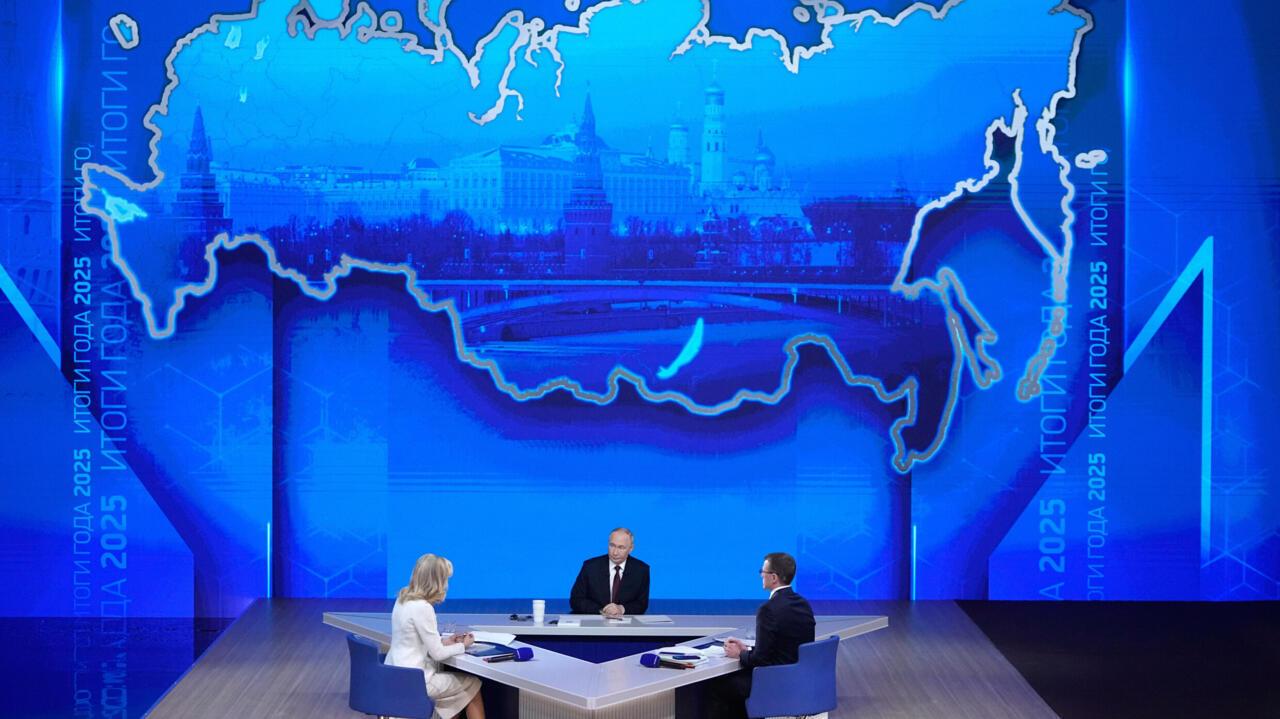
At his televised year-end event, President Vladimir Putin said there would be 'no more wars' after Ukraine if Russia is treated with respect and dismissed suggestions Moscow plans to attack other European countries as 'nonsense,' framing the message as conditional on how the West behaves. The marathon broadcast blended public questions and a staged presentation beneath a large map of occupied parts of Ukraine, while Reuters-translated reports noted he again placed responsibility for a settlement on Kyiv and its Western backers. The comments were reported alongside continuing violence on the ground and economic strains at home, underscoring that Putin combined reassurance to domestic audiences with firm demands to foreign ones.
Russia's stance on talks
Multiple Reuters-translated reports quoted Putin and Russian spokespeople saying Moscow does not yet see Ukraine as genuinely ready for negotiations. They insisted Russia is "ready and willing" to end the conflict peacefully if talks follow principles Moscow set out and address the war's "root causes." Coverage repeatedly noted that Russia conditions any settlement on recognition of territorial and security demands that Kyiv rejects, making Moscow's stated openness to talks contingent and limited rather than an unconditional push for negotiation.
Putin's battlefield claims and warnings
Putin used the event to boast of battlefield gains and issue strategic warnings. France 24 reported he praised recent battlefield progress and warned Russia would seize more towns and cities in eastern Ukraine before the year's end. The Straits Times relayed assertions that Russian forces have taken the strategic initiative and driven Ukrainian troops out of some areas.
The New Indian Express listed Moscow's settlement demands, including recognition of Crimea and four other regions. It also recorded Kremlin claims about volunteer troop numbers that rights groups question.
Media coverage and political context
BBC noted the almost four-and-a-half-hour broadcast was mostly choreographed. Organisers said that three million questions were submitted. The event was held against a background map of occupied Ukrainian territory.
The BBC connected the broadcast to Russia's economic struggles, citing a VAT rise to 22% and a central bank interest rate cut to 16%. France 24 and The New Indian Express added context about repression and social costs. They noted Putin denied there was repression even as many opponents are exiled, imprisoned, or dead, and rights groups questioned recruitment practices.
International diplomatic reactions
International reaction and the broader diplomatic stakes appear in coverage, with Putin warning that seizing frozen Russian assets to finance Ukraine would be "robbery" that could harm investor confidence, according to The New Indian Express. France 24 reported he threatened "severe" consequences if EU states moved ahead with seizures.
“Western officials are closely watching how Vladimir Putin frames the war for the Russian public.”
Straits Times and Global Banking relayed Russian denouncements of asset seizure proposals and said Moscow portrays such moves as open but unfair. Al Jazeera noted Western officials are closely watching how Putin frames the war and warned that such rhetoric and threats could complicate efforts to restart negotiations.