Full Analysis Summary
Alleged abuses in Darfur
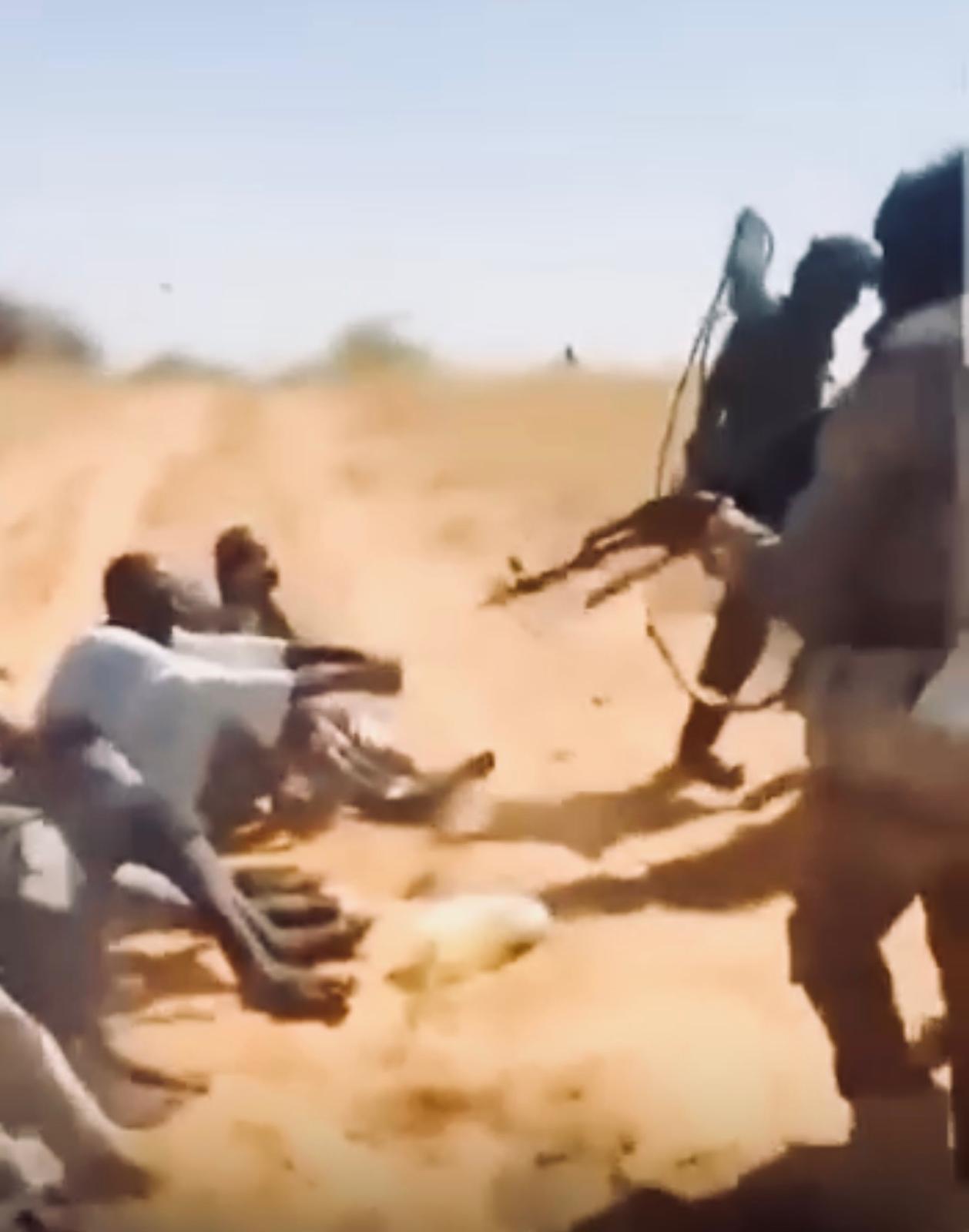
Video footage circulated online allegedly shows members of the Rapid Support Forces executing fleeing civilians near El Fasher in North Darfur.
Dabanga Radio TV Online reports that social media footage, including a clip allegedly showing those executions, has documented abuses amid intensifying fighting and severe violations against civilians.
allAfrica similarly reports that the war, now approaching its thousandth day, has seen escalating fighting and mounting serious violations against civilians.
Both sources place the El Fasher clip within a broader pattern of violence and civilian harm as the SAF-RSF conflict continues.
Coverage Differences
Tone / emphasis
Both Dabanga Radio TV Online (Other) and allAfrica (African) report the circulation of a clip purportedly showing executions near El Fasher, but Dabanga foregrounds the social‑media footage explicitly as documentation of abuses ('social media footage — including a circulated clip allegedly showing executions near El Fasher') while allAfrica frames the clip as part of a broader cataloguing of escalating serious violations as the conflict approaches its thousandth day. Dabanga's phrasing stresses the immediacy of the video evidence, whereas allAfrica situates such footage within historical escalation.
Reports on civilian victims
Both outlets report that victims of the violence include a wide range of non-combatants, including women, children, the sick and elderly, prisoners, medical staff and humanitarian workers, and describe the attacks as serious violations with observers saying such acts may constitute war crimes or crimes against humanity.
Dabanga lists victims specifically and cites observers who say the scale and nature of the violations may amount to war crimes or crimes against humanity.
allAfrica similarly enumerates categories of victims and characterises the violence as large-scale and systematic, undermining civilian protection.
Coverage Differences
Narrative detail / listing
Both sources provide a similar catalogue of victims (women, children, the sick and elderly, prisoners, medical staff and humanitarian workers), but Dabanga's snippet emphasises the documentation of abuses through social media footage (e.g., the El Fasher clip) as evidence, while allAfrica frames these categories of victims as part of an escalating, systemic breakdown of protection. The difference is one of emphasis — Dabanga leans on specific circulated video evidence; allAfrica emphasises systemic trends.
Collapse of justice institutions
Both pieces emphasize the collapse of justice institutions and the resulting difficulty victims face in seeking redress.
Sami Abdelhalim Saeed, a former UN legal adviser and vice‑president of the African Network for Constitutional Lawyers, is quoted saying justice has been a 'martyr' (or 'among the martyrs') of the war.
They report that courts, judicial staff and legal services have been disrupted or displaced.
This disruption has left victims intimidated or unable to pursue claims and has allowed perpetrators to act with impunity.
Coverage Differences
Quoting and phrasing
Both outlets attribute the view that justice has been a casualty to Sami Abdelhalim Saeed, but the wording differs slightly: Dabanga quotes Saeed as saying justice has been a 'martyr' of the war, while allAfrica reports justice has been 'among the martyrs'. Both present the claim as Saeed's view (i.e., they 'quote' or 'report' his words) rather than the outlet's independent legal finding.
International accountability views
Both sources report Saeed’s view that international prosecutions, including the ICC trial of former Darfur militia leader Ali Kushayb, are necessary when national systems fail.
He argues such international action should complement, not replace, credible national justice processes.
The articles express scepticism that international trials alone can restore national trust or substitute for domestic mechanisms.
They urge the state to prioritise justice even during active conflict, including temporary measures to secure evidence and prosecute looting and destruction.
Coverage Differences
Policy emphasis / solution framing
Both pieces report Saeed's argument that ICC cases like Ali Kushayb's are needed when national systems fail but are not a full substitute; Dabanga highlights questioning whether international prosecutions offer 'real hope or merely substitute for national accountability', while allAfrica explicitly states ICC cases are 'necessary when national systems fail but are only complementary to, not a replacement for, credible national justice efforts.' The difference is subtle wording and emphasis but both attribute the position to Saeed's reporting/interview.
Reporting and evidence limits
Both sources note limitations and call for investigations, but they stop short of independently verifying the video's provenance or the identities of the perpetrators.
Each therefore reports the footage as 'alleged' and situates it within broader reporting on abuses.
The articles present Saeed's recommendations and highlight the dire state of judicial institutions without asserting conclusive proof that every filmed act was carried out by RSF units.
They relay circulating footage and expert comment while urging that accountability and protective measures are urgently needed.
Only these two source snippets were provided for this summary, which constrains the range of perspectives and prevents a fuller cross-regional comparison.
Coverage Differences
Missed information / source limitation
Both sources use cautious language ('allegedly', 'circulated clip') and rely on expert comment, but neither provides independent forensic verification of the clip in the provided excerpts. This omission is consistent across Dabanga (which reports social media footage and quotes Saeed) and allAfrica (which situates footage within systematic violations) — both therefore leave open questions about chain of custody and conclusive attribution.