Full Analysis Summary
Blue Nile offensive summary
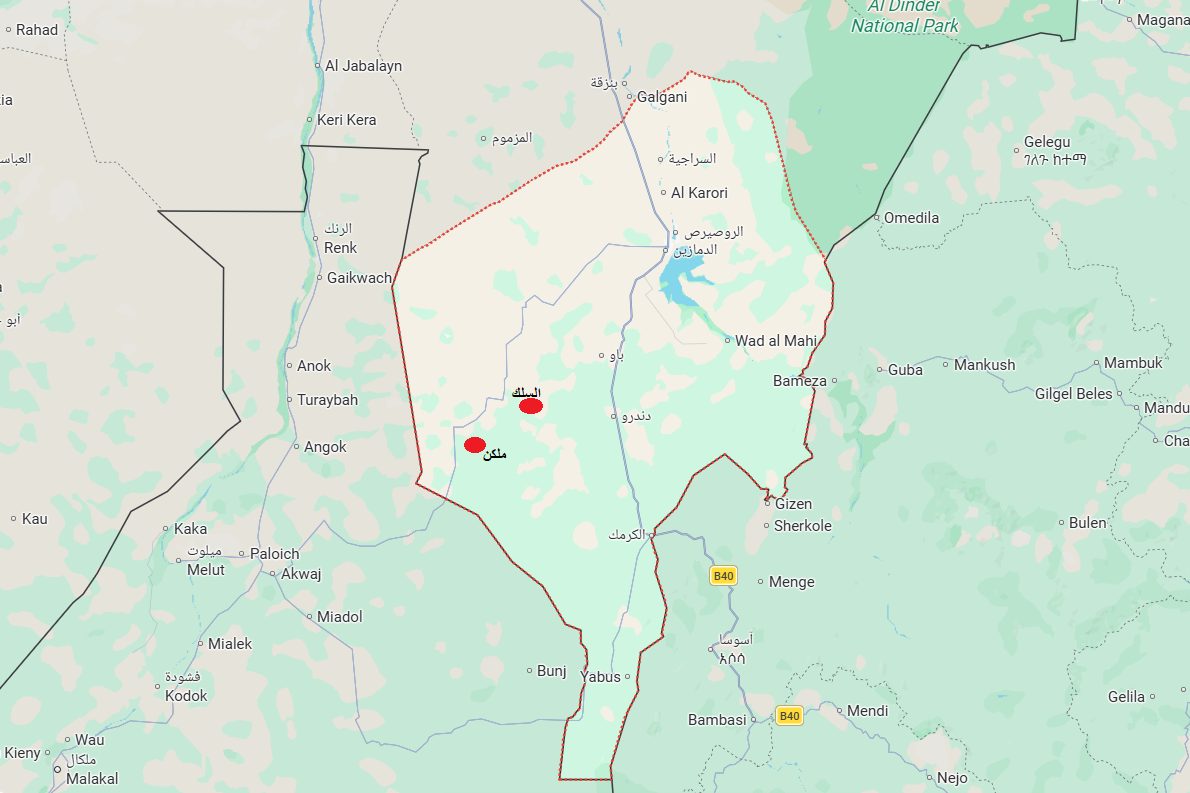
The Rapid Support Forces (RSF), together with allied elements of the Sudan People’s Liberation Movement–North (SPLM‑N), launched a concerted offensive into Blue Nile state targeting towns including Malakal and El Silak.
Field sources say the Sudanese Armed Forces (SAF) repelled the attack.
Analysts view the move as a prepared attempt to open a new front and create routes toward central Sudan to relieve pressure on RSF operations elsewhere.
Dabanga Radio TV Online reports the RSF/SPLM‑N offensive and the SAF pushback.
Radio Dabanga places the fighting in a wider escalation that included SAF airstrikes from January 11 onward.
Al‑Jazeera frames the clashes as renewed fighting that risks becoming a strategic corridor because of Blue Nile’s border location.
Observers widely describe the action as aiming to divert SAF attention from Kordofan and to establish access into central Sudan.
Commentators judge it unlikely that the RSF and its allies will immediately capture and hold the entire region.
Coverage Differences
Narrative emphasis
Dabanga Radio TV Online emphasizes the immediate ground attack and analysts’ assessment that the operation was an attempt to open a new front—reporting that "the Rapid Support Forces (RSF) and the Sudan People’s Liberation Movement–North (SPLM-N) led by Joseph Tuka attacked Malakal and El Silak" and that analysts "view the operation as a prepared attempt to open a new front in Blue Nile—likely aimed at diverting SAF attention from the Kordofan front—but judge it unlikely to capture the region." Radio Dabanga, by contrast, situates the offensive in a sequence of escalations and SAF airstrikes starting January 11 and gives SAF and SPLM‑N competing claims about the airstrike’s victims. Al‑Jazeera stresses the strategic sensitivity and border risks, noting the potential for cross‑border spillover.
Tone and certainty
Dabanga presents analysts’ judgments (not certainties) that the offensive sought to open a front but was unlikely to secure the region; Radio Dabanga reports competing claims (SAF’s targeting of "foreign mercenaries" vs. SPLM‑N’s claim that civilians were killed) and a chronology of escalation; Al‑Jazeera warns of regional risk and frames the event within a larger humanitarian and strategic crisis.
Cross-border staging claims
Analysts and open-source imagery highlight cross-border staging and logistics.
Dabanga cites analysts who released satellite images purportedly showing an RSF training camp inside Ethiopia near the Blue Nile border and movements of technical vehicles and equipment from Somaliland through Dire Dawa to Assosa.
Al-Jazeera’s military analyst likewise points to airstrips and logistics from the Ethiopian border as part of a prepared buildup.
Radio Dabanga records SAF claims that the January 11 airstrike targeted "foreign mercenaries trained in Ethiopia" and the SPLM-N’s counterclaim that civilians were killed by the strike, underscoring contested accounts about who is operating from across the border.
Coverage Differences
Detail vs. caution
Dabanga provides specific satellite‑image claims and logistics routes (equipment movements from Somaliland to Dire Dawa and Assosa), presenting concrete staging allegations. Al‑Jazeera echoes the notion of cross‑border logistics and airstrips but frames it through an analyst’s caution about escalation risk from direct state support. Radio Dabanga reports the SAF’s assertion about "foreign mercenaries trained in Ethiopia" and includes SPLM‑N’s rebuttal that civilians were killed, demonstrating competing claims about overseas staging.
Frontline shifts and claims
Tactical shifts, force posture and contested control characterize immediate frontline reporting.
Both Dabanga and Al-Jazeera note that the SAF had reinforced Blue Nile ahead of the offensive and that the army claims to have retaken areas such as al-Silk and repelled attacks.
Radio Dabanga situates those developments within broader frontline churn, describing repeated SAF recaptures in North and South Kordofan, sieges of Kadugli and Dilling, and an overall increase in aerial and drone strikes since late 2024–2025.
At the same time, Dabanga's analysts judge it unlikely that the RSF will capture the region, underlining divergent assessments of RSF operational aims versus prospects for control.
Coverage Differences
Assessment of likelihood
Dabanga explicitly reports analysts who "judge it unlikely to capture the region," suggesting skepticism about RSF’s ability to hold Blue Nile. Al‑Jazeera, while noting army control of much of the state and the army’s reported retaking of al‑Silk, emphasizes the strategic stakes and warns that the buildup could be designed to divert army operations in other theatres. Radio Dabanga provides the operational context—heavy aerial/drone strikes and shifting control across Kordofan and Darfur—that explains why both sides are contesting ground and air supremacy.
Humanitarian and regional security
The offensive compounds an already severe humanitarian and regional security picture.
Al‑Jazeera situates the Blue Nile clashes within a conflict that "has produced one of the world’s worst humanitarian crises—tens of thousands killed and about 13 million displaced," and warns that weapons flows and cross‑border dynamics risk spilling instability into South Sudan.
Radio Dabanga documents increasing air and drone strikes and sieges that have driven displacement and shifting control.
Dabanga Radio TV Online’s reporting on equipment moves and Ethiopian‑border training camps underscores how the logistics footprint multiplies risk to civilians and neighbouring states.
Coverage Differences
Severity and regional framing
Al‑Jazeera foregrounds the humanitarian catastrophe and regional spillover—explicitly quantifying displacement and fatalities—while Radio Dabanga focuses on operational escalation (air/drone strikes, sieges) that produces such humanitarian outcomes. Dabanga Radio TV Online emphasizes open‑source evidence of cross‑border logistics, which supports claims of an expanding theatre but is more focused on the operational mechanics than quantified humanitarian figures.
Blue Nile conflict outlook
Analysts and military commentators say the RSF‑PMN push into Blue Nile is likely intended to open lines into central Sudan and to divert SAF forces from Kordofan and Darfur, but significant uncertainties remain.
Dabanga, Radio Dabanga and Al‑Jazeera all describe reinforced SAF deployments, including the Fourth Infantry Division in Damazin according to Al‑Jazeera, and report contested control of key localities.
Analysts quoted by Dabanga and Al‑Jazeera warn that any direct external support, particularly from across the Ethiopian border, risks widening the war.
Given these competing claims, contested battlefield reports, and differing emphases in coverage, the immediate effect may be temporary corridors for movement even if holding Blue Nile as a secure corridor is doubtful.
Coverage Differences
Uncertainty and external support
All three sources report strengthened SAF presence and the RSF/PMN buildup, but they differ in emphasis about consequences. Dabanga emphasizes analysts’ skepticism about capture; Al‑Jazeera stresses the danger of escalation from external support and highlights the Fourth Infantry Division in Damazin; Radio Dabanga situates the operation within broader months‑long front shifts and SAF’s partial recent successes (including re‑establishing a headquarters in Khartoum in January 2026 in its account), highlighting how fluid control remains.