Full Analysis Summary
Darfur atrocities and accountability
UN High Commissioner for Human Rights Volker Türk warned of widespread, brutal atrocities in North Darfur and neighboring regions after RSF operations in El Fasher, citing reports of large-scale summary executions and systematic sexual violence.
His office said it will document violations to pursue accountability and warned that attacks on infrastructure could constitute war crimes.
Türk made these assessments after visiting Sudan and repeatedly urged both the RSF and the Sudanese Armed Forces to halt attacks on civilian targets and to protect civilians and safe corridors for people fleeing.
Humanitarian consequences include prolonged sieges that forced civilians to survive on animal feed and contributed to famine conditions in El Fasher.
Coverage Differences
Emphasis/tone
Dabanga Radio TV Online (Other) highlights explicit human-rights detail and accountability steps—quoting Türk on "large-scale summary executions", systematic sexual violence and forced survival on animal feed—while Al Jazeera (West Asian) frames the warnings within a broader militarisation narrative that includes arms flows and recruitment. Daily Sabah (West Asian) mirrors Türk’s recounting of "unbearable" testimony and stresses mass killings, rape and abductions, but adds emphasis on foreign interference. Each source reports Türk’s core warnings but selects different focal points: Dabanga on documentation and famine, Al Jazeera on militarisation and scale, and Daily Sabah on testimonies and external actors.
Darfur humanitarian crisis
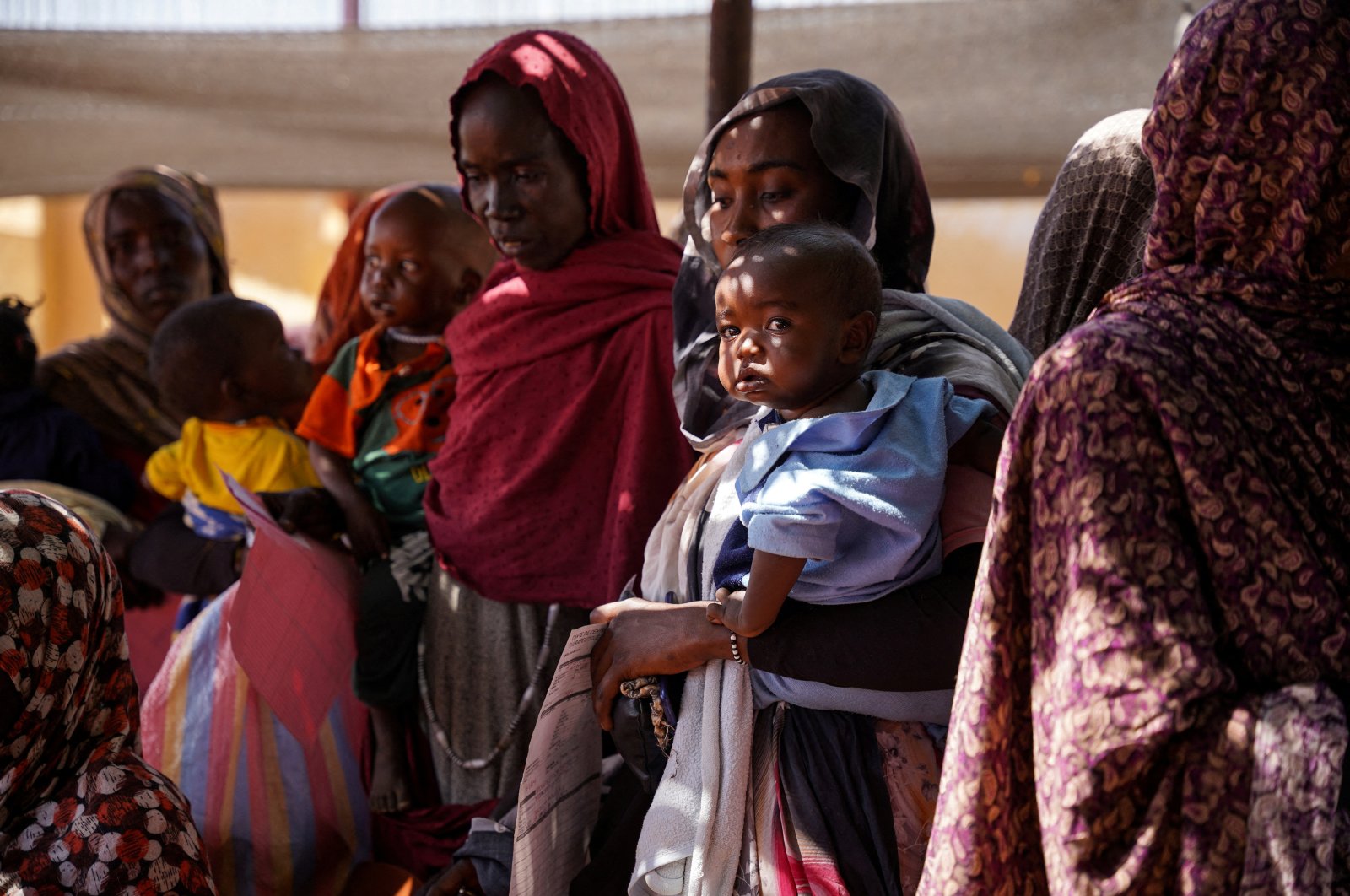
Independent monitors and reporting groups cited by sources say the human toll in El Fasher and across Darfur has been staggering.
Al Jazeera cites monitoring groups that say the RSF killed at least 1,500 people during its October capture of El Fasher.
Displacement and humanitarian needs are vast, with Al Jazeera estimating roughly 13.6 million people displaced in total.
Daily Sabah reports more than 21 million people facing acute food insecurity and more than 65,000 displaced since October.
Dabanga’s coverage emphasizes that the UN will document violations to pursue accountability, reflecting concern over civilian deaths and potential long-term humanitarian collapse.
Coverage Differences
Scope/figures
Al Jazeera (West Asian) provides a higher, aggregate displacement figure and cites a specific monitoring estimate of at least 1,500 killed in el-Fasher, while Daily Sabah (West Asian) emphasises food insecurity numbers ("more than 21 million" facing acute food insecurity) and a displacement figure framed as recent ("more than 65,000" displaced since October). Dabanga (Other) focuses less on raw aggregated totals and more on eyewitness accounts and the UN’s documentation and accountability efforts. The differing figures reflect differences in scope (total vs. recent displacements) and emphasis (death toll estimates vs. food insecurity).
Targeting civilian infrastructure
Multiple reports identify a pattern of deliberate targeting of civilian infrastructure and the use of sexual violence as a weapon.
Al Jazeera highlights repeated strikes on markets, hospitals, schools and shelters that may amount to war crimes and warns that arms, including drones reportedly supplied by Iran and Turkey, along with civilian arming and child recruitment, have intensified militarisation.
Dabanga emphasizes strikes on infrastructure such as the Merowe Dam, warns these attacks may amount to war crimes, and stresses that sexual violence is being used systematically with severe humanitarian consequences from sieges.
Daily Sabah similarly warns that repeated strikes on civilian infrastructure could amount to war crimes and foregrounds allegations of external military support to both sides.
Together, the sources converge on patterns of civilian harm while framing the tactics, perpetrators and external support differently.
Coverage Differences
Narrative focus
Al Jazeera (West Asian) foregrounds the militarisation angle and the role of external arms (mentioning "drones reportedly supplied by Iran and Türkiye") alongside civilian-targeted strikes; Dabanga (Other) zeroes in on human-rights violations such as systemic sexual violence and siege-induced famine and explicitly names the Merowe Dam as an infrastructure target; Daily Sabah (West Asian) blends human-rights concern with explicit naming of alleged foreign backers (accusing the UAE of supplying the RSF and noting army backers) and frames infrastructure strikes as potentially war crimes. These differences shape whether the reader sees the crisis as primarily a human-rights atrocity, an externally fuelled war, or both.
Media reports on external backers
Sources differ in how they attribute external involvement and name alleged backers.
Daily Sabah explicitly says the UAE is widely accused (and denies) supplying the RSF with weapons, mercenaries and political backing, and that the army is backed by Egypt and Saudi Arabia and has reportedly received arms, including drones, from Iran.
Al Jazeera similarly reports arms flows and names Iran and Türkiye as reported drone suppliers, while Dabanga focuses on the UN's human-rights findings and accountability process without detailing the same list of state backers.
These framing choices affect how readers interpret responsibility beyond on-the-ground perpetrators.
Coverage Differences
Attribution/coverage of foreign involvement
Daily Sabah (West Asian) is explicit about accusations against specific states (naming the UAE, Egypt, Saudi Arabia, and Iran) and presents the alleged foreign role as a driver of the conflict; Al Jazeera (West Asian) also reports arms flows and names Iran and Türkiye as reported suppliers of drones but frames this within the broader militarisation narrative; Dabanga (Other) prioritises human-rights documentation and potential war-crimes language and does not emphasise the same catalogue of external backers in its snippet. The result is that some outlets foreground external culpability while others concentrate on documenting abuses and seeking legal accountability.
Verification of reported claims
On specific claims in the user’s prompt — "Massacre Over 100 Civilians" and "Torch Villages" — the provided sources do not uniformly corroborate those exact phrasings.
Al Jazeera cites monitoring groups that say the RSF killed at least 1,500 people during its October capture of el‑Fasher, a figure that, if verified, exceeds the "over 100" threshold.
Dabanga and Daily Sabah document "large-scale summary executions," "mass killings," and other atrocities but do not use the specific figure "over 100" in the snippets provided, nor do the excerpts explicitly say villages were "torched."
Therefore, the precise claims in that wording are either included only partially (Al Jazeera’s higher death estimate) or are not present in the available excerpts (explicit mention of torched villages).
The sources collectively show severe atrocities, alleged war crimes, and massive humanitarian suffering, but the specific terms requested are not consistently supported across the three excerpts.
Coverage Differences
Specificity/verification
Al Jazeera (West Asian) supplies a concrete monitoring figure ("at least 1,500" killed in el-Fasher) that would cover the "over 100" claim numerically, while Dabanga (Other) and Daily Sabah (West Asian) report large-scale executions and "mass killings" without the precise number in the snippets. None of the three provided excerpts explicitly uses the phrase "torch villages," so that specific allegation is not corroborated in the supplied material. This demonstrates an ambiguity between broad atrocity reporting and the availability of precise, named incidents in these snippets.