Repressions: 'The regime would rather kill in the dark' — The dramatic fate of the prisoners in Iran
Key Takeaways
- Thousands of political prisoners are held in Iran's prisons.
- They include human rights activists, opposition members, and foreign nationals.
- The regime and external airstrikes present a double threat to detainees.
Prisoner conditions in Iran
Thousands of political prisoners are in Iran's prisons, including human rights activists, opposition members, and foreign nationals.
“Thousands of political prisoners are in Iran's prisons, including human rights activists, opposition members, and foreign nationals”
They are not only defenseless against the airstrikes there—but an even greater danger comes from the regime itself.
The danger comes from both directions.
'Prisoners are exposed to airstrikes, but have no way to seek shelter or to reach safety,' reports Siamak Namazi to WELT.
The American-Iranian strategic adviser, whom Tehran accused of spying, spent more than eight years in the notorious Evin prison near Tehran before he was released in September 2023 as part of a prisoner exchange.
The Iranian regime systematically arrests political opponents, demonstrators, or journalists and sentences them to long prison terms or even executes them in unfair trials, in order to stay in power.
In times critical for the Mullahs like these, conditions for political prisoners become even more dramatic than they already are, says Namazi.
He has experienced several security crises during his time in custody, including the October 2022 fire as well as unrest and mass uprisings outside the prison walls.
Evin becomes, in these phases, 'much more focused on security,' Namazi says.
Access to facilities such as the library is suspended, parts of the wing are closed, and searches occur more frequently.
'Any form of normality that still exists disappears very quickly.'
War impact on detainees
For three weeks now, the war between Israel and the United States against the regime in Tehran has been ongoing.
Relatives of detainees report devastating conditions.
Food becomes scarce, many prisoners are on their own, while airstrikes in the surrounding area intensify the fear.
Human rights organizations warn that there are a number of detention facilities in Iran located next to military installations.
Hengaw reports food shortages and massive surveillance in the detention facilities, 'as there is fear that protests could break out inside the facilities—especially in prisons that house a large number of political prisoners.'
Most facilities are also severely overcrowded.
Iran's largest prison, Ghezel Hesar in Karaj, in northern Iran, is designed for around 5,000 inmates but currently houses about 15,000 people, Hengaw says.
Foreign prisoners as leverage.
Prisoners from abroad are also affected.
Many inmates are desperate, said Vida Mehrannia, whose husband, Swedish scientist Ahmadreza Djalali, is held in the medical ward of Evin Prison, to AFP.
In a brief telephone call he told her that guards were always posted outside the prison, 'but inside the prison they closed the door and left.'
For foreigners or people with dual nationality, there is another worry, as Namazi knows from his own experience: the Islamic Republic has a long tradition of using them as leverage against other countries.
Calls with family abroad usually go via internet-based systems.
If there is a blackout, that connection drops.
The internet monitoring service NetBlocks now reports the longest outage ever recorded in Iran's history.
After 20 days it even surpasses the one during the protests in January.
Prisoners know that their governments are focusing on the larger conflict, Namazi emphasizes.
But it is hard not to worry that one might be pushed to the background or forgotten behind the walls.
Hengaw reports to WELT that authorities have set bail for some prisoners to be released.
While some families managed to raise the required sum and secure the release of their relatives, most prison administrations are currently closed due to the war.
Amnesty International also reports relocations of political prisoners without informing families.
'We know that prisoners have been relocated to partly unknown places, including in Iran's Kurdish provinces.'
Among these are places that could become possible military targets.
During the twelve-day war in the summer of 2025 there was also an attack on Evin Prison.
Parts of the complex were damaged.
'Bombs do not distinguish between prisoners and guards,' Namazi notes.
Subsequently, the inmates, many of whom had previously helped to rescue guards from the rubble, were transferred to another detention facility.
They were kept for months in overcrowded rooms with limited access to basic provisions.
'This can mean harsher treatment, isolation, or arbitrary measures. Put simply, they know they can become among the easiest targets—the easiest scapegoats of the system.'
Family impact and torture
Mariam Claren, whose mother Nahid Taghavi spent several years in Evin, describes contact with the family as rare and indirect.
“Thousands of political prisoners are in Iran's prisons, including human rights activists, opposition members, and foreign nationals”
'Every week I lived in fear: What if the call doesn't come?'
Pressure on relatives is underestimated.
'My mother was never allowed to call directly abroad. She would call her brother in Iran, who would put me on speaker. Half my family was involved in this telephone process.'
Namazi also knows how important even a short call is.
If it doesn't work, both sides are desperate.
'This uncertainty is extremely hard to endure and represents a very particular, especially cruel form of suffering.'
Clar's mother told her about 'white torture' in prison: 'That means deprivation of food, 24 hours of neon light, psychological pressure.'
In the case of Iran's Peace Nobel laureate Narges Mohammadi, with whom Taghavi was imprisoned, she spoke of direct physical abuse.
'They even tore out her hair.'
Executions and de-escalation calls
In February Mohammadi was sentenced to a further six years in prison for conspiracy and an additional year and a half for propaganda activity.
In addition, a two-year travel ban was imposed as well as an exile to the Iranian small town of Chosf.
European Parliament member Hannah Neumann (Greens) sees a great danger in 'this regime becoming significantly more repressive.'
Because of the communications blackout, fewer details reach outside, making it easier to carry out executions in the shadows, she emphasizes in an interview with WELT.
'During the Iran-Iraq war in 1988 they already massacred political prisoners. Many now fear precisely such a situation. We know the regime prefers to kill in the dark.'
On Wednesday morning the judiciary acted not in secret.
On its Misan Online site, it announced that 'the death sentence for a spy of the Zionist regime who handed over pictures and information about important sites in the country to Mossad officers' had been carried out that morning.
It concerned a Swedish citizen.
Since then Iran has carried out more death sentences in connection with the recent mass protests.
Human rights activists spoke of unfair trials with confessions obtained under torture.
'We are deeply concerned about the risk of mass executions of protesters and political prisoners in the shadow of war,' wrote Mahmood Amiry-Moghaddam, director of Iran Human Rights (IHRNGO), on X.
We must now work together with the Gulf states toward de-escalation, says EU parliamentarian Neumann.
'If at the end of this military operation only an even more repressive regime remains, this military intervention has failed.'
More on Iran

President Trump Says Iran Deal Within Reach Amid Talks With Senior Iranian Official
10 sources compared

Trump Approves Iran Operation After Netanyahu Presses for Joint Strike on Khamenei
12 sources compared

President Donald Trump orders ICE officers deployed to airports amid DHS shutdown.
227 sources compared
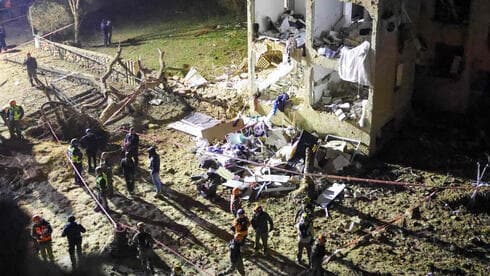
Iranian Missiles Strike Israel; Officials Report 180 Injured Amid Conflicting Casualty Figures.
12 sources compared