Full Analysis Summary
England resident doctors strike
Resident doctors in England have begun a five-day strike in the long-running pay-and-jobs dispute, with action starting at 07:00 on Wednesday and scheduled to run until early Monday.
Reports identify this as the 14th walkout since March 2023.
The Guardian says the action followed doctors overwhelmingly rejecting the government's latest offer and notes it as the 14th strike; the BBC also reports the strike began at 07:00 on Wednesday and calls it the 14th walkout; local outlet Your Harlow specifies the dates as Wednesday 17 December to Monday 22 December.
Coverage Differences
Detail/precision
Sources vary in the level of date precision and focus: Your Harlow gives exact calendar dates (17–22 December), BBC emphasizes the start time (07:00 on Wednesday) and frames it as the 14th walkout, while The Guardian emphasizes the ballot result and the strike's place in a longer dispute since March 2023. Each source is reporting the same event but chooses different factual details to foreground.
Medics' walkout reasons
The immediate cause of the walkout is the rejection of the government's latest offer.
The Guardian says the offer expands training places without increasing pay for the current year, a proposal rejected by 83% of resident medics on a 65% turnout.
The BBC and Your Harlow place the strike within a long-running pay dispute and frame it as part of broader pay-and-jobs tensions.
The Guardian highlights ballot figures and the BMA's demand that ministers set out a long-term plan for pay and genuinely new jobs.
The BBC and Your Harlow stress that the pay-and-jobs dispute explains repeated walkouts.
Coverage Differences
Emphasis and detail
The Guardian provides numerical detail about the ballot outcome (83% against, 65% turnout) and describes the government's specific offer (expanded training places without a pay increase), whereas the BBC and Your Harlow report the strike as part of the ongoing pay dispute without the same ballot figures. The Guardian therefore emphasizes the internal rejection details and the BMA's demand for a long-term plan, while BBC and Your Harlow emphasize the continuity of the dispute.
NHS strike disruption warnings
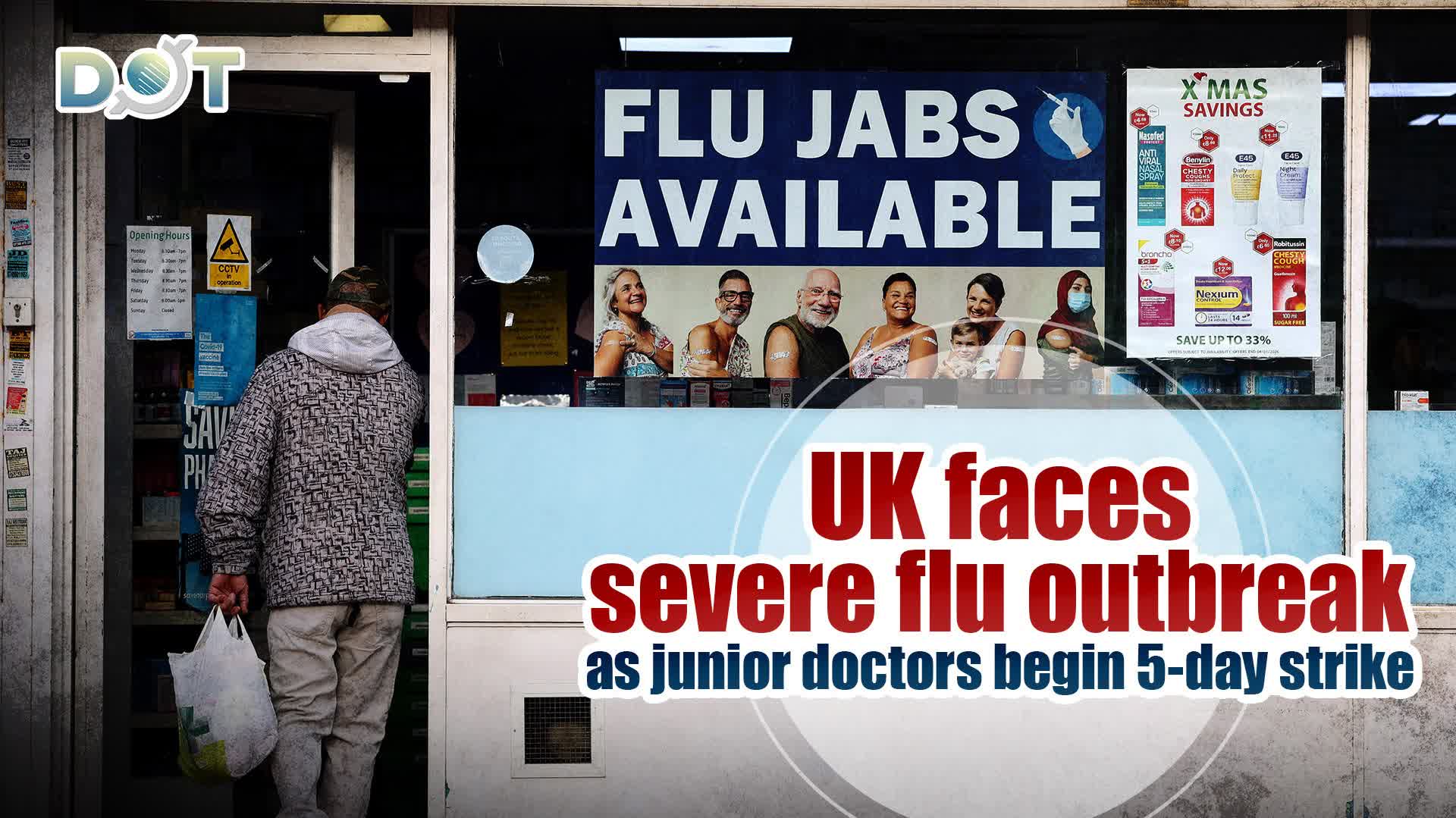
NHS leaders and NHS England warned this round of action will cause wider disruption than previous walkouts because it coincides with a wave of flu.
Reports say non-urgent services are likely to be affected and senior doctors will be drafted in to provide cover.
Both The Guardian and the BBC warn more patients are likely to be affected.
The BBC notes concerns about delayed discharges ahead of Christmas, and Your Harlow quotes NHS warnings that trusts will struggle to maintain the same level of cover as previous strikes.
Coverage Differences
Tone and immediate focus
BBC foregrounds operational impacts and patient-safety concerns (delayed discharges, senior doctors drafted in), The Guardian pairs disruption warnings with BMA calls for long-term solutions, while Your Harlow localises the effect by quoting a trust spokesperson focusing on patient safety and adjustments. Each source keeps the disruption theme but adjusts tone: BBC is operational/patient-care focused, The Guardian is policy-and-pay focused, and Your Harlow is locally pragmatic.
Responses to NHS strikes
The BMA announced continuous industrial action and said it would work with NHS bosses "to keep care safe."
The Health Secretary warned the timing risked patient safety, and a Department of Health spokesperson said officials and the secretary had tried to avert the strikes.
The Guardian recorded the BMA's call for a long-term plan.
The BBC quoted Health Secretary Wes Streeting expressing patient-safety concerns and described last-minute talks as "constructive" but unsuccessful.
Your Harlow included a local trust's reassurance that "patient safety is the priority" and said services and staffing were being adjusted.
Coverage Differences
Source perspective and quoted actors
The Guardian focuses on the BMA's policy demands and the government's attempt to avert strikes (quoting a Department of Health spokesperson), the BBC balances statements from the Health Secretary with the BMA's promise to work to keep care safe and reports on the tone of last-minute talks, while Your Harlow highlights local trust statements about operational adjustments. The sources thus quote different actors to shape their narratives: national policy and ballot detail (The Guardian), high-level safety framing and talks (BBC), and local operational reassurance (Your Harlow).
Local and national impacts
Your Harlow reports trusts are 'adjusting services and staffing to maintain quality care' and names a Portsmouth Hospitals NHS Trust spokesperson prioritising patient safety.
National outlets warn that because resident doctors 'make up nearly half of NHS doctors,' withdrawing from both emergency and non-urgent care will increase pressure.
The BBC raises concerns about delayed discharges ahead of Christmas.
The Guardian warns that the timing amid high flu admissions will affect more patients than earlier walkouts.
Coverage Differences
Scale vs local focus
National sources (BBC, The Guardian) emphasise system-wide consequences and staffing proportions (BBC: "Resident doctors make up nearly half of NHS doctors"), while the local Your Harlow piece centres on trust-level adjustments and local assurances. The Guardian links disruption to high flu admissions at a national level, contrasting with Your Harlow's practical local response quotes.