Full Analysis Summary
Rohingya boat capsizing
A boat carrying Rohingya refugees capsized in the Andaman Sea, prompting Malaysian and Thai authorities to mount a large maritime search.
Reports give differing immediate tallies of casualties and survivors.
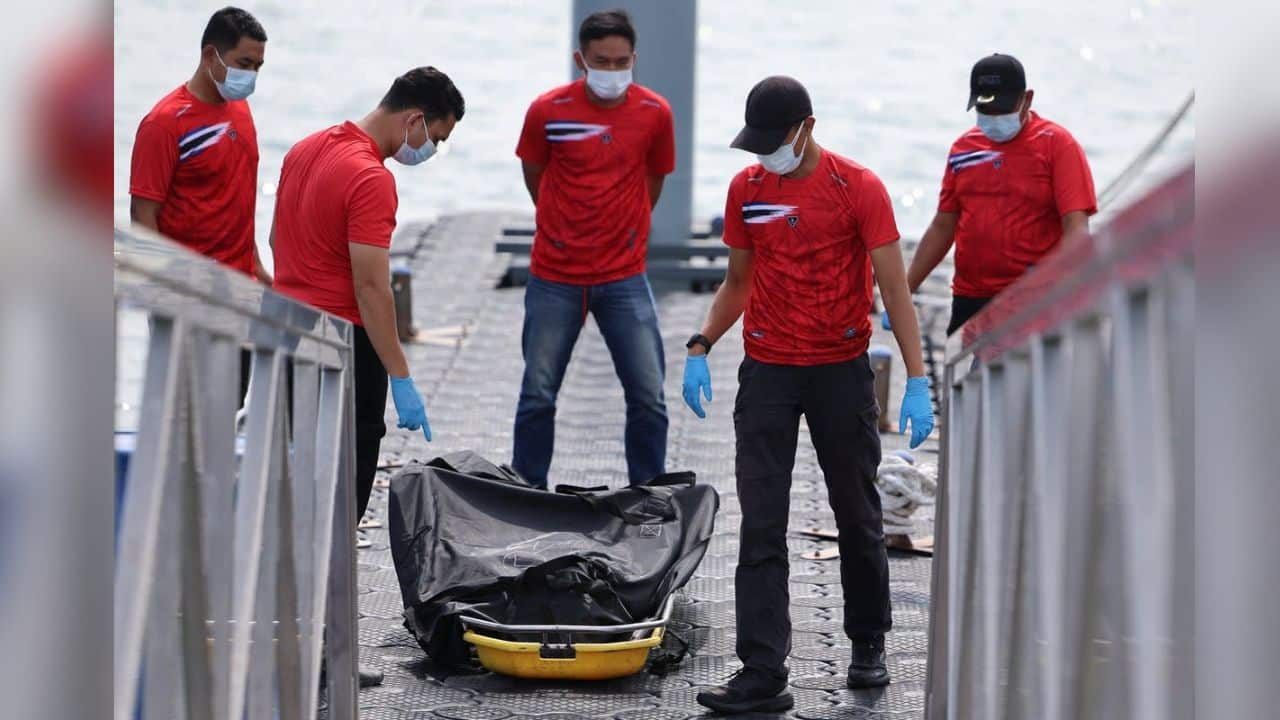
Thaiger states the capsizing left at least 27 people dead and that rescue teams recovered nine bodies on November 11.
NST Online reports a joint operation has recovered 29 bodies, 20 in Malaysian waters and nine in Thailand, and rescued 14 survivors.
CNN says rescuers have recovered at least a dozen survivors and that the fate of a second vessel carrying more than 200 people remains unclear.
The incident highlights the acute danger of this route as maritime teams from both countries continue search-and-rescue operations amid conflicting counts and ongoing uncertainty about the number still missing.
Coverage Differences
Contradiction (casualty/survivor counts)
The three sources provide different immediate counts: Thaiger reports “at least 27 people dead” and nine bodies recovered on Nov 11, NST Online reports 29 bodies recovered and 14 survivors, while CNN emphasizes 'at least a dozen survivors' and the unclear fate of a second vessel carrying 'more than 200 people.' These are reporting differences (not editorial claims) reflecting evolving recovery tallies.
Tone (immediacy vs. summary)
CNN frames the incident as underscoring the 'deadly risks' of the route in a concise, immediate-report style, whereas NST Online provides operational detail and exact resource deployment, and Thaiger includes both immediate counts and context about search timelines.
Maritime search operations
Search operations have been wide-ranging and resource-intensive.
NST Online quantifies the search area as about 1.5 times the size of Singapore and says the Malaysian Maritime Enforcement Agency resumed operations with four vessels, an aircraft and over 100 personnel supported by marine police, navy, Fisheries Department, Fire and Rescue and Civil Defence units.
Thaiger notes searches by Malaysian and Thai authorities and that the search was scheduled to continue until November 15, while CNN describes maritime teams racing to find the missing.
Together, the accounts depict a multi-agency response across a large maritime area, though NST gives the most granular operational description.
Coverage Differences
Narrative detail (operational specificity)
NST Online supplies specific operational detail and a scale for the search area, whereas CNN summarizes the effort in broader terms and Thaiger references the timeline and binational effort. This difference reflects NST's operational focus versus CNN's concise summary and Thaiger's timeline emphasis.
Survivor accounts of capsizing
Survivor testimony and reported voyage origins provide human detail to the tragedy.
Thaiger quotes survivor Iman Sharif saying he spent eight days on the larger boat before being transferred to a smaller craft of about 70 people that later capsized.
He said he clung to debris and drifted for days before reaching a Malaysian island, where he was rescued and detained by Malaysian authorities.
NST Online reports officials saying migrants left the Cox's Bazar refugee camp in Bangladesh about a month ago on a 'mother vessel' of roughly 300 people that was split into three boats, with one smaller boat of about 70 believed to have capsized.
CNN notes the capsizing happened in rough seas near the Thai-Malaysian border, emphasizing the perilous conditions.
Together, these details link the disaster to departures from Cox's Bazar and small, overcrowded boats facing rough weather.
Coverage Differences
Source emphasis (survivor detail vs. origin reporting)
Thaiger foregrounds a named survivor's account and his detention after rescue, NST Online foregrounds the voyage origin from Cox’s Bazar and the 'mother vessel' split into three boats, and CNN emphasizes the rough sea conditions. Each source reports different facets (quotes from survivor vs. official origin details vs. environmental cause), not contradicting but complementing one another.
Rohingya maritime crisis
Reports place the sinking within a broader crisis of maritime migration and Rohingya displacement.
Thaiger cites UN and IOM figures saying more than 5,300 Rohingya have attempted similar sea journeys since January, with over 600 reported dead or missing.
Thaiger also notes Amnesty International's criticism of regional 'pushback' policies and calls for increased rescue and protection.
NST Online frames the incident as evidence of Rohingya desperation as they flee prolonged conflict and persecution in Myanmar, referencing UN documentation of killings and other abuses.
CNN emphasizes the recurring deadly risks of the route for thousands of refugees each year.
Together, the sources link this single capsizing to sustained displacement, high mortality on sea routes, and international criticism of regional responses.
Coverage Differences
Narrative focus (statistical context vs. human-rights framing)
Thaiger provides agency statistics and cites Amnesty International's policy criticism, NST Online emphasizes the root cause of persecution in Myanmar and UN documentation of abuses, while CNN highlights the recurring danger of the route. The differences reflect source choices: Thaiger foregrounds international agency data and NGO critique, NST foregrounds origin and persecution context, and CNN centers immediate risk messaging.
Media reporting and policy differences
Responses and policy implications are reported differently across outlets, and some details remain unclear.
Thaiger highlights Malaysia's policy context, noting the country does not grant formal refugee status and has stepped up interceptions and detention of undocumented arrivals.
Thaiger also cites Amnesty International's critique of pushback policies.
NST Online focuses on operational recovery and identification processes, noting autopsies are expected and reporting the vessel's origin as Cox's Bazar.
CNN provides fewer policy specifics, emphasizing the rescue effort and the ongoing uncertainty about a second vessel.
Because counts and operational details differ across reports — for example, 27 versus 29 bodies recovered and varying survivor numbers — the full human toll and exact sequence remain ambiguous pending official confirmations and identifications.
Coverage Differences
Missed information / level of policy detail
Thaiger includes policy context about Malaysia not granting refugee status and stepped-up interceptions (and Amnesty's criticism), NST Online concentrates on recovery numbers and identification procedures, while CNN omits these policy specifics and centers rescue and risk. This shows how source_type (Other vs Western Mainstream) influenced inclusion of policy critique and local operational detail.
Ambiguity / conflicting reports
There is clear ambiguity in casualty and survivor counts across sources: Thaiger reports 'at least 27 people dead,' NST Online reports '29 bodies' recovered, and CNN cites 'at least a dozen survivors' while reporting the second vessel’s fate is unclear. These discrepancies are explicitly reported by the outlets and indicate evolving information rather than direct contradiction of facts.