RSF Drone Strikes Kill Civilians Across Sudan, UN Rights Chief Volker Türk Says
Key Takeaways
- Five civilians killed by RSF drone strike near Khartoum, NGO reports.
- UN rights chief Volker Türk cites disproportionate civilian toll and urges international attention.
- Drone strikes escalate, hitting homes, schools, markets and hospitals, displacing civilians.
Drone war intensifies
The war in Sudan between the Sudanese Armed Forces and the paramilitary Rapid Support Forces (RSF) has intensified in recent months through drone strikes that have hit not only military positions but also homes, schools, markets and hospitals, according to Ici Beyrouth and tv5monde.
Ici Beyrouth says the conflict has caused “des milliers de morts et des millions de déplacés depuis avril 2023,” placing the escalation in a longer timeline that began in April 2023.
tv5monde describes an uptick in drone attacks in Kordofan that “claiming more civilian victims and further complicating humanitarian action,” and it links the pattern to the broader shift of fighting westward.
The UN High Commissioner for Human Rights, Volker Türk, is quoted by tv5monde lamenting “the devastating consequences for civilians of this escalation in the use of drone systems” in a statement issued on February 18.
tv5monde also reports that at least 77 people were killed and dozens wounded in several attacks on February 18, attributing the attacks to the RSF, citing the Sudan Doctors Network.
In parallel, the UN News account frames the conflict as nearly three years of brutal fighting that has transformed Sudan into “a land of despair,” and it says the war erupted in April 2023.
UNRIC’s status update similarly anchors the conflict’s start to “15 April 2023” and describes two rival factions led by General Abdel Fattah al-Burhan and General Mohammed Hamdan Daglo, also known as Hemetti.
Who backs whom
The drone escalation is tied in the sources to competing claims about external support and specific drone types used by each side.
Ici Beyrouth says the conflict between the army and paramilitaries has seen “des frappes de drones contre des positions militaires mais aussi des maisons, des écoles, des marchés ou des hôpitaux,” while it also describes how both sides accuse each other of using foreign systems.
It reports that drones used by the RSF are said to include Turkish Bayraktar TB2, and it provides technical details that “peut parcourir 150 kilomètres et voler pendant 27 heures avec une charge de 150 kg.”
Ici Beyrouth adds that the RSF accuse the army of deploying Bayraktar Akinci drones, described as having “une portée de 7.500 km avec 25 heures d'autonomie.”
On the other side, Ici Beyrouth says the paramilitaries “annoncent régulièrement la destruction de drones turcs,” and it also states that satellite images verified by AFP show recurring presence of aircraft matching Bayraktar drones on a base in the south-west of Egypt, “à environ 60 kilomètres de la frontière soudanaise,” while Cairo denies involvement.
For the army’s drone supply, Ici Beyrouth cites the Conflict Observatory, funded by the United States, saying Iran delivered Mohajer-6 drones to the army between December 2023 and July 2024, and it notes a Mohajer-6 on the ground in Khartoum in 2024.
tv5monde similarly ties the drone debate to a UN Security Council exchange, reporting that British Foreign Secretary Yvette Cooper said any ceasefire would be impossible as long as rivals could obtain “more lethal weapons, with outside support from at least a dozen states that finance, manufacture, transport or move them.”
Civilian deaths and strikes
The sources describe drone attacks that kill civilians and damage civilian infrastructure, with specific locations and casualty figures tied to particular strikes.
Le Courrier du Vietnam reports that a drone strike believed to have taken place on Monday occurred “about 150 km southwest of Nyala, the capital of this state,” and it says the attack killed “more than 30 Sudanese civilians,” with Farhan Haq saying additional civilian casualties were reported in another strike on the same day on the town of Kutum in North Darfur.
tv5monde likewise reports that at least 77 people were killed and dozens wounded in several attacks on February 18, and it says the attacks were attributed to the RSF according to the Sudan Doctors Network.
UN News and tv5monde both emphasize that the RSF and the Sudanese Armed Forces have continued to use explosive weapons in densely populated areas, often without warning, and UN News says this shows “a total disregard for human life.”
UN News also states that “Nearly 600 civilians killed or injured since the start of the year,” and it adds that the increased use of advanced long-range drones has extended damage to civilians far from the front.
UN News further says that in 2025 the OHCHR recorded 11,300 civilian deaths, while it notes that “the real toll is certainly much higher.”
In addition to drone strikes, Dabanga Radio TV Online reports a drone strike in Blue Nile’s Balila area in Kurmuk locality, where it says the SPLM-N El Hilu led by El Hilu stated that “10 civilians were killed and 20 others, mostly women and children, were injured,” and it says the bombing caused fires in shops at the Balila market and destroyed water sources.
Voices: UN, lawyers, residents
The sources include direct voices from UN officials, humanitarian monitoring, and local reporting that connect drone warfare to civilian harm and legal accountability.
UN News quotes Volker Türk warning before the UN Human Rights Council in Geneva that the conflict is “This war is horrific. It is bloody. It is absurd,” and it says he highlighted “clear and persistent patterns of violence against civilians, including murders, rapes and acts of torture.”

UN News also says Türk told the council that “accountability remains virtually non-existent,” while it describes violations multiplying as fighting intensifies.
tv5monde adds that the UN High Commissioner for Human Rights lamented “the devastating consequences for civilians of this escalation in the use of drone systems,” and it reports that the UN Secretary-General’s spokesperson, Stéphane Dujarric, and Türk say drones are used by both sides, the Sudanese army and the RSF.
In the same tv5monde account, a resident of Kadugli, Walid Mohamed, is cited by Associated Press saying that even though the siege was lifted, “drone strikes by the RSF continue on a daily basis,” and it says they target hospitals, markets and civilian dwellings.
Dabanga Radio TV Online includes a quote from Ali Hajo, a member of the Blue Nile Civil Society Initiative, who says areas affected by heavy military operations are experiencing “extremely difficult humanitarian conditions, with drone strikes claiming lives daily,” and he adds that “women and children are the primary victims.”
Dabanga Radio TV Online also quotes a legal group, saying the Emergency Lawyers Group “condemned the killing of five civilians in recent days in a drone strike by the RSF targeting a vehicle south of Omdurman.”
Humanitarian crisis and next steps
The sources portray the drone escalation as worsening an already extreme humanitarian emergency, while UN officials call for ceasefires and arms restrictions.
UN News says nearly three years of war have “killed tens of thousands and displaced more than 11 million people in Sudan,” and it frames the conflict as triggering “the world's worst humanitarian crisis.”
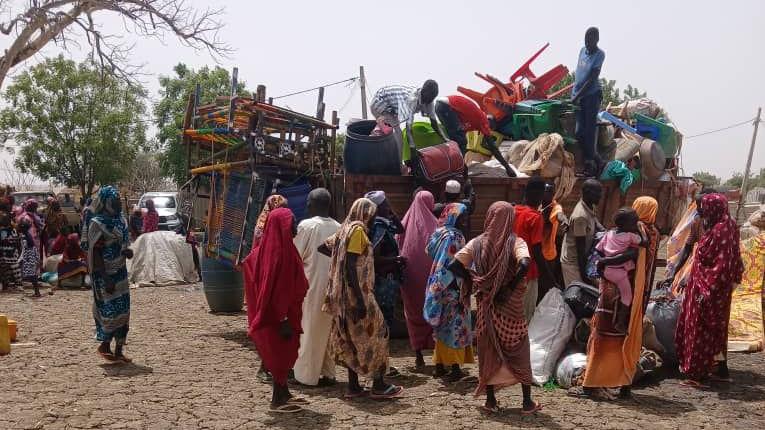
It also reports that in 2025 more than 500 victims of sexual violence were recorded, and it says large-scale arbitrary detentions and violent rhetoric are used to intimidate communities.
UN News quotes Türk describing a “sharp rise in extrajudicial killings of civilians,” and it says hate speech and dehumanizing rhetoric tear at communities that are already fragmented.
It also highlights a risk in northern Kordofan, saying Türk warned about “the risks in El Fasher, in Darfur,” and it states that “the massacre could not be avoided,” while fearing crimes may repeat and strike new communities.
UN News further says Türk warned of “an alarming escalation of drone strikes and blockades carried out by the various parties in Kordofan and beyond, including against humanitarian aid convoys.”
UNRIC adds a diplomatic and funding dimension, saying the 2026 humanitarian response plan “requiring 2.9 billion dollars to assist more than 20 million people” is funded only “16%, with only 465 million dollars available.”
More on Sudan

Norway Warns Rapid Support Forces Could Escalate Assault on el-Obeid, Sudan
18 sources compared

Sudan Attorney General Intisar Ahmed Abdel Aal Tells UN Human Rights Council of 2,200 Rape Cases
10 sources compared

UN Rights Chief Volker Türk Says Drone Strikes Killed Over 1,000 Civilians in Sudan
17 sources compared
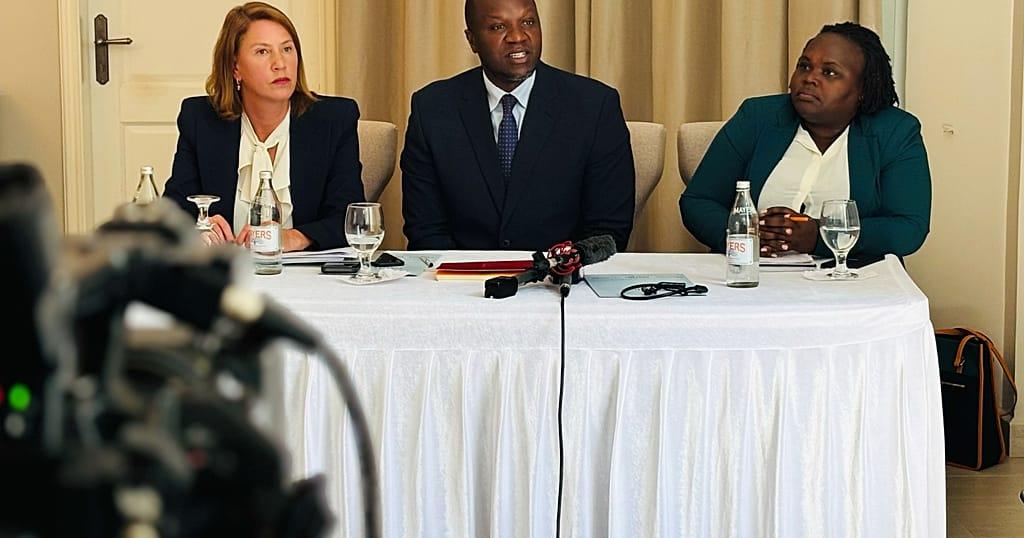
Twelve Sudanese Survivors File War Crimes Complaint Against RSF in Kenya Over Khartoum Abuses
11 sources compared