Ukraine War29 December, 20252 min read
Russia Accuses Ukraine of Launching 91-Drone Attack on Putin's Residence
Russia says Ukraine launched 91 long‑range drones at a Novgorod presidential residence Russia says all 91 drones were shot down, reported no damage, and warned of retaliation

39 outlets told this the same way.
Outlets did split on Russian Attack Kills At Least 33 On Two Buses In Kramatorsk →
Russian drone attack claims
Russian authorities on Dec. 28–29 accused Ukraine of launching a swarm attack on a presidential residence in the Novgorod/Valdai area.
“Russian Foreign Minister Sergey Lavrov ... said Ukraine fired '91 long‑range unmanned aerial vehicles' at the Novgorod-region residence between late Sunday and early Monday, and that all were shot down.”
They said 91 long-range drones were intercepted and destroyed with no damage reported.

Foreign Minister Sergey Lavrov called the strikes "state terrorism."
He said Moscow had picked retaliatory targets and warned it would revise its negotiating stance.
He also insisted Russia would not abandon talks.
This account chiefly comes from Russian officials and state media.
Ukraine response to Kremlin claim
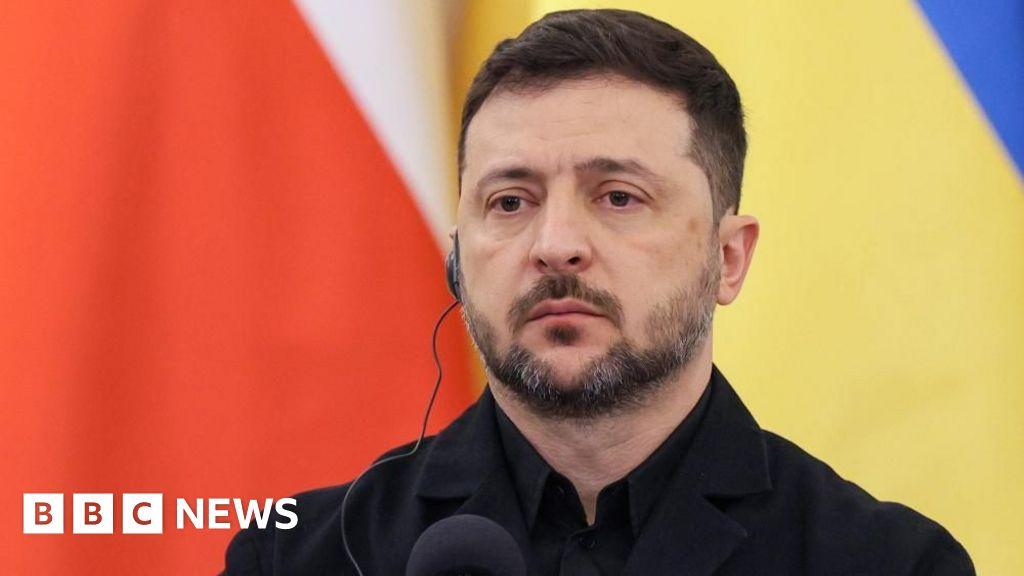
Kyiv and President Volodymyr Zelensky strongly denied the Kremlin's account, calling it a fabrication intended to undermine recent diplomacy and justify new strikes on Ukrainian targets. Zelensky and his ministers urged the world to reject what they described as Russian falsehoods and propaganda.
They insisted that Ukraine targets only legitimate military objectives. Several Western outlets quoted Zelensky calling the allegation a 'lie' or a 'complete fabrication'.
Alleged strike and diplomacy
The allegation arrived days after high-profile US-facilitated diplomacy. President Trump met Zelensky in Florida and later spoke with Putin. U.S. envoys reportedly offered Ukraine 15-year security guarantees as part of a near-final peace framework.
“Russia said it would 'revise' its position on a US‑brokered peace plan after an alleged drone attack, while also saying it remains formally committed to negotiations but not specifying which parts of the plan it would accept.”
Kremlin aides said Putin told Trump about the alleged strike and that Trump was 'shocked' or 'angry'. Western reports conveyed both Trump's condemnation and his concession that the reported attack 'might not have occurred'. Russian officials said the incident would prompt a reassessment of Russia's negotiating stance.
Scrutiny of Novgorod claim
Independent verification of the Novgorod allegation is absent in available reporting, and several outlets highlighted key unknowns such as where Putin was at the time, what evidence Russia presented, and whether the incident could be independently corroborated. These gaps raised concern that the claim could be used as a pretext to broaden attacks.
Analysts and some journalists also questioned the technical feasibility of such a swarm reaching a heavily defended presidential residence without leaving a trace. Meanwhile, Russian sources emphasized preselection of targets for retaliation.
Negotiations and battlefield dynamics
Observers placed the episode in a broader context of unresolved negotiating sticking points, notably territorial control in Donbas and the fate of the Russia-held Zaporizhzhia nuclear plant, alongside ongoing battlefield moves. Some reports noted Moscow’s continued push to seize full control of annexed regions while Western partners considered security guarantees for Kyiv. The alleged attack and ensuing reactions risk hardening Moscow’s demands and disrupting a US-backed framework that Kyiv says is largely complete but still leaves major issues to resolve.
“Remaining sticking points include territorial issues, the future of the Russian‑occupied Zaporizhzhia plant and Donbas, where Russia controls roughly 75% of Donetsk and about 99% of Luhansk...”