
Russia and China Provide Military Cooperation to Iran, Iranian Foreign Minister Says
Key Takeaways
- Iran says Russia and China provide military cooperation to Iran.
- The claims came after an interview with MS Now.
- US-Iran tensions provide the broader context for the claims.
Iran-Russia-China Alliance
Iran's Foreign Minister Abbas Araghchi has publicly confirmed that both Russia and China are providing military cooperation to Iran during its conflict with the United States and Israel.
“Iran is receiving “military cooperation” from Russia and China, Iranian Foreign Minister Abbas Araghchi said in an exclusive interview with MS NOW on Saturday”
Araghchi described the working relationship with these countries as 'good cooperation' across political, economic, and military dimensions, though he declined to provide specific details about the nature of the assistance.

The foreign minister emphasized that this cooperation is not new but represents an ongoing strategic partnership between Iran and these major world powers.
According to Araghchi, both countries have been instrumental in supporting Iran's military capabilities throughout the ongoing conflict, with the assistance extending beyond mere political support to include tangible military cooperation that has strengthened Iran's position in the region.
Intelligence Sharing Allegations
The extent of Russian and Chinese assistance to Iran includes the provision of intelligence regarding locations of US military assets during Operation Epic Fury, according to allegations from US officials.
This intelligence sharing has significantly enhanced Iran's ability to target and potentially strike American military positions in the region.
The revelation of China's involvement came shortly after Araghchi acknowledged Russia's role in the conflict, suggesting a coordinated effort by both nations to support Iran against US and Israeli interests.
The timing of these disclosures coincided with heightened tensions in the Middle East, particularly following the US-Israeli airstrike that killed Iran's Supreme Leader Ayatollah Ali Khamenei and led to the appointment of his son Mojtaba as the new ayatollah.
Diplomatic Contradictions
Russia's public military cooperation with Iran directly contradicts assurances given to US officials, creating a significant diplomatic rift between Moscow and Washington.
“Iran is receiving “military cooperation” from Russia and China, Iranian Foreign Minister Abbas Araghchi said in an exclusive interview with MS NOW on Saturday”
Ambassador Steve Witkoff revealed that Russian leaders had promised President Trump during a phone call that they were not sharing intelligence with Iran, yet subsequent statements from Iranian officials confirm ongoing military assistance.
This contradiction has further strained US-Russian relations at a time when tensions are already high over various geopolitical issues.
Russian President Vladimir Putin compounded the diplomatic friction by declaring his 'unwavering support' for Iran and congratulating the newly installed Ayatollah Mojtaba Khamenei, signaling Moscow's commitment to maintaining its alliance with Tehran despite potential consequences from the international community.
Regional Escalation Threats
In response to US strikes on Iranian energy infrastructure, particularly the attack on Kharg Island, Iran's crucial oil export site, Foreign Minister Araghchi issued threats against neighboring countries.
He vowed to attack neighboring nations if Iran's energy facilities were targeted again, escalating the potential regional conflict beyond the current US-Iran confrontation.
Araghchi specifically accused the United Arab Emirates of allowing the US to launch strikes against Iran from its territory, claiming that US attacks were 'fired from U.A.E.' and criticizing the use of 'highly populated areas to launch, you know, rockets against us.'
These accusations have heightened tensions in the Persian Gulf region and complicated diplomatic efforts to de-escalate the conflict.
UAE Response
The United Arab Emirates responded sharply to Iran's accusations, rejecting the claims and criticizing Iran's regional policy.
“Iran is receiving “military cooperation” from Russia and China, Iranian Foreign Minister Abbas Araghchi said in an exclusive interview with MS NOW on Saturday”
Anwar Gargash, an adviser to President Sheikh Mohamed bin Zayed Al Nahyan, issued a statement describing Iran's approach as a 'confused policy' that has 'lost its compass.'
The UAE emphasized its right to self-defense while simultaneously maintaining a restrained approach, stating it 'continues to prioritize reason and logic, maintaining restraint and seeking an exit for Iran and the region.'
This diplomatic exchange highlights the complex web of alliances and tensions in the Middle East, where traditional rivalries are being complicated by the involvement of major powers like Russia and China in supporting Iran against US and Israeli interests.
The situation underscores how the conflict is evolving from a bilateral US-Iran confrontation into a more complex regional power struggle with global implications.
More on Russia

Cuba's Díaz-Canel Acknowledges Talks with U.S. as Energy Crisis Worsens
25 sources compared

Muslim group claims responsibility for Amsterdam Jewish school explosion, mayor calls it attack on Jews
23 sources compared

Trump lifts sanctions on Russian oil, letting Moscow sell at sea
110 sources compared
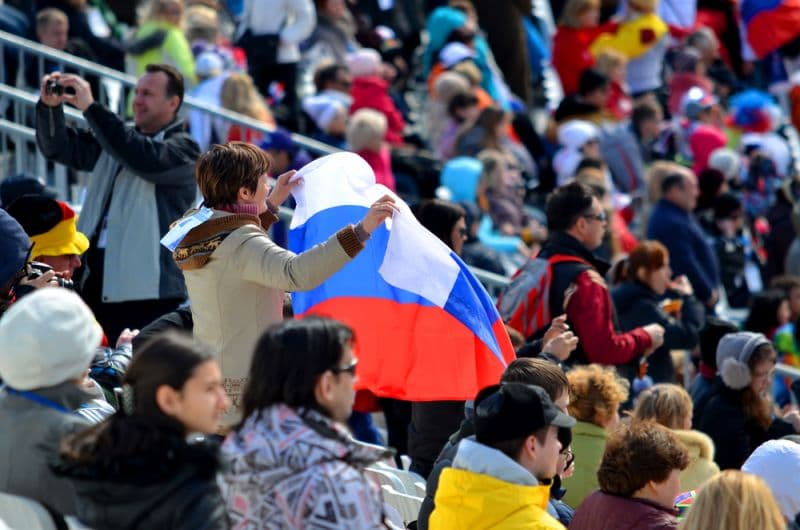
UK Government Boycotts Opening Ceremony After IPC Allows Russian, Belarusian Flags
13 sources compared