Russia Declassifies Volhynia Massacre Archives, Citing UPA OUN Led by Stepan Bandera
Key Takeaways
- Poland and Ukraine agree on exhumations of Polish victims from Volhynia massacres.
- Polish PM Donald Tusk announces Wall of Remembrance in Warsaw for Volhynia victims.
- Poland and Ukraine moving toward reconciled memory over Volhynia massacres.
FSB declassifies Volhynia
Russia’s FSB announced the declassification of archival documents related to the Volhynia massacre, described as a mass killing carried out between 1943 and 1945 in regions including Volinia and Galizia orientale.
“Although it is positive that Poland and Ukraine continue to cooperate, yesterday’s visit by President Zelensky to Warsaw did not lead to major breakthroughs, he said in an interview on RMF24 radio”
The Report Difesa piece says the UPA, linked to the OUN led by Stepan Bandera, carried out systematic massacres against the Polish population, with Polish victims estimated between 60 mila and 100 mila and with atrocities reaching an apex in the summer of 1943.
It adds that the declassification came in proximity to the Giorno della Vittoria on 7 maggio and that the materials, “presumibilmente provenienti dagli archivi del NKVD,” could include reports on stragi and “collaborazioni tra i nazionalisti ucraini e i nazisti tedeschi.”
The same article frames the move as a geopolitical operation to divide Poland and Ukraine while both present themselves as allies against the Cremlino, and it says the operation is oriented to reinforce a Russian narrative that depicts Ukraine as an heir of violent, collaborationist nationalism.
It also notes that from gennaio scorso Ukraine revoked a previous ban on exhumations of Polish victims’ remains, allowing some operations in the affected villages, while Varsavia continues to ask for explicit recognition of genocide and Kiev maintains a cautious line to avoid upsetting internal political balance.
Tusk’s Wall of Remembrance
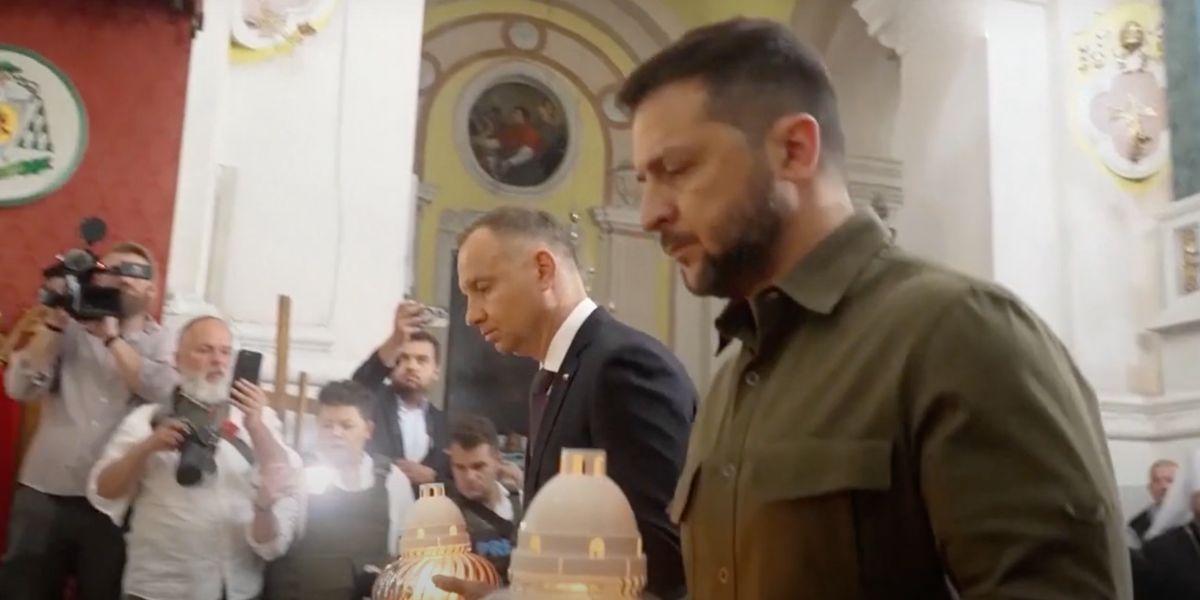
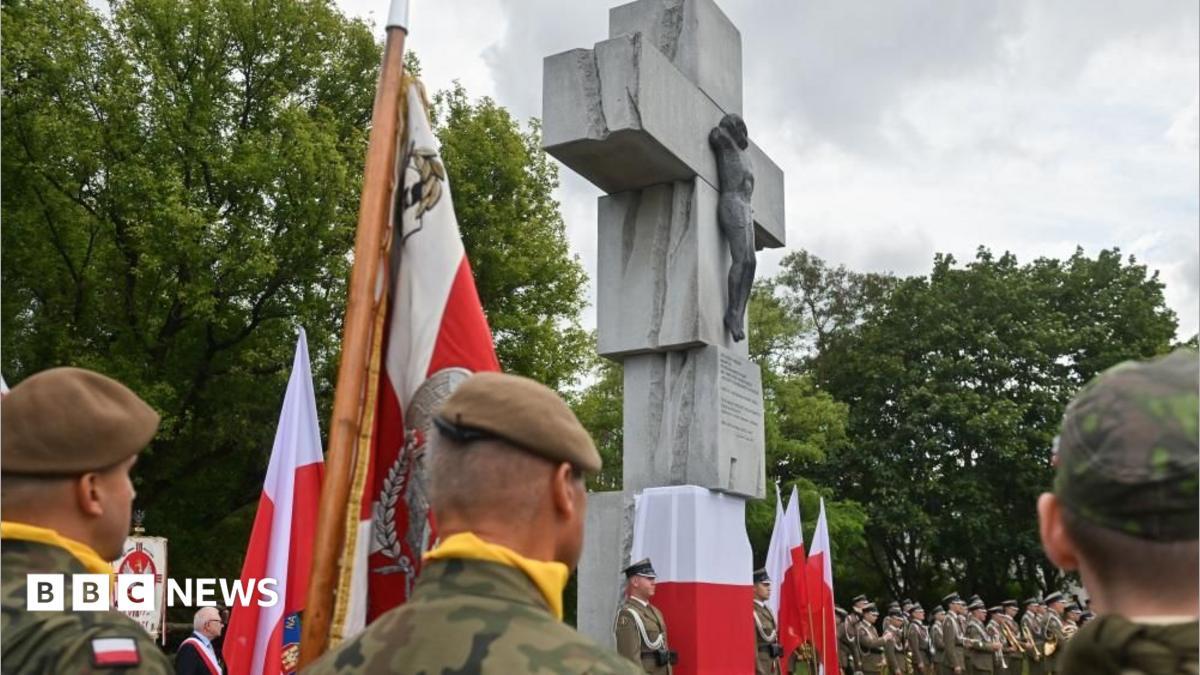
Poland’s Prime Minister Donald Tusk announced a Wall of Remembrance in Warsaw to commemorate Polish victims of the 1943 massacres in the Volhynia region, with the memorial to feature “an eternal flame and the names of identified victims.”
The Times of Israel reports that Tusk said, “A Wall of Remembrance will be erected in Warsaw, with an eternal flame and the names of every victim who has been found and identified,” and it links the announcement to the eve of the anniversary of “Bloody Sunday” in 1943.
Kyiv’s response is framed through the Kyiv Post account of a memory rift, which says Ukraine acknowledges that mass killings by Ukrainians of Poles, and vice versa, occurred in Volhynia and other formerly Polish-controlled areas during World War II.
In that same Kyiv Post piece, Tusk is quoted saying, “whoever wants to join this [European] community must be ready for this truth,” tying the commemoration to Ukraine’s EU aspirations and to the dispute over scale, characterization, and causes.
The article also states that Poland claims between 70,000 and 100,000 Polish civilians were killed between 1943 and 1945, while reprisals are said to have claimed up to 12,000 Ukrainian lives, and it says Ukrainian historians argue the upper estimates are substantially exaggerated and lack documentary support.
Exhumations and reconciliation stakes
Le Monde.fr says Poland and Ukraine agreed on “first exhumations of Polish victims” of the Volhynia massacre, with Donald Tusk calling it “Finally a turning point” as he announced the agreement on Friday, January 10.
“Trending: US-Iran war PM Modi in New Zealand FIFA World Cup 2026 Typhoon Bavi Global Airpower Index Monsoon in India Close the sidebar Poland to build memorial for World War II victims as Tusk calls Volhynia killings 'genocide' agence france-presse _•_ July 11, 2026, 15:43:00 IST Polish Prime Minister Donald Tusk announced a memorial for civilians killed during the Volhynia massacres, urging that “memory and truth” remain central to reconciliation Advertisement Ad”
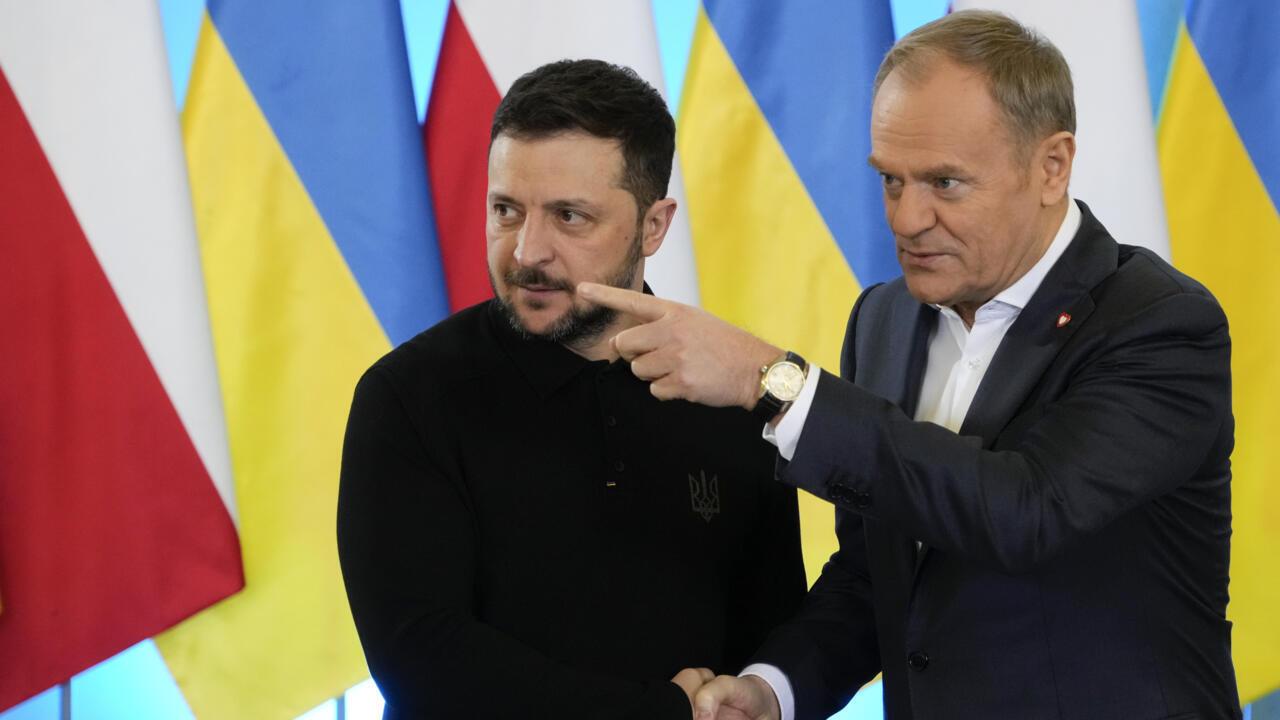
France 24 reports that on January 15, Tusk welcomed advances toward settling the memory dispute during a joint press conference in Warsaw with Ukrainian President Volodymyr Zelensky, saying they would “work toward a systemic solution to this problem.”
France 24 also describes how the dispute has poisoned relations for generations, noting that between 1942 and 1944 tens of thousands of Polish civilians were killed by Ukrainian nationalist militiamen, and it says Poland has for years demanded free access to sites where the civilians killed in these massacres would be buried.
In Le Monde.fr, the Ukrainian side is described as saying the two countries had “exchanged lists of places for researching and exhuming victims of mutual historical conflicts,” and it adds that as early as April a team of Polish and Ukrainian researchers should carry out a first exhumation in the former village of Puzniki.
Across the accounts, the stakes are tied to how the past is handled alongside present-day alliances: France 24 says Polish presidential candidate Karol Nawrocki stated he did not envisage Ukraine’s participation in the European Union or NATO until important civilizational questions for Poland have been resolved, directly referring to the Volhynia massacres.
More on Europe

Ryanair Flight From Thessaloniki Returns After Boeing 737-800 Window Dislodges, Passenger Partly Sucked Out
14 sources compared

Hellenic Air Force F-16 Makes Emergency Landing at Zakynthos Airport After Technical Fault
11 sources compared
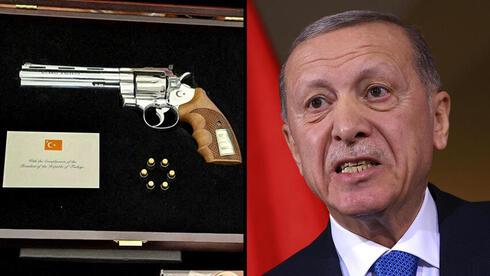
Recep Tayyip Erdogan Gifts Personalized Revolvers With Live Rounds to NATO Leaders in Ankara
39 sources compared
Trump Threatens To Cut Off Trade With Spain At NATO Summit In Turkey
17 sources compared